

Cognitive-Behavioral Therapy (CBT) manages anxiety and depression by identifying distorted thought patterns that fuel persistent worry or low mood. This method effectively interrupts the cycle of emotional distress through behavioral changes and cognitive restructuring. It allows for better daily functioning.
Research from the American Psychological Association confirms its high success rate.
CBT helps you learn to catch a panic-inducing thought before it gets out of control. It modifies your reactions to internal stress. Thus, you gain mastery over your mental state. This practical framework provides relief for those feeling trapped by their own minds. Mayo Clinic suggests that this approach is often as effective as medication for many people.
Our experts at Dallas Whole Life provide treatments like Cognitive-Behavioral Therapy (CBT) to help you regain peace. We focus on results because you deserve to feel light again.

What Is Cognitive-Behavioral Therapy (CBT)?
Cognitive-Behavioral Therapy (CBT) is an evidence-based therapeutic approach that focuses on the connection between thoughts, emotions, and behaviors. It is based on the idea that unhelpful thinking patterns can reinforce emotional distress like anxiety and depression.
CBT is structured, goal-oriented, and focused on present challenges rather than only past experiences. This makes it one of the most widely used therapies today. CBT emphasizes action and the present moment, prioritizing what you can do right now to feel better.

How CBT Works to Reduce Anxiety Symptoms
CBT can be as effective as medication for anxiety. It can provide long-lasting relief. In many cases, a combined approach of CBT and medication produces the best outcomes. They help you achieve faster symptom reduction.
- Identifying anxiety-triggering thoughts and beliefs
- Challenging irrational fears with realistic, balanced thinking
- Learning coping strategies for panic, worry, plus overthinking
- Gradual exposure to anxiety-provoking situations in a controlled way
- Building confidence through skill-based emotional regulation
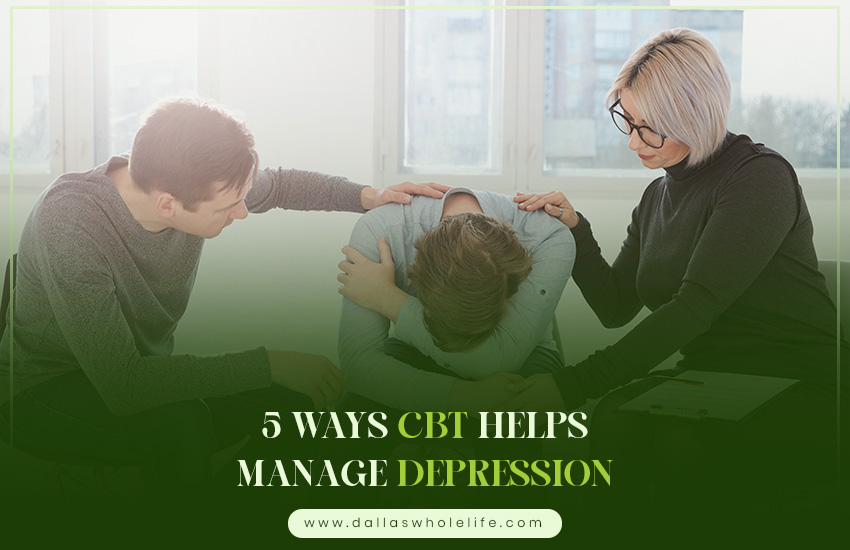
5 Ways CBT Helps Manage Depression
Depression is walking through deep mud every single day. It tells you that nothing matters. Also, things won’t get better. CBT challenges those lies directly. It helps you get moving again. You start to reclaim your life piece by piece.
- Addressing negative self-talk and feelings of worthlessness
- Breaking cycles of avoidance and low motivation
- Reintroducing healthy routines and meaningful activities
- Teaching problem-solving skills to regain a sense of control
- Helping clients reconnect actions with emotional improvement

When CBT May Be the Right Choice for You
Do you feel like your brain is constantly scanning for danger? CBT might be the solution. Living in a state of high alert is draining. Most people reach out when their own coping mechanisms stop working. We offer CBT to those who want to break free from these cycles:
- Persistent anxiety, worry, or panic symptoms
- Ongoing depressive thoughts or low mood
- Feeling stuck in repetitive thinking patterns
Start Cognitive-Behavioral Therapy (CBT) with Dallas Whole Life Counseling Today!
Our team is ready to help you thrive. If you want to stop feeling like your brain is working against your happiness, Dallas Whole Life offers specific support for these heavy seasons. We believe in your ability to change.
Contact us to schedule your first session. Let us help you find your way back to a balanced life.
Frequently Asked Questions (FAQs)
Q1: How do you explain CBT simply?
CBT helps people change unhelpful thoughts. So, emotions and behaviors can improve. Thoughts influence feelings. Feelings influence actions. CBT helps interrupt that loop in healthier ways.
Q2: Can I do CBT on my own?
You can practice some CBT techniques using workbooks. But working with a trained therapist is usually more effective. Guidance helps greatly. You stay safe. A professional provides objective feedback that you cannot give yourself. They keep you accountable.
Q3: What is the CBT approach to therapy stress?
It views stress as something you can manage by changing your reaction to it. You focus on what you can control. The rest matters less. This helps you lower the volume of daily pressure.
Q4: What are the CBT calming techniques?
Common techniques include:
- Deep breathing
- Progressive muscle relaxation
- Mindfulness
- Cognitive restructuring
- Exposure therapy
