

Seeking professional divorce counseling is vital when your emotions begin to disrupt your daily routine or cloud your judgment during legal proceedings. Therapy provides clarity and works well. Many people benefit from professional support early in the process to manage the heavy burden of grief or to establish healthy boundaries with an ex-spouse before conflict escalates. You deserve peace and support can help you protect it.
Professional guidance helps you. You can distinguish between temporary emotional reactions and long-term mental health needs. It basically offers relief. According to the American Psychological Association, maintaining emotional health is the most critical factor in a successful post-divorce life. You can also find resources for coping with loss at HelpGuide.

Why Divorce Is Emotionally Challenging Even When It Feels “Expected”
Divorce is not just a legal process. It is an emotional transition involving loss, identity shifts, plus uncertainty. Many individuals assume that an expected separation will feel easier, but the reality involves a massive shift in how you see yourself. Grief hits hard. Even if the split feels like the right choice, you might still experience a heavy sense of failure and an intense fear for the future.
Some people feel a strange mix of relief and sorrow that creates a lot of internal confusion during these quiet moments. This is normal. Suppressing these feelings often leads to physical illness or a sudden mental health crisis months after the legal process ends. Normalizing professional support early rather than waiting for a crisis point allows you to process these changes in a healthy environment. You find hope, and growth happens.
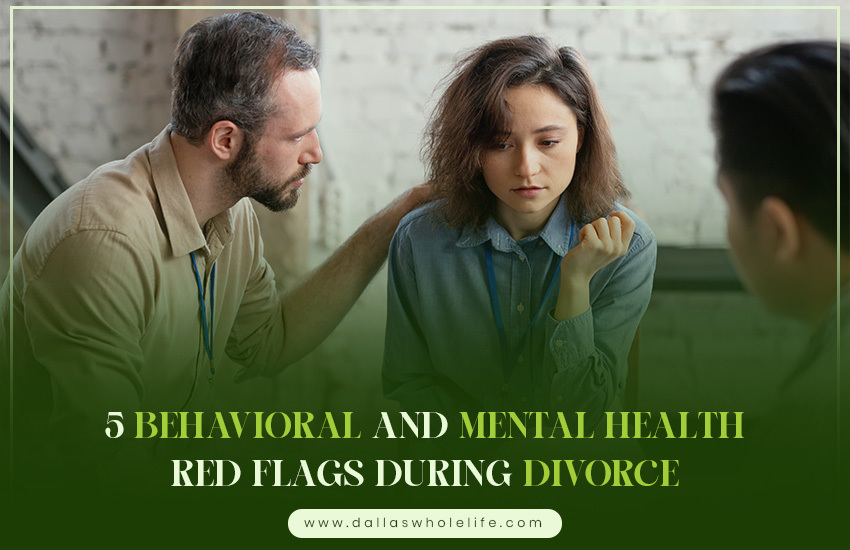
5 Behavioral and Mental Health Red Flags During Divorce
Watch for behavioral shifts. It helps you catch mental health declines before they spiral into a serious crisis that affects your children and your life. Listen to signals. Because your body speaks first.
- Trouble sleeping. Appetite changes. Physical exhaustion.
- Increased reliance on alcohol, food, or distractions to cope.
- Withdrawal from friends and family, as well as support systems
- Difficulty focusing or making decisions
- Escalating conflict with a spouse or co-parent
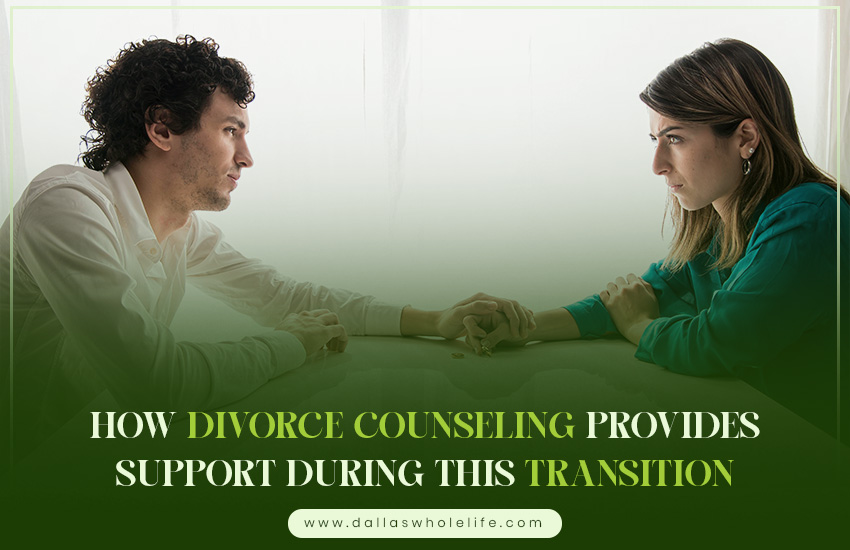
How Divorce Counseling Provides Support During This Transition
Perspective changes everything. A counselor acts as a neutral party to help you sort through the mental clutter of a legal split without adding more stress. Working with a therapist ensures that your emotional health remains a priority while your life changes in significant ways during this period.
- Creates a safe, neutral space to process complex emotions
- Helps individuals manage stress, anxiety, and grief
- Supports healthy communication during co-parenting or mediation
- Assists with boundary-setting and emotional regulation
- Encourages clarity, self-awareness, and long-term emotional stability

Start Divorce Counseling with Dallas Whole Life
Our team at Dallas Whole Life understands the heavy weight you carry right now and offers compassionate care for every client. We listen well, and we help.
- Expert individual therapy for loss
- Support for co-parenting plus mediation
- Specialized counseling for life transitions
You do not have to walk through this alone because our therapists are ready to help you rebuild your sense of self-worth. Start healing today by contacting us now.
Frequently Asked Questions (FAQs)
Q1: Why is divorce so hard, even if you want it?
Divorce feels difficult because it represents the death of a dream and the total restructuring of your daily existence. Even when you choose to leave, the brain still processes the change as a traumatic event.
Q2: Why is divorce so hard emotionally?
The emotional strain comes from the collision of several high-stress life events happening at once. You might feel guilt as well as relief. These conflicting feelings create mental exhaustion.
Q3: What are the red flags for divorce?
Red flags during a split include persistent thoughts of self-harm and a total inability to function at work or home.
Q4: What are the aftereffects of divorce?
Aftereffects often include a period of identity confusion and changes in social circles or financial status. Some people experience post-traumatic stress or a lingering sense of loneliness that persists long after the decree is final.
