

Relationship. They are our happy place, right? Our anchor. But if you’ve been in one for more than a few years, you know they can be incredibly hard. Even the best connections have off days. It’s totally normal for that intense closeness to fade in and out.
When that strain just… lasts. That’s a different feeling. You wonder why such a simple bond now needs so much effort. You see your relationship with your partner deteriorate over time. It is difficult. Fortunately, these challenges are not isolated incidents. The majority of couples encounter the same typical obstacles. You can begin implementing significant changes by identifying the underlying causes of relationship issues. You can return to an environment of sincere affection and support for one another.
Identifying these common causes is the first step toward healing. It takes courage to look closely at where things are breaking down. But this process is essential if you want to revitalize your partnership. The goal isn’t just to stop fighting. It’s about restoring a secure, loving foundation. So, both partners feel truly seen.

When Love Feels Harder Than It Should
Every relationship experiences tension. This is a fact of life. You’re two separate people with unique histories and needs. Naturally, you’ll have disagreements. But when small disagreements turn into emotional distance or constant frustration, it’s easy to wonder:
“What’s happening to us?”
A few bumps in the road are expected. A constant state of frustration is a major warning sign.
Most couples don’t realize that beneath daily arguments, or silence, lies a set of common, deeply human struggles that affect nearly every relationship at some point. The fights about dishes or money. They are rarely about the dishes or money. These are symptoms of deeper, core needs that are not being met. If left ignored, it can create deep cracks in your foundation. Therefore, it’s important to identify these patterns before they cause serious, lasting harm.
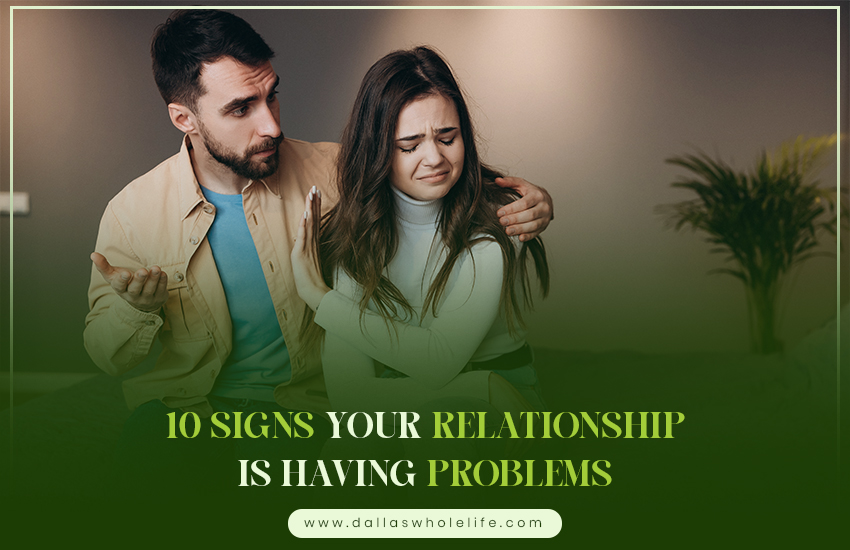
10 Signs Your Relationship is Having Problems
Many people ignore the early warnings. They hope the problems will just go away. But relationships, like gardens, must be tended. Ignoring the weeds just means they’ll choke out the flowers. If you recognize any of these issues, it may be time to seek help.
1. Poor Communication Patterns
Talking is not the same thing as communicating. Most couples do not talk to each other. They talk at each other. You might find yourselves having the same argument over and over. It never gets resolved. This cycle leaves both of you feeling like the other person just doesn’t get it.
- One partner shuts down completely during a conflict.
- Conversations turn into blaming sessions fast.
- Important feelings get swallowed just to keep the peace.
2. Unresolved Past Conflicts
Old wounds have a nasty habit of coming back if they weren’t healed properly. You might think you moved past that thing from three years ago. Yet here it is. It pops up in every new argument. This baggage weighs down the present moment.
- Bringing up old mistakes during a new disagreement.
- Feeling resentment that just won’t fade away.
- Avoiding specific topics so you don’t trigger a fight.
3. Emotional Disconnection
You can sit on the same couch but feel miles apart. This drift happens slowly. It isn’t always caused by a big blowout fight. Often, it’s just a lack of active engagement. One day, you look up and realize… you don’t know what your partner is feeling.
- Conversations stay strictly logistical or superficial.
- You stop sharing the small wins. You don’t mention daily frustrations.
- Feeling lonely even when you are sitting right there together.
4. Stress and External Pressures
Life hits hard. Jobs get demanding. Family members get sick, or money gets tight. When external stress is high, the relationship often becomes the punching bag. Partners forget they are supposed to be on the same team.
- Taking work stress out on your spouse.
- Zero patience for minor inconveniences.
- Viewing your partner as another obligation instead of a support.
5. Lack of Quality Time
Coexisting is not bonding. Spending time in the same room while scrolling on phones doesn’t count. Relationships starve without intentional interaction. You need moments that are just for the two of you.
- Date nights are basically non-existent.
- Focusing entirely on the kids. Or maybe work takes over.
- Rarely making eye contact when you talk.
6. Different Communication or Attachment Styles
One person pursues. The other pulls away. This dynamic creates a chase that exhausts everyone involved. Learning how your partner gives love is crucial, and receiving love matters too. Without that insight, you miss each other constantly.
- Feeling smothered by a partner’s need to be close.
- Feeling abandoned when a partner needs some space.
- Misinterpreting a need for solitude as rejection.
7. Trust Issues
Trust is fragile. Once it breaks, rebuilding takes a ton of work. This doesn’t always mean infidelity happened. Broken promises erode the foundation. Small lies do it too.
- Checking a partner’s phone. Or checking their emails.
- A constant need for reassurance.
- Doubting where a partner is or what they mean.
8. Unbalanced Effort
A relationship cannot survive if only one person is rowing. Resentment builds fast when one partner feels they carry the load alone. It creates a parent-child dynamic. That kills romance quickly.
- One person initiates all the serious talks.
- Household chores fall on one person. The mental load does too.
- Feeling like you care way more about the relationship than they do.
9. Unmet Emotional or Physical Needs
We all have requirements to feel loved. When those tanks run dry, we get irritable. It is hard to be generous when you feel deprived of yourself. Ignoring these needs leads to looking for validation elsewhere.
- Feeling physically rejected. Feeling undesirable.
- Lack of non-sexual physical touch.
- Emotional bids for connection get ignored.
10. Avoidance of Vulnerability
Being guarded protects you from pain. It also prevents deep intimacy, though. You cannot be fully loved if you are never fully seen. Keeping walls up ensures you stay safe. But you also stay isolated.
- Refusing to admit when you are scared. Or hurt.
- Using humor to deflect the serious moments.
- Keeping secrets about how you really feel.
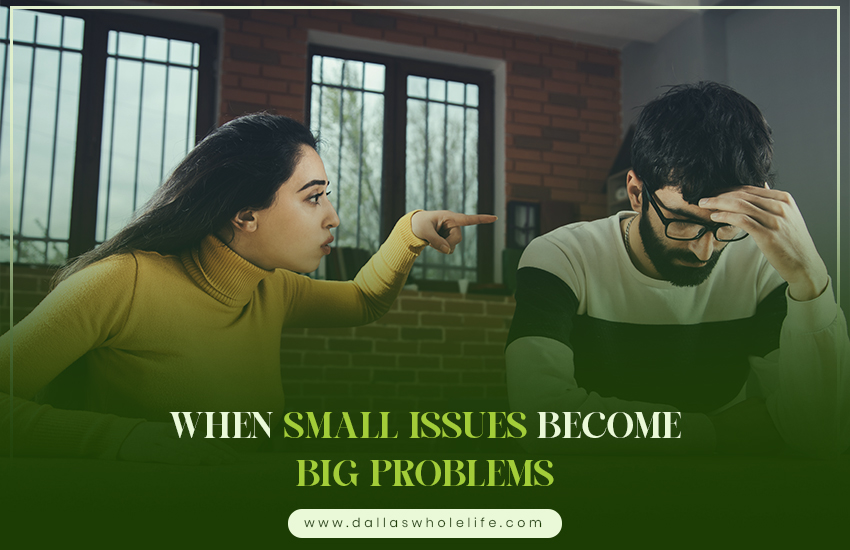
When Small Issues Become Big Problems
Most relationships do not collapse from one major issue. They slowly erode under the weight of unspoken frustration and unmet needs. The pile of “small things” eventually becomes a mountain you cannot climb. A missed “thank you.” A forgotten chore. They seem trivial in the moment. Over time, these moments accumulate into a narrative that says:
“You don’t care about me.”
- Resentment calcifies into contempt.
- Small irritations trigger disproportionate anger.
- Partners stop trying to resolve the conflict altogether.

How Couples Counseling Can Help with Relationship Issues
Many people wait until the papers are signed to seek help. Therapy works best when you go before the house is on fire. Couples counseling provides a neutral ground. It offers tools you likely weren’t taught in school. A therapist helps translate your arguments into the actual needs you are trying to express.
- Identify and break unhealthy communication cycles
- Rebuild trust and emotional safety
- Develop empathy and active listening skills
- Strengthen intimacy and mutual understanding
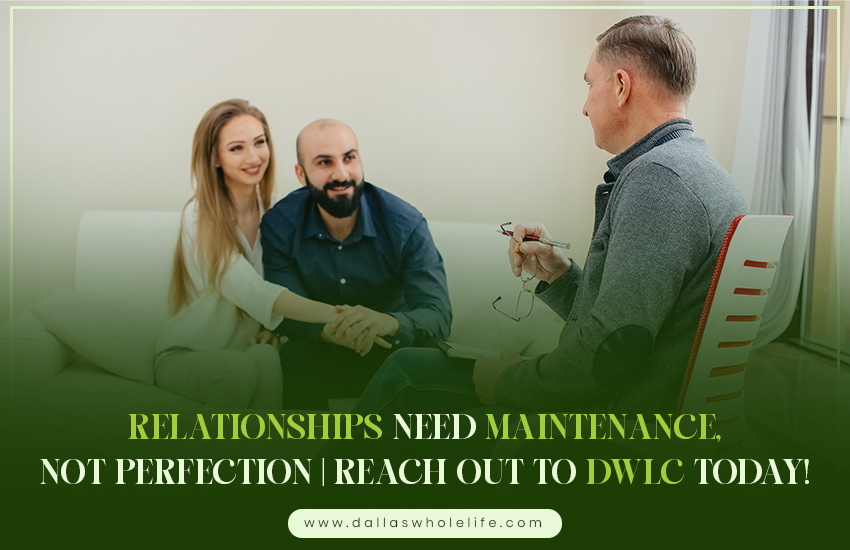
Relationships Need Maintenance, Not Perfection | Reach Out to DWLC Today!
You change the oil in your car. You go to the dentist for cleanings. Your relationship requires the same level of care. It isn’t about being perfect. It is about being willing to repair. Are you stuck in a loop of conflict or silence? Then, you don’t have to stay there. The team at Dallas Whole Life is ready to help you find your way back to each other. Contact us today and start the conversation!
Frequently Asked Questions (FAQs)
Q1: What is the hardest time in a relationship?
Honestly? It’s often not the loud, explosive fighting. It’s when the silence sets in. This is when routine arguments start covering up deep, unmet needs.
Q2: How to fix a struggling relationship?
You must start by changing how you communicate. Focus on truly hearing your partner’s feelings, even when it’s hard. Small, consistent efforts to show care rebuild connections fast.
Q3: What issues can couples therapy resolve, and when should partners seek it?
Therapy resolves communication traps, trust breaches, and conflict patterns. Partners should seek it when they feel stuck, hopeless, or when outside issues are constantly hurting their bond.
Q4: Can couples therapy help to recover a relationship?
Absolutely. Therapy gives you new tools and neutral guidance to tackle old problems differently. It helps partners create safety so love can regrow.

