

Meditation and mindfulness training teaches you how to slow down, notice your thoughts and emotions without judgment, and return to the present moment instead of getting pulled into stress, overthinking or automatic reactions. Through practices like mindful breathing, body scans, grounding exercises, guided meditation and present-moment awareness, mindfulness training can help reduce stress, support anxiety management, improve focus, calm emotional reactivity, and build a steadier relationship with your mind.
Sometimes life starts to feel like one long reaction.
You wake up and reach for your phone.
You rush through the morning.
You answer messages while thinking about the next thing.
You eat without really tasting your food.
You hear someone speak, but your mind is already somewhere else.
You lie down at night, and suddenly your brain wants to review the entire day.
You are doing everything, but not really feeling present for any of it.
That is what living on autopilot can feel like.
Mindfulness helps you come back to your life as it is happening. Not perfectly. Not peacefully every second. Just more awake, more aware, and less controlled by every thought or feeling that shows up.
Meditation is one way to practice that skill.
And yes, with time and support, it can change the way you respond to stress, emotions, relationships, and yourself.
What Is Meditation and Mindfulness Training?
Meditation and mindfulness training is a guided way to build awareness, attention, and emotional steadiness. At Dallas Whole Life Counseling, Meditation & Mindfulness Training can help you learn practical techniques to calm your mind, relax your body, and use mindfulness in everyday life. Mindfulness means paying attention to the present moment with openness and less judgment. Meditation is a practice that helps train that attention.
Meditation vs Mindfulness: What Is the Difference?
Meditation and mindfulness are closely connected, but they are not exactly the same.
Meditation is usually a set practice. You may sit quietly, focus on your breath, listen to a guided meditation, do a body scan, or practice loving-kindness meditation for a set period of time.
Mindfulness is the quality of attention you bring to any moment.
You can practice mindfulness while:
- Drinking coffee
- Walking
- Listening to someone
- Eating
- Washing dishes
- Working
- Stretching
- Driving safely
- Taking a few breaths before replying to a message
Meditation is like formal training. Mindfulness is using that training in real life.
You do not have to sit for an hour every day to benefit. Even small moments of awareness can help you step out of autopilot.
Why Our Minds Wander So Much
If you have ever tried to meditate and thought, “I’m terrible at this,” you are not alone.
The mind wanders. That is what minds do.
It jumps to the future.
It replays the past.
It solves problems.
It imagines conversations.
It worries.
It plans.
It judges.
It compares.
Mind-wandering is not a personal failure. It is part of being human.
The practice is not to stop thoughts forever. The practice is to notice when your mind has wandered and gently bring your attention back.
Every time you notice and return, you are practicing mindfulness.
That moment of returning is the work.
Signs You Could Benefit From Mindfulness Training
Mindfulness training may help if your mind feels busy, reactive, or hard to settle.
You may benefit from mindfulness training if you notice:
- Constant stress
- Overthinking
- Trouble concentrating
- Racing thoughts
- Emotional reactivity
- Difficulty sleeping
- Feeling mentally overwhelmed
- Irritability
- Trouble relaxing
- Worry loops
- Feeling disconnected from your body
- Snapping before you can pause
- Living mostly in the past or future
- Feeling like your brain will not switch off
- Wanting healthier ways to cope
You do not need to be in crisis to start. Mindfulness can be used as a well-being practice, a stress tool, or part of therapy.
Why Being Present Is Harder Than Ever
Modern life trains the mind to be everywhere at once.
Phones, emails, social media, news alerts, multitasking, work pressure, and constant availability can make your attention feel scattered.
You may be physically in one place while your mind is answering tomorrow’s problems.
Over time, that can make stillness uncomfortable.
When you pause, you may suddenly feel everything you have been avoiding: tension, sadness, worry, anger, loneliness, or exhaustion.
That does not mean mindfulness is not working. Sometimes it means you are finally noticing what has been there.
With the right support, mindfulness can help you meet those feelings without being swallowed by them.
Common Myths About Meditation and Mindfulness
Mindfulness is simple, but it is often misunderstood.
Myth: You have to empty your mind.
No. You are not trying to have no thoughts. You are learning to notice thoughts without being controlled by every one.
Myth: Meditation is only religious.
Meditation appears in many spiritual traditions, but mindfulness training can also be taught as a practical mental health and well-being skill.
Myth: You need hours every day.
You can start with 2 to 5 minutes. Consistency matters more than perfection.
Myth: Mindfulness is only for calm people.
Mindfulness is often most helpful for people who do not feel calm.
Myth: You have to sit perfectly still.
Some people sit. Others walk, stretch, breathe, journal, or use grounding exercises. There is more than one way to practise.
Myth: Mindfulness means accepting bad situations.
Mindfulness does not mean approving of harmful behavior or ignoring problems. It means seeing clearly enough to respond more wisely.
You Know Stress Is Affecting You, But You Are Not Sure What Actually Helps
When stress builds, people often try to push through.
You may tell yourself to calm down, work harder, think positively, or stop worrying. But if your nervous system is already activated, those instructions usually do not help much.
Mindfulness works differently.
It helps you pause, notice what is happening, and relate to your thoughts, emotions, and body with more awareness.
That pause can change everything.
Not because the stress disappears instantly, but because you are no longer reacting automatically.
How Does Mindfulness Training Work?
Mindfulness training works by helping you practice attention and awareness.
Instead of getting lost in every thought, you learn to observe what is happening.
You might notice:
“I am having a worried thought.”
“My chest feels tight.”
“I am judging myself.”
“I want to avoid this.”
“I am angry.”
“My mind is predicting the worst.”
That awareness creates space.
And in that space, you can choose a different response.
Mindfulness can support emotional regulation because it teaches you to pause before reacting. It can also help you recognize patterns, such as overthinking, tension, avoidance, or self-criticism.
The American Psychological Association describes mindfulness meditation as a practice that can help people become more aware of thoughts and feelings and respond to stress with greater awareness.
Can Mindfulness Reduce Stress and Anxiety?
Mindfulness can help many people reduce stress and anxiety, especially when practiced regularly.
It does not remove every stressful situation from your life. It helps you change how you relate to stress.
Instead of being immediately pulled into panic, tension, or overthinking, you may begin to notice:
“This is stress.”
“My body is activated.”
“My mind is trying to protect me.”
“I can breathe before I respond.”
“I do not have to solve everything this second.”
If anxiety is affecting daily life, mindfulness may also be used alongside anxiety counseling.
Mental Health Benefits of Meditation and Mindfulness
Meditation and mindfulness training may support mental health in several ways.
Benefits may include:
- Reduced stress
- Lower anxiety
- Better focus
- Improved emotional awareness
- Less reactivity
- Better sleep routines
- More self-compassion
- Greater patience
- Less rumination
- Improved mood regulation
- Better connection with the body
- Stronger ability to pause before reacting
A research study on the effects of mindfulness on psychological health found mindfulness is associated with positive psychological effects, including reduced psychological symptoms and improved well-being.
This does not mean mindfulness is a cure for everything. It means it can be a useful, evidence-supported tool for many people.
Can Mindfulness Help With Overthinking and Worry?
Yes, mindfulness can be especially helpful for overthinking.
Overthinking often feels like problem-solving, but much of the time it becomes a loop.
You replay.
You predict.
You analyze.
You check.
You argue with yourself.
You imagine every possible outcome.
Mindfulness helps you notice the loop instead of staying trapped inside it.
For example, instead of thinking:
“What if I make the wrong decision?”
You might notice:
“My mind is trying to get certainty.”
That shift may sound small, but it matters. When you can observe a thought, you have more choice about whether to follow it.
Mindfulness does not stop thoughts from appearing. It helps thoughts lose some of their power.
How Meditation Helps Improve Sleep Quality
Many people struggle to sleep because their body is tired but their mind is still active.
At night, the distractions disappear. Then the mind starts reviewing, planning, worrying, or replaying.
Meditation can help by giving your mind and body a way to slow down.
Helpful bedtime practices may include:
- Body scan meditation
- Slow breathing
- Gentle mindfulness of sound
- Progressive muscle relaxation
- Noticing thoughts without chasing them
- A short guided meditation
The Mayo Clinic describes mindfulness exercises such as breathing methods and body scans as practical ways to bring attention into the present moment.
Mindfulness may not fix every sleep issue, but it can help reduce the racing thoughts that often make sleep harder.
Can Mindfulness Improve Focus and Concentration?
Mindfulness is attention training.
Every time you notice your mind has wandered and bring it back, you are practicing focus.
Over time, this may help you become more aware of distraction and more able to return to what matters.
This can be useful for:
- Work
- Studying
- Conversations
- Parenting
- Creative tasks
- Decision-making
- Therapy
- Emotional self-awareness
Mindfulness does not mean you never get distracted. It means you get better at noticing distraction and returning.
That skill can be powerful in a world constantly trying to pull your attention away.
Is Meditation the Same as Relaxation?
Meditation and relaxation overlap, but they are not the same.
Relaxation is usually about feeling calmer.
Meditation is about awareness.
Sometimes meditation does help you relax. Other times, it helps you notice tension, sadness, anger, or worry that was already there.
That is why some people feel surprised when meditation is not instantly peaceful.
A mindfulness practice may bring calm, but calm is not the only goal. The deeper goal is learning how to be with your experience without running from it or reacting automatically.
Who Can Benefit From Mindfulness Training?
Mindfulness training can help many kinds of people.
It may support:
- Adults under stress
- Teens dealing with emotions or pressure
- College students
- Parents
- Professionals
- Business owners
- People in therapy
- People with anxiety
- People experiencing grief
- People recovering from burnout
- People struggling with anger or reactivity
- People who feel disconnected or overwhelmed
At Dallas Whole Life Counseling, we support individuals, couples, kids, teens, and families with a wide range of mental and emotional health concerns. Mindfulness may be used on its own as a training practice or combined with therapy when appropriate.
Meditation vs Mindfulness: Choosing the Right Practice for Your Needs
There is no single best mindfulness practice for everyone.
Some people love sitting meditation. Others prefer walking meditation. Some need guided audio. Others prefer silence. Some want body-based grounding. Others want mindfulness woven into therapy.
The best practice is one you can actually use.
Meditation vs Mindfulness: Which One Is Right for You?
Formal meditation may be right for you if you want a set practice that helps you build focus, calm and awareness.
Everyday mindfulness may be right for you if you want practical tools you can use during daily life.
You may choose meditation if:
- You like structure
- You want a morning or evening routine
- You want to practice focus
- You want a quiet reset
You may choose everyday mindfulness if:
- You are busy
- Sitting still feels hard
- You want tools for stressful moments
- You want to bring awareness into work, parenting, or relationships
Most people benefit from both.
What Happens During a Mindfulness Training Session?
A mindfulness training session is usually gentle, practical, and personalized.
At Dallas Whole Life Counseling, mindfulness practice may be customized around your background, goals and strengths. Sessions may include meditation practice during the appointment and take-home practices to use in daily life.
A session may involve:
- Talking about your stress, goals or challenges
- Learning a mindfulness concept
- Practicing a breathing exercise
- Trying a short meditation
- Noticing body sensations
- Exploring thoughts and emotions
- Reviewing what happened during practice
- Choosing a simple exercise for the week
You do not need to be good at meditation before starting. That is the point of training.
Common Mindfulness Techniques Explained
Mindfulness techniques are simple, but they can feel very different depending on the person.
Here are some of the most common ones.
Mindful Breathing
You gently focus on the breath. When the mind wanders, you notice and return.
This can help calm the body and train attention.
Body Scan
You move attention through the body, noticing sensations without trying to force change.
This can help with tension, stress and body awareness.
Grounding Exercises
Grounding brings attention to the present moment through the senses.
One example is noticing five things you can see, four things you can feel, three things you can hear, two things you can smell and one thing you can taste.
Walking Meditation
You walk slowly and pay attention to the feeling of movement, the feet, the breath and the environment.
This can be helpful if sitting still feels difficult.
Loving-Kindness Meditation
This practice involves silently offering kind phrases towards yourself and others.
It may support compassion, patience and emotional softening.
Five Senses Exercise
You pause and notice what is happening through sight, sound, touch, smell and taste.
This is simple, fast and useful during stress.
Guided Meditation vs Silent Meditation
Guided meditation is often easier for beginners because someone leads you through the practice.
Silent meditation gives you more space, but it can feel harder when your mind is very active.
Guided meditation may help if:
- You are new
- You feel anxious in silence
- You want structure
- You like step-by-step support
Silent meditation may help if:
- You want quiet
- You are building independence
- You have some practice
- You want fewer external prompts
There is no need to choose only one. Many people use guided meditation at first and gradually add silent practice over time.
How Long Should You Meditate Each Day?
You do not need a long session to begin.
Start with 2 to 5 minutes.
That may sound too small, but small practices are easier to repeat. And repetition is what builds the habit.
You might try:
- 2 minutes of breathing before work
- 5 minutes of body scan before bed
- 3 mindful breaths before replying to a stressful message
- 10 minutes of guided meditation a few times a week
- 1 mindful walk around the block
A short daily practice is usually more useful than one long session you only do once.
How to Stay Consistent With Mindfulness
The best mindfulness routine is the one that fits your real life.
Try this:
- Attach it to something you already do
- Keep it short
- Practice at the same time each day
- Use a reminder
- Track it simply
- Do not restart with shame if you miss a day
- Choose a practice you do not hate
- Practice before you desperately need it
You might attach mindfulness to brushing your teeth, drinking coffee, parking the car, closing your laptop or getting into bed.
The easier it is to remember, the more likely you are to repeat it.
Can Mindfulness Be Practiced at Work or School?
Yes. Mindfulness can be used almost anywhere.
At work or school, you might try:
- Taking three slow breaths before a meeting
- Feeling your feet on the floor during a stressful conversation
- Pausing before sending an email
- Eating lunch without scrolling
- Taking a mindful walk between tasks
- Noticing tension in your shoulders
- Listening fully for one minute
- Naming the emotion before reacting
You do not need a cushion, candle or perfect quiet.
Mindfulness can happen in the middle of real life.
Is Mindfulness Training Suitable for Beginners?
Yes. Mindfulness training is suitable for beginners.
In fact, beginners often benefit from guidance because they may have common worries, such as:
- “Am I doing this wrong?”
- “Why can’t I stop thinking?”
- “Why do I feel restless?”
- “What if I get emotional?”
- “How do I know if it is working?”
A mindfulness trainer or therapist can help you understand what is normal, adjust the practice, and choose techniques that suit your personality and needs.
Mindfulness Training vs Therapy: Do You Need Both?
Mindfulness training and therapy are different, but they can work well together.
Mindfulness training teaches awareness, breathing, attention and presence.
Therapy can help you understand deeper patterns, trauma, anxiety, depression, grief, relationships, identity, stress and emotional pain.
You may benefit from mindfulness training alone if you want practical tools for focus, stress or everyday awareness.
You may need therapy if you are dealing with intense anxiety, depression, trauma, panic, self-harm thoughts, eating disorder symptoms, severe grief, relationship distress or ongoing emotional difficulty.
Mindfulness can support therapy, but it should not be used to avoid deeper issues that need care.
Starting Meditation and Mindfulness Training
You do not need to wait until life is calm before starting mindfulness.
In fact, mindfulness is often most useful when life is not calm.
Start small. Start imperfectly. Start with one breath.
How to Start a Simple Meditation Routine
Here is a beginner-friendly way to start.
- Choose a quiet or reasonably calm space.
- Sit comfortably with your feet on the floor or your body supported.
- Set a timer for 2 to 5 minutes.
- Bring attention to your breath.
- Notice the inhale and exhale.
- When your mind wanders, gently return to the breath.
- When the timer ends, notice how your body feels.
- Repeat tomorrow.
That is meditation.
Not perfect focus. Not instant peace. Just noticing and returning.
What Type of Mindfulness Training Is Best for You?
The best mindfulness training depends on your goals.
If you feel anxious, breathing and grounding may be helpful.
If you feel disconnected from your body, body scans may help.
If you overthink, cognitive defusion and thought-noticing practices may help.
If you are grieving, gentle present-moment awareness and compassion practices may help.
If you are stressed at work, short practical pauses may be best.
If you are using mindfulness alongside therapy, your therapist can help choose exercises that fit your treatment goals.
Mindfulness should support your life, not become another task you feel guilty about.
Easy Mindfulness Exercises You Can Practice Today
Try one of these today.
Three-Breath Reset
Take three slow breaths. On each exhale, soften your shoulders.
Name What Is Here
Pause and silently name what you notice.
“Worry.”
“Tension.”
“Planning.”
“Sadness.”
“Pressure.”
Naming can create space.
One-Minute Senses Check
Notice one thing you can see, hear, feel, smell and taste.
Mindful Handwashing
Feel the water, temperature, soap and movement for 30 seconds.
Thought Noticing
When a thought appears, say, “I am noticing the thought that…”
This helps you step back from the thought instead of becoming tangled in it.
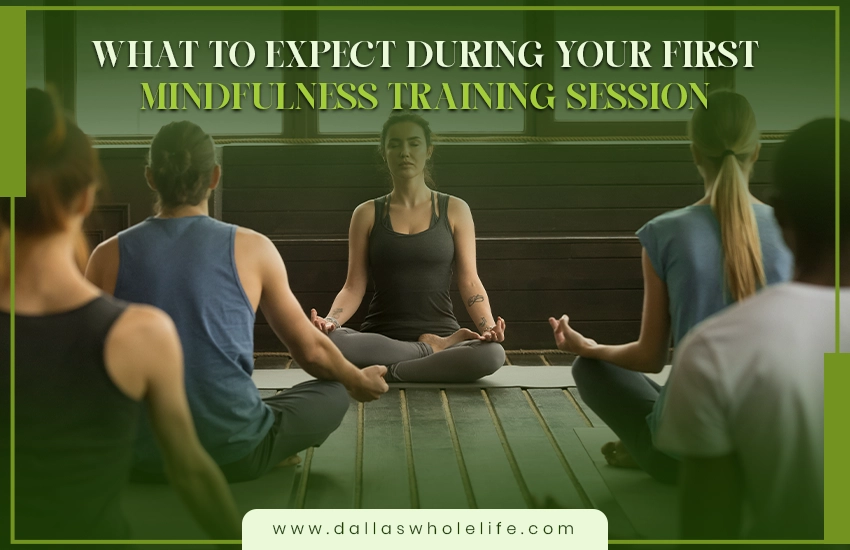
What to Expect During Your First Mindfulness Training Session
Your first mindfulness training session may feel calmer than you expect, or more emotional than you expect. Both are normal.
We may talk about:
- What you want help with
- Your stress level
- Your experience with meditation
- Whether silence feels comfortable or uncomfortable
- Any anxiety, trauma, grief or emotional concerns
- What kind of practice might fit your daily life
- How to use mindfulness outside the session
Then we may try a simple practice together.
You do not have to impress us. You do not have to be peaceful. You only have to be willing to begin.
How Mindfulness Supports Long-Term Emotional Wellbeing
Mindfulness supports long-term well-being by changing your relationship with your inner life.
You may begin to notice:
- Thoughts are not always facts
- Emotions rise and fall
- The body gives early stress signals
- You can pause before reacting
- You can be kind to yourself during hard moments
- You do not have to believe every fear
- You can return to the present even after being pulled away
Over time, this can build resilience.
Not the kind of resilience where you never struggle. The kind where you can struggle and still stay connected to yourself.
When Should You Seek Professional Support Instead of Self-Practice?
Mindfulness apps, videos and self-guided exercises can be helpful.
But professional support may be important if:
- Anxiety is affecting daily life
- Depression is present
- Panic attacks are happening
- Trauma memories appear during mindfulness
- You feel unsafe in your body
- You become overwhelmed when you slow down
- You are having thoughts of harming yourself
- Grief feels unbearable
- Eating disorder symptoms are present
- Stress has turned into burnout
- You cannot function normally
If you are in immediate danger or thinking about harming yourself, call emergency services or a crisis support line now.
Mindfulness can be powerful, but it is not a substitute for urgent care.
Combining Mindfulness Training With Counseling
Many therapy approaches include mindfulness because awareness helps change.
Mindfulness may be used alongside:
- Cognitive-Behavioral Therapy
- Acceptance and Commitment Therapy
- Stress management counseling
- Anxiety therapy
- Depression counseling
- Trauma-informed therapy
- Grief counseling
- Relationship therapy
In therapy, mindfulness can help you notice thoughts, regulate emotions and respond differently to old patterns.
At Dallas Whole Life Counseling, online virtual therapy is available anywhere in Texas, while in-person sessions are available in the Dallas/Fort Worth area.
Mindfulness Will Not Make Life Perfect, But It Can Help You Meet Life Differently
Mindfulness is not about escaping your life.
It is about showing up for it with more awareness, honesty, and steadiness.
You may still have stress.
You may still have hard days.
You may still overthink sometimes.
You may still feel anxious, sad, or frustrated.
But you may also learn how to pause.
How to breathe.
How to notice.
How to come back.
How to respond from the part of you that is calmer and clearer.
At Dallas Whole Life Counseling, our Meditation & Mindfulness Training can help you build practical skills for stress, focus, emotional balance and everyday presence. We offer in-person support in the Dallas/Fort Worth area and telehealth visits anywhere in Texas.
If you are ready to feel less run by your thoughts and more present in your life, we are here to help.
FAQs
What is meditation and mindfulness training?
Meditation and mindfulness training teaches you how to pay attention to the present moment with more awareness and less judgment. It may include breathing, body scans, guided meditation, grounding and daily mindfulness practices.
How does mindfulness training work?
Mindfulness training works by helping you notice thoughts, emotions and body sensations without reacting automatically. This can create more space between what you feel and how you respond.
What is the difference between meditation and mindfulness?
Meditation is usually a formal practice done for a set time. Mindfulness is the broader skill of paying attention in daily life. Meditation helps you practice mindfulness.
Do I need experience to start mindfulness training?
No. Mindfulness training is suitable for beginners. You do not need to know how to meditate before starting.
How long should a mindfulness practice be each day?
You can start with 2 to 5 minutes a day. Short, consistent practice is usually more helpful than long sessions that are hard to maintain.
What are the benefits of mindfulness and meditation training?
Benefits may include reduced stress, better focus, lower anxiety, improved emotional awareness, better sleep routines, less reactivity and more present-moment awareness.
Can mindfulness help reduce stress and anxiety?
Mindfulness can help many people manage stress and anxiety by calming the nervous system, reducing rumination and helping you respond to thoughts with more awareness.
What happens during a mindfulness training session?
A session may include a conversation about your goals, guided breathing, meditation practice, body awareness, reflection and simple take-home exercises.
Is mindfulness training suitable for beginners?
Yes. Beginners often do well with guided support because they can learn how to practice without judging themselves for having a busy mind.
Can mindfulness improve focus and concentration?
Mindfulness may improve focus by training attention. Each time you notice distraction and return to the present, you practice concentration.
What are the most common mindfulness techniques?
Common techniques include mindful breathing, body scans, grounding exercises, walking meditation, loving-kindness meditation and five senses exercises.
Is meditation the same as relaxation?
No. Meditation may help you relax, but the main goal is awareness. Sometimes meditation helps you notice stress or emotions rather than immediately feeling calm.
How do I stay consistent with mindfulness practice?
Start small, attach mindfulness to an existing routine, practice at the same time each day and avoid judging yourself if you miss a session.
Can mindfulness be practiced at work or school?
Yes. You can use mindful breathing, grounding, body awareness and short pauses at work, school or during daily tasks.
What type of mindfulness training is best for me?
The best type depends on your goals. Breathing may help anxiety, body scans may help tension, grounding may help overwhelm, and guided meditation may help beginners.
Can mindfulness help with overthinking?
Yes. Mindfulness can help you notice overthinking instead of getting pulled into every thought. It helps you observe worry loops with more distance.
Can mindfulness improve sleep?
Mindfulness may help sleep by calming racing thoughts, relaxing the body and creating a steadier bedtime routine.
Should I choose mindfulness training or therapy?
Mindfulness training may help with stress, focus and everyday awareness. Therapy may be better if you are dealing with anxiety, depression, trauma, grief, panic, relationship issues or deeper emotional pain.
Does Dallas Whole Life Counseling offer mindfulness training online?
Yes. We offer Meditation & Mindfulness Training in the Dallas/Fort Worth area and telehealth visits anywhere in Texas.
Who oversees Meditation & Mindfulness Training at Dallas Whole Life Counseling?
Our Meditation & Mindfulness Training program is overseen by James Robbins, MA, LPC, co-founder and co-owner of Dallas Whole Life Counseling.
