
Eating disorder treatment helps people recover from unhealthy or distressing eating patterns, body image struggles, fear around food, binge eating, restriction, purging behaviors, emotional eating, or feeling controlled by thoughts about weight, food, or appearance. Treatment often involves therapy, medical care, nutrition support, and, when appropriate, medication evaluation. At Dallas Whole Life Counseling, we offer eating disorder therapy in the Dallas/Fort Worth area and statewide telehealth visits for clients in Texas, helping people understand what is happening, get the right level of support, and begin rebuilding a healthier relationship with food, body, and self.
Eating disorders are not always obvious from the outside.
You might still be going to work.
You might still be doing well at school.
You might still be caring for your family.
You might still look “fine” to everyone around you.
But inside, food may feel complicated.
You may think about what you ate all day. You may feel guilty after meals. You may avoid social events because food will be involved. You may feel out of control around food, then ashamed afterwards. You may check your body often, compare yourself constantly, or feel like your mood depends on what you ate or how you look.
A lot of people tell themselves:
“It is not that serious.”
“I am just trying to be healthier.”
“I can stop whenever I want.”
“Everyone worries about their body.”
“I do not look like someone with an eating disorder.”
But eating disorders do not have one look. They can affect people of different ages, genders, body sizes, cultures, and backgrounds.
If food, body image, or eating patterns are taking up more and more space in your mind, it may be time to talk with someone.
What Are Eating Disorders?
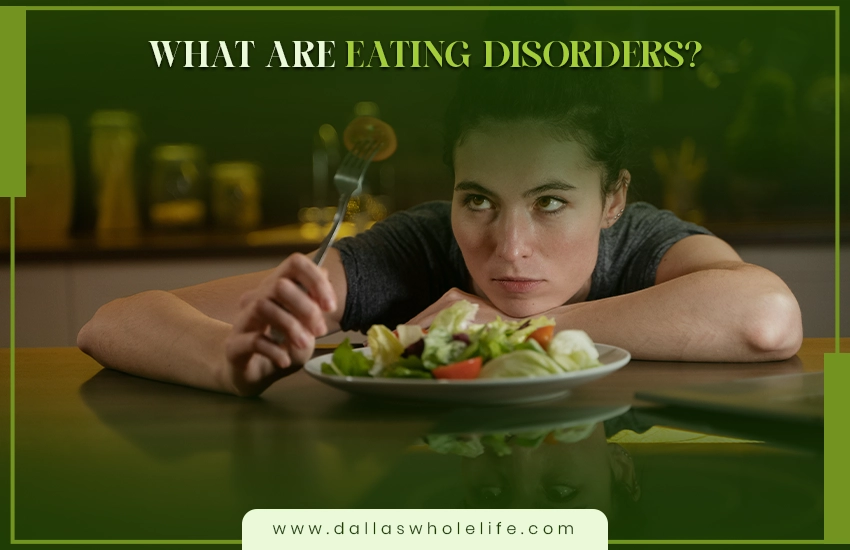
Eating disorders are serious mental and physical health conditions that involve ongoing disturbances in eating behaviors and thoughts about food, body image, weight, shape, or control.
They are not simply diets gone too far. They are not vanity. They are not attention-seeking. And they are not something you can always “just stop”.
The National Institute of Mental Health explains that eating disorders may involve severe disturbances in eating behaviors and intense fixation on food, body weight, or shape.
At Dallas Whole Life Counseling, we describe eating disorders as psychological conditions that go far beyond normal dieting behaviors. They can affect thoughts, emotions, relationships, health, and daily life.
What Are the Different Types of Eating Disorders?
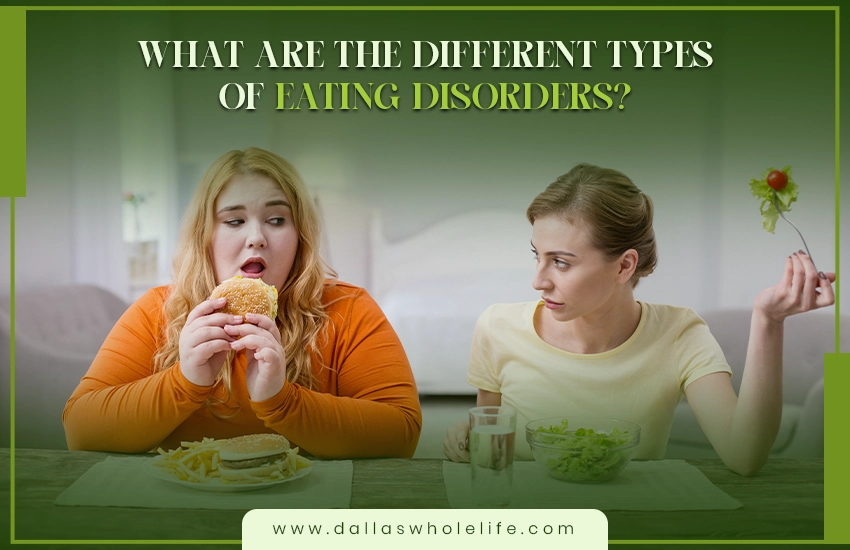
There are several recognized types of eating disorders. Some people fit one diagnosis clearly. Others experience serious symptoms that do not fit neatly into one category.
Either way, your struggle is still valid.
Anorexia Nervosa
Anorexia nervosa often involves significant restriction of food intake, intense fear around weight or body changes, and a distorted or overly harsh view of the body.
It is important to say this clearly: anorexia is not only about wanting to be thin. It can involve fear, control, anxiety, body image distress, perfectionism, emotional pain, and a sense that food or weight is the only thing that feels manageable.
Anorexia can become medically dangerous and may require coordinated care involving therapy, nutrition support, and medical monitoring.
Bulimia Nervosa
Bulimia nervosa usually involves cycles of binge-eating followed by compensatory behaviors. The person may feel out of control during eating episodes, then feel panic, shame, or urgency afterward.
Bulimia can be physically dangerous because compensatory behaviors can affect hydration, digestion, dental health, electrolytes, heart function, and overall well-being.
Therapy can help someone understand the emotional cycle behind the behavior and develop safer ways to cope with distress.
Binge Eating Disorder
Binge-eating disorder involves repeated episodes of eating a large amount of food while feeling a loss of control, usually followed by distress, shame, or guilt.
Unlike bulimia, binge-eating disorder does not involve regular compensatory behaviors.
Binge-eating is not a lack of willpower. It is often connected to emotional distress, restriction, shame, trauma, stress, depression, anxiety, loneliness, or an attempt to soothe something painful.
OSFED
OSFED stands for Other Specified Feeding or Eating Disorders.
This category includes eating disorder symptoms that may not meet the exact criteria for anorexia, bulimia, or binge-eating disorder, but are still serious and deserving of care.
Many people with OSFED are highly distressed and may face real physical and emotional risks. You do not need a “perfect diagnosis” to deserve help.

Are Anorexia and Bulimia the Only Eating Disorders?
No. Anorexia and bulimia are well known, but they are not the only eating disorders.
Eating disorders may also include binge eating disorder, OSFED, avoidant/restrictive food intake disorder, and other serious patterns involving food, fear, avoidance, distress, or body image.
According to the National Eating Disorders Association, eating disorders are serious but treatable mental and physical illnesses that can affect people across genders, ages, races, religions, body sizes, and identities.
That matters because many people delay care when they do not match the stereotype of what they think an eating disorder “should” look like.
What Are the Most Dangerous Eating Disorders?
All eating disorders can be dangerous.
Anorexia nervosa is often highlighted because it is associated with one of the highest mortality rates among psychiatric conditions, but bulimia, binge eating disorder, and OSFED can also carry serious medical and emotional risks.
Rather than asking, “Is mine dangerous enough?” it may be more helpful to ask, “Is this affecting my health, mind, relationships, or daily life?”
If the answer is yes, getting support matters.
Psychological Causes of Eating Disorders
Eating disorders usually do not come from one single cause.
They often develop from a mix of psychological, biological, social, family, cultural, and life stress factors.
Possible contributors include:
- Anxiety
- Depression
- Trauma
- Perfectionism
- Low self-esteem
- Body dissatisfaction
- Bullying
- Family pressure
- Dieting history
- Social comparison
- Emotional avoidance
- Stress
- Loss of control in other areas of life
- Pressure from sports, performance, or appearance-focused environments
- Genetics or biological vulnerability
The American Psychiatric Association notes that eating disorders are complex conditions involving eating behaviors, thoughts, and emotions, and that treatment depends on the specific disorder and person.
In therapy, we look at the whole picture, not just the behavior.
What Causes Binge Eating?
Binge eating often has an emotional cycle.
It may begin with stress, sadness, boredom, loneliness, restriction, shame, or feeling overwhelmed. Food may become a way to numb, soothe, escape, or feel something different for a short time.
After the binge, guilt or shame may appear. That shame can lead to more restriction, secrecy, or self-criticism, which can increase the chance of another binge.
This cycle can feel exhausting.
Therapy can help you understand your triggers, reduce shame, build emotional regulation skills, and create a more stable relationship with food.
Eating Disorders and Body Image
Body image is the way you think and feel about your body.
An eating disorder can make body image feel harsh, unstable, or overwhelming. You may feel okay one moment and deeply distressed the next. You may compare your body constantly or feel like your worth changes based on appearance.
Body image distress can show up as:
- Checking mirrors often
- Avoiding mirrors completely
- Comparing your body to others
- Feeling anxious in certain clothes
- Avoiding photos
- Feeling ashamed after eating
- Believing your body determines your value
- Feeling disconnected from your body
- Thinking your body needs to change before you can live freely
Eating disorder therapy can help you explore where those beliefs came from and how to relate to your body with less fear, punishment, or shame.
Does Social Media Influence Eating Disorders?
Social media does not cause every eating disorder, but it can contribute to body image distress, comparison, and food-related pressure for some people.
Seeing filtered bodies, edited images, “what I eat” content, fitness extremes, body checking, weight-loss messaging, or constant appearance comparison can make it harder to feel neutral or safe in your own body.
The problem is not only the images. It is the repeated message that your body is a project other people are allowed to judge.
If social media leaves you feeling anxious, ashamed, obsessive, or pressured around food or your body, that is worth paying attention to.
Therapy can help you build boundaries around content, comparison, and the beliefs that get triggered by what you see online.
Does Media Promote Unrealistic Body Standards?
Yes, media can promote unrealistic body standards.
Advertising, film, social media, fitness content, and beauty trends can create narrow ideas of what bodies “should” look like. Those standards can be especially harmful when they are presented as health, discipline, or success.
Not everyone exposed to those messages develops an eating disorder. But for someone already vulnerable, repeated pressure can intensify body dissatisfaction and disordered eating.
A healthier relationship with your body often requires unlearning messages that taught you your worth had to be earned through appearance.
Does Obsession With Thinness Lead to Eating Disorders?
An obsession with thinness can increase risk, but eating disorders are more complex than simply wanting to be thin.
For some people, thinness may feel connected to control, safety, approval, success, identity, achievement, or emotional relief. For others, the issue may be binge-eating, shame, anxiety, trauma, or fear around food.
The behavior may be about food or body size on the surface, but underneath it may be about pain, fear, control, worth, safety, or coping.
That is why therapy is important. It helps address what is underneath the behavior, not just the behavior itself.
How Stress and Trauma Contribute to Eating Disorders
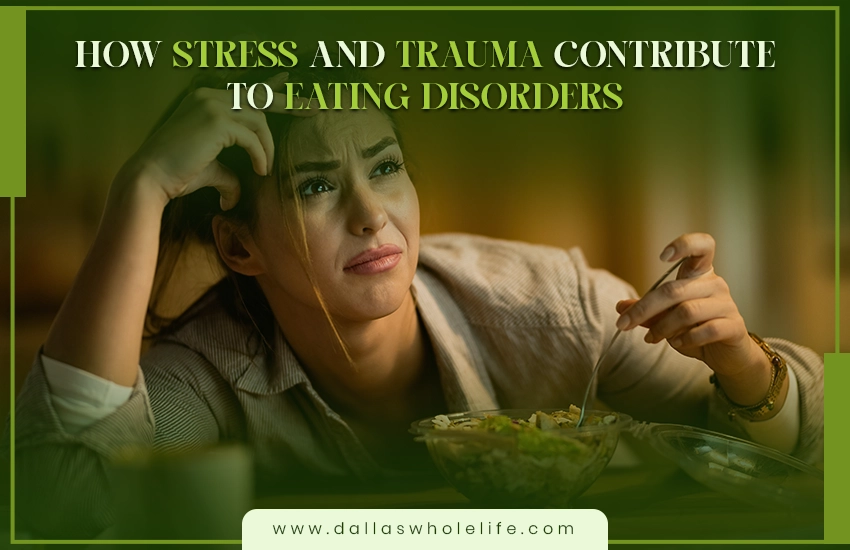
Stress and trauma can affect the nervous system, emotions, body awareness, appetite, control, and coping patterns.
Some people restrict food to feel in control. Some binge to numb or soothe. Some feel disconnected from hunger and fullness cues. Some feel unsafe in their body. Some use food rules to create structure when life feels chaotic.
If trauma is part of the picture, eating disorder treatment may need to include trauma-informed care.
At Dallas Whole Life Counseling, support for trauma and PTSD may be part of care when eating patterns are connected to painful experiences, fear, shame, or emotional survival.
Common Myths About Eating Disorders
Eating disorder myths can stop people from getting help.
Myth: You can tell if someone has an eating disorder by looking at them.
Fact: You cannot always see an eating disorder. People of any body size can be struggling.
Myth: Eating disorders are only about food.
Fact: Food is part of the issue, but eating disorders often involve emotions, anxiety, shame, control, trauma, body image, and self-worth.
Myth: Only teenage girls get eating disorders.
Fact: Eating disorders can affect people of any gender and age.
Myth: Binge eating is just overeating.
Fact: Binge eating disorder involves distress, loss of control, and emotional pain.
Myth: You have to be extremely unwell before getting help.
Fact: Early support matters. You do not need to wait until things become dangerous.
Early Warning Signs Most People Ignore
Early signs can be easy to dismiss.
You may notice:
- Increasing food rules
- Feeling guilty after eating
- Avoiding meals with others
- Hiding eating habits
- Feeling anxious around certain foods
- Frequent body checking
- Skipping meals
- Eating in secret
- Feeling out of control around food
- Exercising from guilt or fear
- Feeling ashamed of hunger
- Thinking about food most of the day
- Avoiding clothes, photos, or mirrors
- Mood changes around eating
- Feeling like your worth depends on your body
If these signs are present, you do not have to wait for them to become worse before reaching out.
Something Feels Off: Do You Need Help?
A lot of people do not know where the line is between dieting, emotional eating, disordered eating, and an eating disorder.
That line can be hard to judge on your own.
A helpful question is:
“Is this affecting my health, mood, relationships, daily life, or sense of peace?”
If yes, support may help.
10 Warning Signs You May Need Eating Disorder Therapy
You may benefit from eating disorder therapy if:
- You feel anxious or guilty after eating.
- You avoid social events because food is involved.
- You feel out of control around food.
- You use strict food rules to feel safe.
- You are preoccupied with body size, weight, or shape.
- You hide eating behaviors from others.
- Your mood depends heavily on what you ate or how your body looks.
- You feel shame after eating.
- You are using food, restriction or body control to cope with emotions.
- Your eating patterns are affecting your health, relationships, work, school, or daily life.
You do not need all ten signs to get help.
How Do Doctors Diagnose Eating Disorders?
Eating disorders are diagnosed through a careful assessment of eating behaviors, thoughts, emotions, medical history, and physical health.
A doctor, therapist, or specialist may ask about:
- Eating patterns
- Food rules
- Binge episodes
- Restriction
- Compensatory behaviors
- Body image concerns
- Weight and health history
- Mood and anxiety
- Trauma history
- Exercise patterns
- Menstrual or hormonal changes when relevant
- Sleep
- Family history
- Physical symptoms
- Safety concerns
Medical providers may also recommend lab work, vital sign checks, or other physical evaluations, depending on symptoms.
A blog cannot diagnose you. But it can help you recognize when it is time to speak with a qualified professional.
Can Anxiety or Depression Lead to Eating Disorders?
Anxiety and depression can increase eating disorder risk for some people.
Anxiety may show up as control, food fears, perfectionism, obsessive thinking, or distress around uncertainty.
Depression may show up as emotional eating, appetite changes, low motivation, hopelessness, body shame, or withdrawal from social eating.
NIMH eating disorder statistics show high lifetime co-occurrence between eating disorders and other mental health conditions, including anxiety and mood disorders.
Dallas Whole Life Counseling offers support for both anxiety counseling and depression counseling when eating concerns overlap with mood, worry, or emotional distress.
Physical and Emotional Symptoms of Eating Disorders
Eating disorders can affect both body and mind.
Possible emotional symptoms include:
- Shame
- Anxiety
- Depression
- Irritability
- Secrecy
- Low self-worth
- Fear around food
- Obsessive thoughts
- Feeling out of control
- Emotional numbness
- Social withdrawal
Possible physical symptoms include:
- Fatigue
- Dizziness
- Feeling cold often
- Stomach problems
- Sleep changes
- Headaches
- Dental concerns
- Heart palpitations
- Digestive discomfort
- Changes in concentration
- Feeling weak or faint
- Changes in menstrual cycle when relevant
If you are fainting, having chest pain, heart symptoms, severe weakness, confused, dehydrated, or have any urgent medical concern, seek medical care immediately.
When Does Disordered Eating Become Serious?
Disordered eating becomes serious when it affects your health, safety, emotions, daily life or ability to function.
It may be serious if:
- You cannot eat normally without fear or guilt
- You feel controlled by food rules
- You binge or restrict regularly
- You hide behaviours
- Your body feels physically unwell
- You avoid important parts of life because of food or body image
- You feel ashamed or trapped
- Loved ones are concerned
- You feel unable to stop on your own
You do not need to prove you are “sick enough”. If you are worried, that is enough reason to ask for help.
Eating Disorders in Teens vs Adults
Eating disorders can affect both teens and adults, but they may show up differently.
Teens may show signs such as:
- Skipping meals
- Sudden food rules
- Mood changes around eating
- Avoiding family meals
- Increased secrecy
- Body comparison
- Drop in school focus
- Social withdrawal
- Irritability
- Fear of certain foods
- Changes in energy or physical health
Adults may show signs such as:
- Chronic dieting
- Secret eating
- Binge episodes
- Shame around body changes
- Stress-related eating patterns
- Avoiding intimacy or social eating
- Food rules disguised as health
- Overworking or overexercising
- Eating struggles linked to trauma, parenting, divorce, burnout, or life transitions
At Dallas Whole Life Counseling, child and teens counseling can support young people when food, body image, anxiety, or self-esteem concerns are affecting life.
When Should Parents Seek Therapy for Their Child?
Parents should consider therapy if they notice ongoing changes in eating, mood, body image, secrecy, weight, energy, school performance, or social behavior.
Seek professional help sooner if your child:
- Avoids meals regularly
- Has intense fear around food or body changes
- Talks harshly about their body
- Becomes secretive around eating
- Shows sudden mood changes
- Seems faint, weak, or physically unwell
- Withdraws from friends or activities
- Exercises in a compulsive or distress-driven way
- Shows signs of bingeing or purging behaviors
- Becomes highly rigid about food
If you are worried, it is better to ask for help early than wait until symptoms become more severe.
What Happens If Eating Disorders Are Left Untreated?
Untreated eating disorders can affect mental health, physical health, relationships, school, work, and long-term wellbeing.
They may contribute to:
- Worsening anxiety or depression
- Medical complications
- Social isolation
- Relationship strain
- Difficulty focusing
- Physical weakness
- Digestive problems
- Heart and electrolyte concerns
- Increased shame and secrecy
- Greater difficulty changing behaviors over time
NIMH describes eating disorders as serious and sometimes fatal illnesses. That does not mean recovery is hopeless. It means early, appropriate support matters.
Exploring Treatment Options: What Actually Works?
Eating disorder treatment works best when it is matched to the person’s symptoms, medical needs, age, support system, and level of risk.
For some people, outpatient therapy is appropriate. Others need more structured care, medical monitoring, dietitian support, or a higher level of treatment.
The right support should never be based only on appearance or weight. It should consider the whole person.
What Is Eating Disorder Treatment?
Eating disorder treatment is a coordinated approach to helping someone recover physically, emotionally, and behaviorally.
According to Mayo Clinic’s overview of eating disorder treatment, treatment may include psychotherapy, medical monitoring, nutrition education, and sometimes medications, depending on the person and symptoms.
Treatment may involve:
- Individual therapy
- Family therapy
- CBT
- DBT skills
- ACT
- Nutrition support
- Medical monitoring
- Medication evaluation when appropriate
- Support for anxiety, depression, or trauma
- Relapse prevention planning
At Dallas Whole Life Counseling, eating disorder support may include psychotherapy, nutrition management coordination, and medication evaluation referral when needed.
How Effective Is Eating Disorder Treatment?
Eating disorder treatment can be effective, especially when support begins early and care is matched to the person’s needs.
Recovery is not always quick or perfectly linear. There may be progress, setbacks, learning, relapse prevention, and deeper emotional work along the way.
The important thing is that eating disorders are treatable. Many people recover or build long-term stability with the right support.
The American Psychiatric Association’s updated guideline on eating disorders includes recommendations for assessment and evidence-based treatments across eating disorder diagnoses.
Therapy for Eating Disorders
Therapy helps you understand the thoughts, emotions, and patterns behind the eating disorder.
It may focus on:
- Food fears
- Body image distress
- Shame
- Anxiety
- Trauma
- Emotional regulation
- Perfectionism
- Family patterns
- Self-esteem
- Coping skills
- Relapse prevention
- Relationship with food and body
Therapy is not about blaming you. It is about helping you understand what the eating disorder has been doing for you and then building healthier ways to cope.
CBT for Eating Disorders
Cognitive-Behavioral Therapy, or CBT, is often used in eating disorder treatment.
CBT can help you notice and change unhelpful thought patterns, beliefs, and behaviors that maintain the eating disorder.
For example:
- “I was bad because I ate that.”
- “My body has to look a certain way for me to be worthy.”
- “If I lose control once, everything is ruined.”
- “I cannot handle this feeling unless I use food behaviors.”
CBT helps you challenge these thoughts and practice safer, more balanced behaviors.
Dallas Whole Life Counseling offers Cognitive-Behavioral Therapy for a range of concerns, including thought patterns that affect mood, anxiety, and behavior.
DBT and ACT for Eating Disorders
DBT skills may help with emotional regulation, distress tolerance, mindfulness, and healthier coping during intense urges.
ACT can help you make room for difficult emotions, separate from painful thoughts, and take actions that align with your values rather than fear or shame.
Support through Acceptance and Commitment Therapy can be helpful when food behaviors are connected to avoidance, anxiety, uncertainty, or feeling stuck.
Nutrition Therapy for Eating Disorders
Nutrition support can be important because eating disorder recovery is not only emotional.
A dietitian or nutrition professional may help you rebuild regular eating patterns, understand your body’s needs, reduce fear around food, and support physical stability.
This should be done carefully and compassionately. Eating disorder nutrition support is not about dieting or weight-loss coaching. It is about nourishment, safety, consistency, and recovery.
For some people, nutrition support and therapy work best together.
Medical Monitoring
Medical care may be necessary when eating disorders affect physical health.
Medical monitoring may include checking:
- Heart rate and blood pressure
- Electrolytes
- Hydration
- Weight changes when clinically relevant
- Dizziness or fainting
- Digestive symptoms
- Bone health
- Hormonal changes
- Dental health
- Medication needs
- Other health complications
Therapy is powerful, but it does not replace medical care when the body is at risk.
If symptoms are physically urgent, seek medical support right away.
Eating Disorder Counseling vs Therapy
The words counseling and therapy are often used in similar ways.
Both can involve working with a licensed professional to understand eating behaviors, emotions, thoughts, and recovery goals.
In practice, the most important question is not the word being used. It is whether the professional understands eating disorders, knows when medical or nutrition support is needed, and provides care that is safe, respectful, and evidence-informed.
What Happens During Your First Eating Disorder Therapy Session?
Your first session is usually about understanding what has been happening and what kind of support you need.
We may ask about:
- Eating patterns
- Food fears or rules
- Bingeing, restriction or compensatory behaviors
- Body image concerns
- Mood and anxiety
- Stress or trauma
- Medical symptoms
- Sleep
- Relationships
- Family concerns
- Current support
- Past treatment
- Safety concerns
- Goals for therapy
You do not have to explain everything perfectly. You can start with something simple:
“I think food is taking over my life.”
“I do not feel okay in my body.”
“I feel out of control around eating.”
“I am scared to tell anyone.”
“I do not know if this is serious enough.”
That is enough.
Can Online Eating Disorder Therapy Be Effective?
Online eating disorder therapy can be helpful for some people, especially when symptoms are appropriate for outpatient care, and the person has privacy, reliable internet, and access to any needed medical or nutrition support.
Online therapy may help if:
- You live outside the Dallas/Fort Worth area
- You want therapy from home
- You need flexible scheduling
- You feel anxious about in-person appointments
- You are more likely to attend consistently online
- You live anywhere in Texas and need statewide access
At Dallas Whole Life Counseling, online virtual therapy is available for clients across Texas through secure virtual sessions.
Online therapy may not be enough if you need intensive medical monitoring, inpatient care, or a higher level of eating disorder treatment. In that case, we can help you think through the next appropriate step.
How Long Does Eating Disorder Treatment Take?
There is no single timeline.
Some people need months of focused support. Others need longer-term care, especially when the eating disorder has been present for years or is connected to trauma, anxiety, depression, or medical complications.
Recovery may involve stages such as:
- Recognizing the problem
- Reducing shame and secrecy
- Building safety and medical stability
- Developing regular eating patterns
- Understanding emotional triggers
- Changing thought patterns
- Rebuilding body trust
- Practicing relapse prevention
- Strengthening support systems
- Creating a life that is not centered around the eating disorder
The timeline is not a test of willpower. Recovery takes what it takes.
Can You Fully Recover From an Eating Disorder?
Yes, many people recover from eating disorders or build long-term stability and freedom from eating disorder behaviors.
Recovery does not always mean you will never have a hard thought again. It may mean those thoughts no longer control your life.
Recovery may look like:
- Eating with less fear
- Reduced shame
- More flexible food choices
- Better emotional coping
- Less body checking
- Healthier relationships
- More self-compassion
- Better physical stability
- More trust in your body
- A life that feels bigger than food and appearance
Recovery is possible, and support can make a real difference.
Relapse Prevention After Eating Disorder Recovery
Relapse prevention is an important part of recovery.
It means understanding what can trigger old patterns and having a plan before things escalate.
Triggers may include:
- Stress
- Grief
- Trauma reminders
- Relationship conflict
- Body changes
- Social comparison
- Diet talk
- Holidays
- Medical changes
- School or work pressure
- Feeling out of control
- Big life transitions
A relapse prevention plan may include therapy check-ins, support people, coping tools, regular meals, reduced exposure to triggering content, medical support when needed, and clear steps for what to do if behaviors return.
Relapse does not mean failure. It means support needs to be strengthened.

Choosing the Right Support
Eating disorder recovery often works best when support is thoughtful and coordinated. You may need one professional or a team, depending on your symptoms and level of risk.
How to Find the Right Eating Disorder Therapist
The right therapist should make you feel respected, not judged.
Look for someone who:
- Understands eating disorders
- Takes symptoms seriously at any body size
- Knows when medical support is needed
- Works with anxiety, depression, trauma, or self-esteem concerns
- Does not focus on shame or blame
- Supports gradual behavior change
- Can involve family when appropriate
- Respects your pace while still helping you move forward
- Can discuss online or in-person care options
At Dallas Whole Life Counseling, you can find a counselor based on concerns, therapist fit, and insurance.
Online vs In-Person Eating Disorder Therapy
Online and in-person therapy can both help, depending on your needs.
Online therapy may fit if you need flexibility, live outside Dallas/Fort Worth, feel more comfortable at home, or want statewide Texas access.
In-person therapy may fit if you need more structure, have privacy concerns at home, feel safer face-to-face, or need local coordination with medical and nutrition providers.
If symptoms are medically serious, a higher level of care may be needed beyond standard outpatient therapy.
Questions to Ask Before Starting Therapy
Before beginning eating disorder therapy, you may want to ask:
- Do you work with eating disorders?
- Do you coordinate with doctors or dietitians when needed?
- What therapy approaches do you use?
- Do you offer online sessions?
- How do you decide whether outpatient care is enough?
- Can family be involved when helpful?
- What happens if symptoms become medically risky?
- Do you accept my insurance?
- What should I expect in the first few sessions?
You deserve care that feels safe, clear, and appropriate for your situation.
Cost, Insurance and Accessibility
Dallas Whole Life Counseling accepts many major Texas insurance plans. Costs depend on your benefits, therapist, network status, and session type.
For clients without insurance, reduced rates may be available based on need and financial situation.
You can review therapy rates and insurance options before getting started.
The Role of Dietitians, Doctors, and Therapists
Eating disorder recovery may involve several types of professionals.
A therapist helps with thoughts, emotions, behaviors, trauma, anxiety, depression, self-esteem, and coping patterns.
A dietitian may help with nutrition rehabilitation, meal support, and food flexibility.
A medical provider monitors physical health and safety.
A psychiatrist or prescribing provider may help with medication evaluation when needed.
This team approach can be important because eating disorders affect both mental and physical health.
Ready to Get Help: Where to Start
If you are worried you may have an eating disorder, the first step does not have to be dramatic.
You can begin by telling one safe person.
You can contact a therapist.
You can book a medical check-up.
You can write down what has been happening.
You can stop waiting until you feel “sick enough”.
At Dallas Whole Life Counseling, getting started takes just a few minutes. Same-day and next-day appointment requests may be available depending on therapist availability, insurance, and fit.
How Professional Support Speeds Up Recovery
Professional support helps because eating disorders often thrive in secrecy.
Therapy gives you a place to say the things you have been hiding. It helps you understand the cycle, reduce shame, build skills, and make changes with support instead of trying to fight it alone.
Professional support can also help you catch medical or emotional risk earlier.
Eating disorders are serious, but they are treatable. You do not have to wait until recovery feels easy to begin.
How Family Support Improves Recovery
Family support can make a meaningful difference, especially for teens and young adults.
Family members can help by:
- Staying calm and compassionate
- Avoiding comments about weight, body size, or appearance
- Not turning meals into arguments
- Encouraging professional support
- Learning about eating disorders
- Supporting consistency
- Avoiding blame
- Listening without trying to fix everything
- Getting their own guidance if needed
Family involvement should be handled carefully, especially if family dynamics are part of the stress. When appropriate, family counseling can help loved ones understand how to support recovery without increasing pressure.
What to Do If Someone You Love Has an Eating Disorder
If you are worried about someone, approach them gently.
You might say:
“I care about you, and I have noticed you seem really stressed around food lately.”
“I am not here to judge you. I just want to understand what is happening.”
“You do not have to handle this alone.”
“Would you be open to talking with someone who can help?”
Try to avoid:
- Commenting on their weight
- Accusing them
- Threatening or shaming them
- Making it about appearance
- Saying, “Just eat normally”
- Trying to become their therapist
- Watching every bite in a way that feels controlling
If they are medically unsafe, seek urgent medical help.
Creating a Long-Term Recovery Plan
A long-term recovery plan may include:
- Regular therapy
- Medical monitoring when needed
- Nutrition support
- Emotional coping skills
- Relapse prevention
- Support from trusted people
- Reduced exposure to triggering content
- Healthy routines
- Body image work
- Treatment for anxiety, depression, or trauma
- Family or relationship support when needed
Recovery is not only about stopping behaviors. It is about building a life where the eating disorder is no longer the main way you cope.
You Do Not Have to Wait Until It Gets Worse
If food, body image, or eating patterns are taking over your life, you deserve support now.
Not when things are “bad enough”.
Not when someone else finally notices.
Not when you have the perfect words.
Now.
At Dallas Whole Life Counseling, we offer eating disorder therapy in the Dallas/Fort Worth area and statewide telehealth visits for clients across Texas. We can help you understand what is happening, explore treatment options, and take the next step towards recovery with compassion and care.
If you are worried about yourself or someone you love, reaching out is a strong first step.
FAQs
What are the different types of eating disorders?
Common eating disorders include anorexia nervosa, bulimia nervosa, binge eating disorder, and OSFED. Other feeding and eating concerns can also be serious and deserve support.
Are anorexia and bulimia the only eating disorders?
No. Binge eating disorder, OSFED, and other feeding or eating disorders can also affect mental and physical health.
What are early signs of an eating disorder?
Early signs may include food rules, guilt after eating, secrecy, body checking, avoiding meals, binge eating, fear around food, shame, and feeling controlled by thoughts about weight or body image.
How do doctors know if you have an eating disorder?
Doctors and mental health professionals assess eating behaviors, thoughts, emotions, medical history, body image concerns, physical symptoms, and safety risks. Medical tests may also be used when needed.
Can you fully recover from an eating disorder?
Yes, many people recover or build long-term stability with the right support. Recovery may take time and can involve therapy, nutrition support, medical care, and relapse prevention.
How effective is eating disorder treatment?
Treatment can be effective, especially when started early and matched to the person’s symptoms, medical needs and support system.
Does social media contribute to eating disorders?
Social media can contribute to body comparison, body dissatisfaction, and food-related pressure for some people, especially when content promotes unrealistic appearance standards.
Can obsession with thinness cause eating disorders?
It can increase risk, but eating disorders are complex. They may involve anxiety, trauma, shame, control, genetics, social pressure and emotional coping patterns.
What are the psychological causes of binge eating?
Binge eating may be connected to stress, trauma, shame, restriction, loneliness, depression, anxiety, emotional avoidance or difficulty regulating feelings.
What happens during eating disorder therapy?
Therapy may focus on food fears, body image, emotional triggers, thought patterns, coping skills, trauma, self-esteem, behavior change, and relapse prevention.
Can online therapy help with eating disorders?
Online therapy can help some people, especially when outpatient care is appropriate and there is access to any needed medical or nutrition support.
How long does eating disorder treatment take?
The timeline varies. Some people need months of support, while others need longer-term care depending on symptoms, medical needs, history and recovery goals.
When should someone seek help for an eating disorder?
Seek help when eating patterns, food thoughts, body image, shame, bingeing, restriction or compensatory behaviors affect your health, emotions, relationships or daily life.
Can eating disorders affect physical health?
Yes. Eating disorders can affect the heart, digestion, hormones, sleep, energy, dental health, concentration, bone health and overall physical wellbeing.
Can anxiety or depression lead to eating disorders?
Anxiety and depression can contribute to eating disorder symptoms for some people, and eating disorders can also worsen mood and anxiety over time.
When should parents seek therapy for a child or teen?
Parents should seek help if their child has ongoing food fears, secrecy, body distress, meal avoidance, bingeing, purging behaviors, major mood changes, physical symptoms, or distress around eating.
Does Dallas Whole Life Counseling offer online eating disorder therapy in Texas?
Yes. We offer in-person therapy in the Dallas/Fort Worth area and statewide telehealth visits for clients across Texas.
Does Dallas Whole Life Counseling accept insurance for eating disorder therapy?
We accept many major Texas insurance plans. Costs depend on your benefits, therapist fit, and network status. Reduced rates may be available for uninsured clients based on need.

