

To fix sleep problems caused by stress, you should implement relaxation techniques like deep breathing and consistent evening routines to lower your physical arousal. Address the psychological sources of your worry by speaking with a therapist who can help you process the underlying triggers. You must create an environment that signals safety to your nervous system.
Resting well requires a mind that feels secure. When you can’t shut off your brain, your body remains stuck in an active state. Professional counseling for stress management provides a path toward regaining control over your nighttime thoughts. According to the Mayo Clinic, high cortisol levels directly interfere with the production of melatonin.
Why Stress and Sleep Are Closely Connected
Your brain contains an ancient survival mechanism that prioritizes safety over rest whenever it perceives a threat. This “fight or flight” response floods your system with adrenaline. Relaxation vanishes quickly. Sleep feels impossible.
Stress-related insomnia stands as one of the most frequent reasons people seek mental health support. Frequent worry creates a loop where you feel too tired to function but too wired to rest. Research shows that even minor daily hassles can disrupt the quality of your REM cycles.
6 Signs That Stress is Disrupting Your Healthy Sleep Patterns
Identifying the specific ways your body reacts to pressure is the first step toward reclaiming your night. Your body sends signals if you are more stressed than you realize. Listen to them.
- Racing thoughts and an overactive mind.
- Physical tension, such as muscle tightness with a rapid heartbeat.
- Hormonal imbalance involving cortisol spikes at night.
- Trouble falling asleep or staying asleep.
- Waking up tired despite hours in bed.
- Increased irritability and difficulty concentrating.
Short-Term Coping Techniques for Better Sleep
- Deep breathing and progressive relaxation.
- Creating a calming nighttime routine.
- Limiting caffeine plus alcohol while avoiding late-night screen use.
Long-Term Stress Management Strategies for Restful Sleep
- Regular exercise and physical activity.
- Mindfulness plus meditation alongside daily journaling.
- Setting boundaries at work and in relationships.
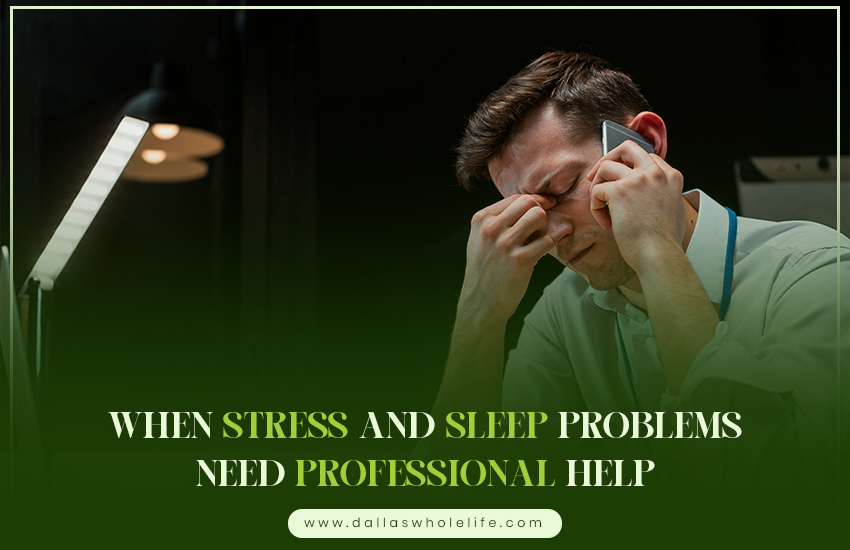
When Stress and Sleep Problems Need Professional Help
Chronic insomnia is a serious condition. If you lie awake for three nights a week for over a month, your body is struggling to regulate itself. Therapy helps you identify the root causes of your mental fatigue.
Dallas Whole Life approaches these issues by looking at your lifestyle and your internal thought patterns. We help. You heal. Our specialists combine anxiety therapy with practical behavioral changes to ensure you wake up feeling capable.
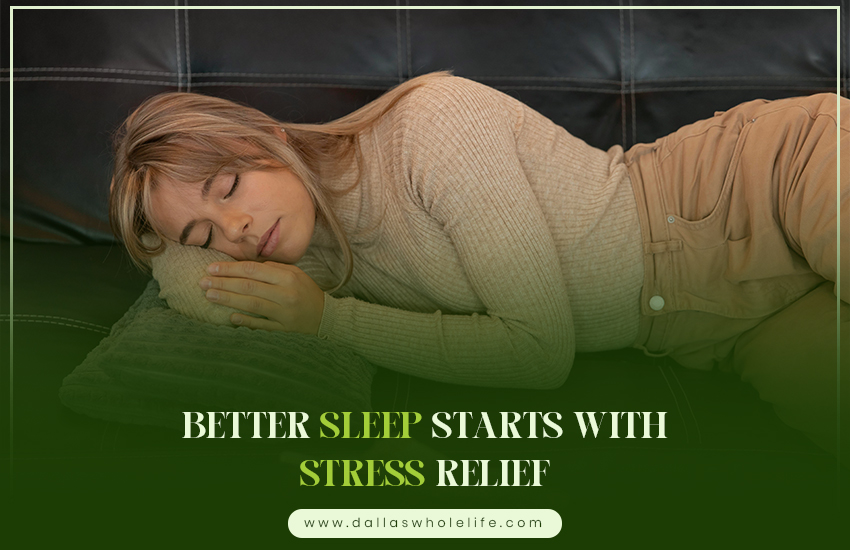
Better Sleep Starts With Stress Relief
Prioritizing your mental health is the most effective way to ensure your body gets the restorative downtime it needs to function. You deserve peace. Start today. Reach out to Dallas Whole Life through our website to find a counselor who can guide you back to a state of balance. We offer the support you need to quiet your mind and finally get the rest your body craves.
Frequently Asked Questions (FAQs)
Q1: What to do if you can’t sleep due to stress?
Get out of bed and perform a low-stimulation activity like reading in dim light until you feel drowsy. Avoid checking the clock. This prevents your brain from associating your bed with the frustration of being awake.
Q2: What is the connection between sleep and stress?
Stress triggers the release of cortisol and norepinephrine, which keep the brain in a state of hyperarousal. This hormonal surge blocks the transition into deep sleep. Poor sleep then increases your sensitivity to stress the following day.
Q3: Is broken sleep better than no sleep?
Yes. Because even fragmented sleep allows the brain to complete some essential metabolic cleaning and memory consolidation tasks. However, chronically broken sleep prevents you from spending enough time in the deep and REM stages. You will still feel exhausted.
Q4: How does sleep help relieve stress?
Sleep allows the brain to process emotional experiences and reduces the activity of the amygdala. During rest, your body also lowers production of stress hormones. You wake up with a more regulated nervous system.

