

Stress is generally a response to an external trigger. It subsides once the situation is resolved. However, anxiety is more persistent and often irrational, which can feel uncontrollable. When it interferes with your daily life, it may be a sign of a more serious condition.
If your anxiety is like that, it is recommended that you consult with a mental healthcare provider like Dallas Whole Life Counseling right away.
Here are 10 signs your anxiety might be more than everyday stress:
1. Constant Worry That Feels Difficult Or Impossible To Shut Off
Worrying is a normal part of life. But this constant tension feels different. Like a background noise you can’t turn off. You might find yourself stuck in a loop of what-ifs that never ends. It is exhausting to be on high alert for things that haven’t even happened yet.
- Thoughts repeat themselves in an endless cycle.
- Your brain refuses to find a resting point during quiet hours.
- Small decisions feel like life-or-death scenarios.
2. Anxiety That Interferes With Sleep Or Causes Frequent Insomnia
Bedtime should be a relief, but stress starts affecting it. It becomes a theater for your deepest fears. You lie there. Eyes wide open. Your brain rehearses every mistake or future catastrophe. Even when you finally drift off, the rest doesn’t feel real. You wake up feeling like you fought a battle in your sleep.
- Falling asleep takes hours of mental agitation.
- You wake up in the middle of the night with a jolt of fear.
- Restless legs or tossing and turning prevent deep sleep.
3. Physical Symptoms Like Chest Tightness, Headaches, Or Stomach Issues
Anxiety affects you both mentally and physically. Sometimes your chest feels tight. Sometimes your stomach does flips before a simple meeting. Your body is stuck in survival mode. It is trying to protect you from a threat. One that is not actually there.
- Shallow breathing makes it feel like you can’t get enough air.
- Unexplained aches settle in your neck and shoulders.
- Digestive issues arise without any specific dietary cause.
4. Feeling On Edge, Restless, Or Tense Most Of The Day
You feel jumpy. A loud noise or a sudden question makes you want to crawl out of your skin. It’s like your internal idling speed is set way too high. You can’t sit still. You can’t truly relax. You are always waiting for the other shoe to drop.
- Fidgeting with your hands or feet becomes a constant habit.
- Sudden movements from others make you jump uncontrollably.
- Sitting still for a movie or a meal feels frustrating.
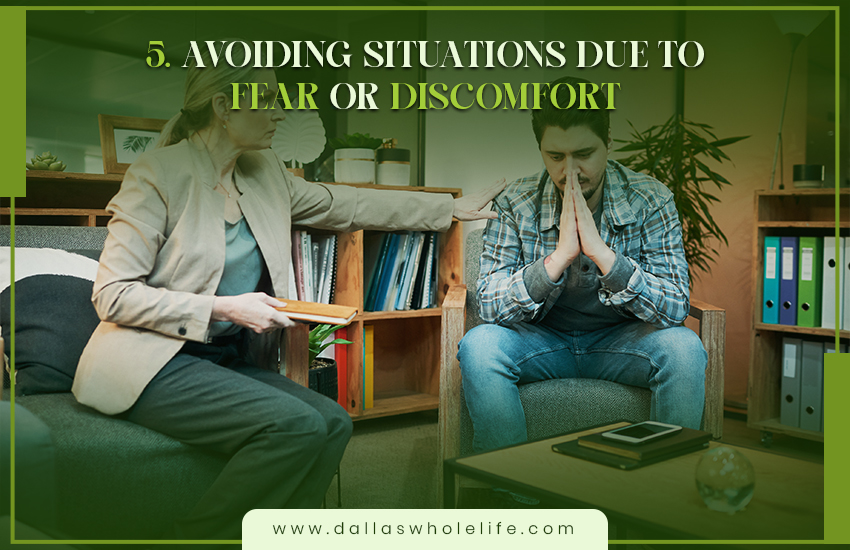
5. Avoiding Situations Due To Fear Or Discomfort
The world starts to feel smaller. You say “no” to things you used to enjoy. Because the thought of going feels like too much. Avoidance feels like safety in the moment. But over time, it just makes the fear grow bigger. It locks you into a very narrow comfort zone.
- Canceling plans at the last minute feels like your only option.
- Social settings cause an intense desire to find the nearest exit.
- You stay home because the “outside” feels too unpredictable.

6. Difficulty Concentrating Or Racing Thoughts
Focusing on a task feels like trying to read in a hurricane. Your thoughts are moving too fast to pin down. You might find yourself staring at a screen for an hour. That too, without doing a single thing. Your brain is too busy scanning for danger to focus on your work.
- Conversations drift away because your mind is elsewhere.
- Work tasks take twice as long as they used to.
- Simple chores feel overwhelming due to a lack of mental clarity.
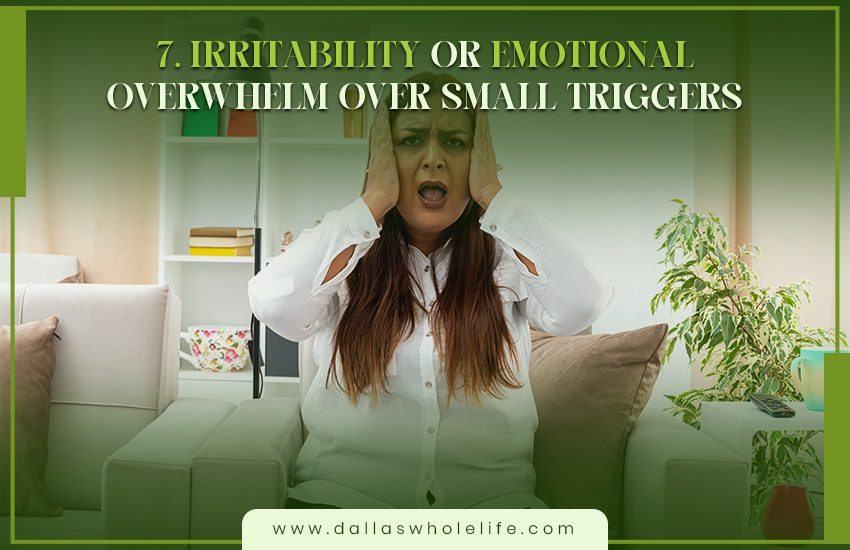
7. Irritability Or Emotional Overwhelm Over Small Triggers
Your patience is gone. Small things that used to be minor annoyances now feel like major insults. You might snap at people you love. Because you are simply overwhelmed. It’s not that you’re a mean person. It’s that your emotional cup is already full. So, one more drop makes it overflow.
- Snapping at coworkers or family members happens frequently.
- Small mistakes lead to an explosion of frustration.
- Crying spells occur without a clear or obvious reason.
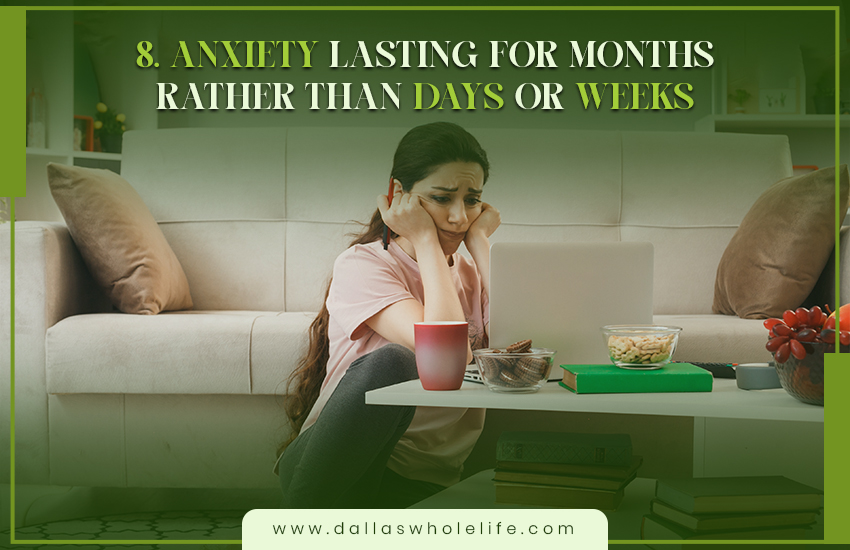
8. Anxiety Lasting For Months Rather Than Days Or Weeks
This isn’t just a bad week. It has been going on for months. You might not even remember the last time you felt truly calm. When anxiety becomes your normal, it changes how you see the world. It’s a chronic weight that you’ve just gotten used to carrying.
- The heavy feeling in your chest persists for over half a year.
- Good news only provides a few minutes of relief.
- Worry remains your default setting every single morning.
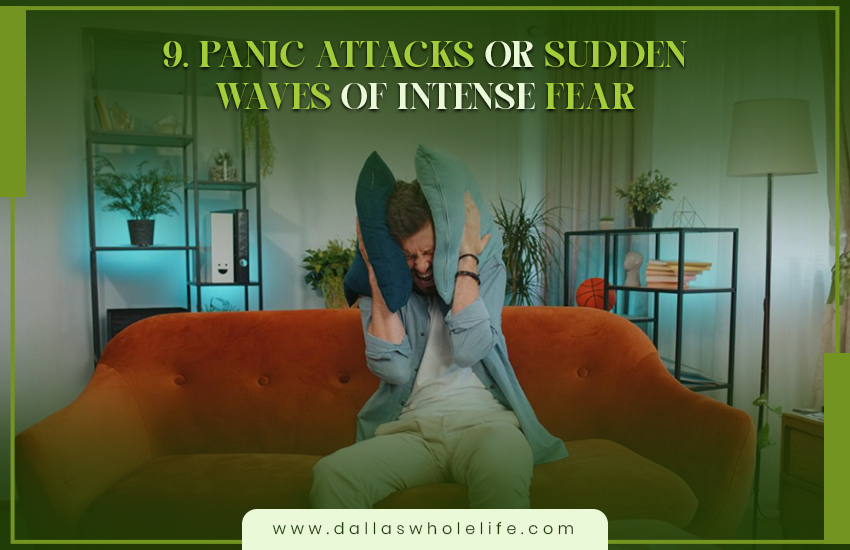
9. Panic Attacks Or Sudden Waves Of Intense Fear
These are sudden and terrifying. One minute you’re fine. Next, you feel like you’re dying. Your heart hammers. Your hands shake. You need to get out. It is an overwhelming surge of fear that leaves you feeling fragile for days afterward.
- Your heart beats so hard it feels painful.
- Sweating or shaking occurs even in a comfortable environment.
- A terrifying feeling of losing control washes over you.

10. Feeling Exhausted From “Managing” Anxiety All The Time
Managing your anxiety is a full-time job. It’s unpaid. It’s grueling. You spend all your energy just trying to look normal to everyone else. By the end of the day, you have nothing left for yourself. You are simply tired of being tired.
- Chronic tiredness persists regardless of how much you sleep.
- Motivation for hobbies or exercise completely vanishes.
- Every day, social interactions feel like a heavy burden.
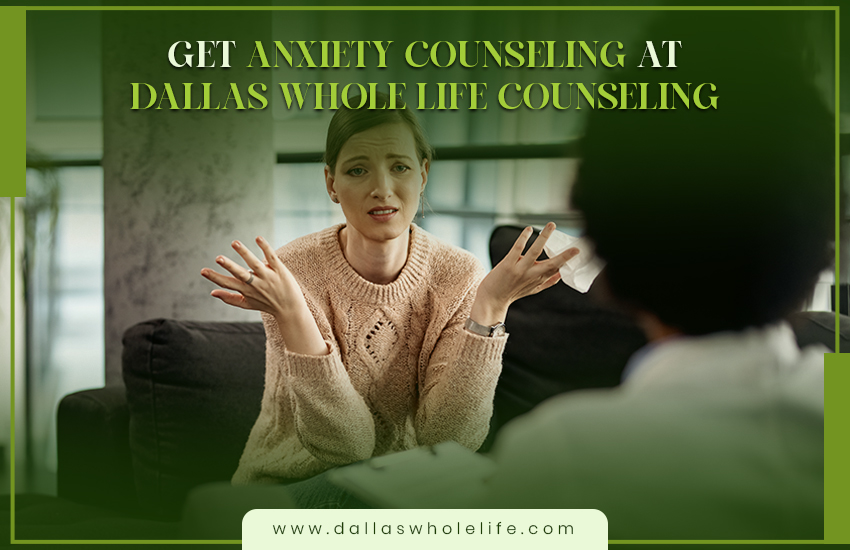
Get Anxiety Counseling at Dallas Whole Life Counseling
Seeking help is a sign of strength. Our therapists provide a safe space to unpack the heavy bags you carry. You can learn to quiet the noise. Peace is a skill that we can help you build together. Make an appointment today to:
- Find relief from chronic worry.
- Get tools for immediate calm.
- Reclaim your sleep and your energy.
We offer specialized support for your specific needs. Visit our page on anxiety to see how we work. Your healing starts with one conversation.
Frequently Asked Questions (FAQs)
Q1. What does chronic anxiety feel like?
It often feels like constant tension that never fully turns off. Many people describe it as persistent worry, physical tightness, restless thoughts, or a sense of unease that lasts for months.
Q2. Does anxiety affect daily life and relationships?
Yes. Anxiety creates a barrier between you and the people you care about. This is due to irritability and social withdrawal. You might find yourself avoiding shared activities. You snap at loved ones because your internal stress levels are maxed out. Over time, this can lead to isolation and a decreased quality of life.
Q3. Can anxiety have an impact on the body and mind, both?
Absolutely. Anxiety triggers physical responses like digestive issues and chronic pain. Mentally, it leads to racing thoughts and emotional instability. The two reinforce each other, as physical discomfort often increases mental distress.
Q4. How to check if I have anxiety?
By monitoring if your worry persists for over six months and interferes with your ability to function normally. Look for physical signs like tension. Track your sleep patterns. Consult a professional at Dallas Whole Life for an accurate assessment.
