

Taking a depression self-evaluation is a brave step. It helps you understand your mental landscape. However, a score is just a number until it’s interpreted with nuance and care.
This guide will help you move past the score and understand what the results actually signify for your well-being.
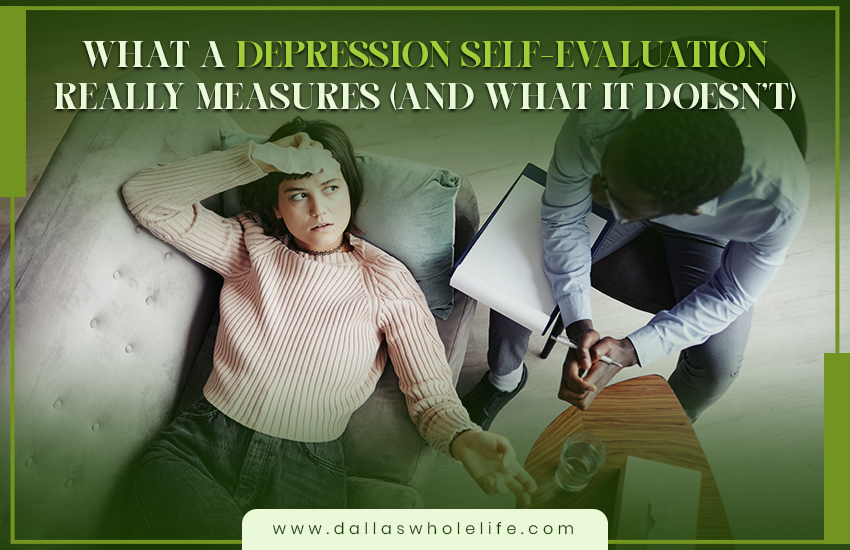
What a Depression Self-Evaluation Really Measures (and What It Doesn’t)
A depression self-evaluation assesses the frequency and intensity of emotional, cognitive, and physical symptoms such as low mood, fatigue, sleep disruption, and loss of interest. These tools are screening instruments, not clinical diagnoses. They identify patterns in your mental health over a specific period. But lack the professional nuance required to determine the medical condition.
Do not view your results as a permanent label. See them as a snapshot of your current state that can change over time. Your interpretation must remain thoughtful rather than fear-driven. A high score is not a reason for panic. It is a constructive signal that you may need additional support.
Why Your Results Should Be Viewed in Context, Not Isolation
Your test results depend heavily on what is happening in your life right now. If you just went through a breakup or are dealing with a huge life change, your score will naturally be higher. This doesn’t always mean you have clinical depression. It means you are having a very normal human reaction to a very difficult situation. We call this “context,” and it changes everything about how to treat your symptoms.
Physical health also plays a massive role in how you feel emotionally. If you haven’t slept well in a week or burnt out at work, you might feel sad and mentally exhausted. This can look exactly like depression on paper. So, patterns over time matter more than a single result. A single high score is a signal to pay attention. A consistent pattern of high scores over several months is a signal to take action.
Signs Your Results May Indicate a Need for Professional Support
Self-evaluations are most useful when they act as a bridge to professional care. If your results align with the following “Red Flags,” it’s time to consult a therapist or doctor:
- Symptoms persist for more than two weeks
- Difficulty functioning at work, school, or in relationships
- Loss of interest in previously meaningful activities
- Emotional numbness, hopelessness, or constant fatigue
- Thoughts of withdrawal, isolation, or disconnection
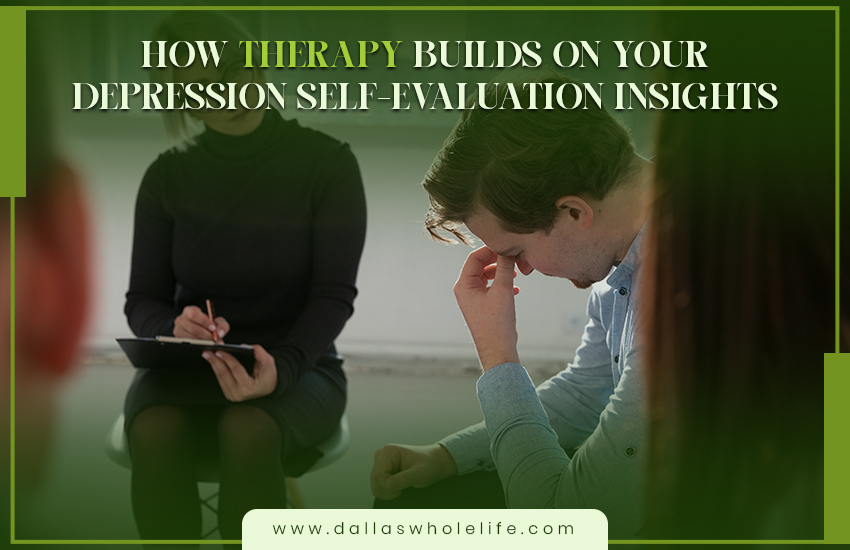
How Therapy Builds on Your Depression Self-Evaluation Insights
An assessment only identifies symptoms. The real work of healing begins in therapy. Therapists use your results to explore deeper emotional patterns and triggers that a questionnaire simply can’t capture. Moving beyond your symptoms, it addresses both immediate symptom relief and the long-term root causes of your distress.
They use structured approaches like CBT to help reframe your negative thinking. This ongoing support provides accountability. It ensures you aren’t just managing symptoms alone, but actually making steady, measurable progress
Take the Depression Self-Evaluation Test Today & Start Your Recovery Journey!
Taking a depression self-evaluation is a meaningful step you can take to understand your emotional health. But you should not view the results as a definitive diagnosis. They can offer valuable insight into how you have been feeling or whether additional support for depression may be helpful.
If your results raise concerns, remember that:
“Support is available, and recovery is possible.”
Seeking help is not a sign that you are weak. It shows that you are self-aware and want to take care of yourself.
Your emotional well-being deserves attention and support. So, contact us today to open the door to healing and long-term resilience.
Frequently Asked Questions
What is a good score on the depression test?
A healthy score on the commonly used PHQ-9 depression test is 0–4. It indicates minimal or no depression. Scores between 5 and 9 are considered mild. A score of 10 or higher is generally the cutoff for moderate or severe depression, which needs further evaluation by a professional.
How is the self-rating depression scale scored?
The Zung Self-Rating Depression Scale (SDS) is scored by summing responses to 20 items. 10 positively worded and 10 negatively worded, rated on a 1–4 scale (rarely to most of the time). Raw scores (20–80) are often converted into an “SDS Index” (multiplied by 1.25) to rank severity: normal (<50), mild (50–59), moderate (60–69), and severe (>70).
How often is depression misdiagnosed?
Depression is frequently misdiagnosed, with studies indicating that 26% to over 50% of patients diagnosed with depression may not actually meet the clinical criteria.
What can be mistaken for depression?
Several medical conditions and hormonal imbalances, as well as mental health issues, can mimic depression, including hypothyroidism, Vitamin D deficiency, anemia, PTSD, ADHD, and bipolar disorder.

