

Living with a constant hum of worry? Even small tasks feel overwhelming. When daily life is interrupted, seeking support becomes essential. You might wonder if a computer screen can offer the same support as a traditional therapist’s office. It is a common concern. People worry that the lack of physical presence makes the conversation hollow or disconnected.
However, research into digital mental health care shows a different story. Many individuals find that being in their own home makes it easier to open up about difficult feelings.
Anxiety thrives when you feel trapped or swamped by your surroundings. Choosing a digital option removes the pressure of commuting or sitting in a public waiting room. Virtual therapy allows you to focus entirely on your mental health without the added stress of logistics.
Does Virtual Anxiety Therapy Actually Work?
Evidence shows that online sessions are remarkably successful for treating various anxiety disorders. Clinical studies, like those shared by the American Psychological Association, suggest that teletherapy offers results that mirror traditional face-to-face sessions. Success is usually tied to how often you engage with your therapist and your willingness to apply new tools.
If you remain consistent, the digital gap closes quickly and leaves room for genuine progress. You might be surprised by how fast a deep connection develops over video. A skilled counselor knows how to read body language and tone even through a lens. This shared space becomes a safe environment where real change happens every week.
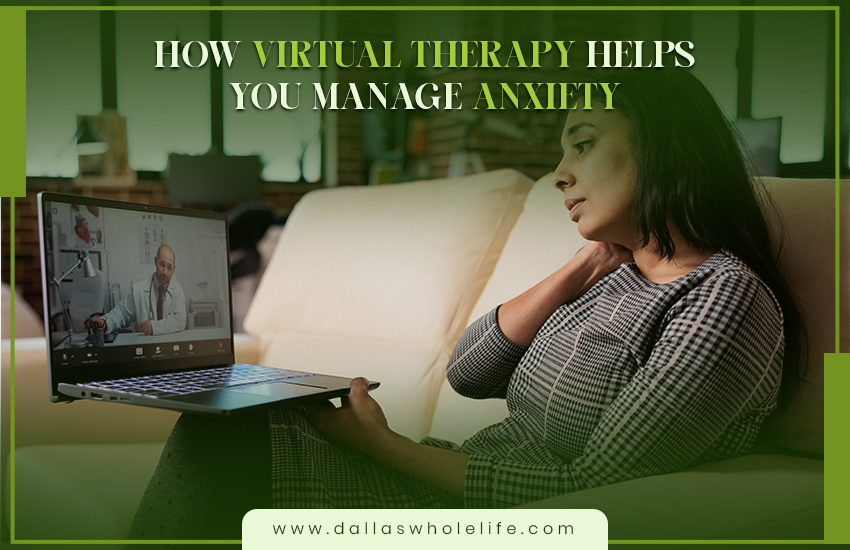
How Virtual Therapy Helps You Manage Anxiety
Managing your symptoms requires a mix of self-reflection and practical action. Your therapist provides a structured way to look at your fears without feeling consumed by them.
- Identifying anxiety triggers and thought patterns: You will learn to recognize the specific events or internal monologues that cause your stress to spike.
- Learning coping techniques like breathing and grounding: These physical tools give you immediate control over your nervous system’s response to stress.
- Cognitive-behavioral strategies to reduce overthinking: You will practice replacing circular, negative thoughts with more balanced and realistic perspectives.
5 Benefits of Online Anxiety Therapy
- Comfort of being in a familiar environment
- Reduced stress from commuting or waiting rooms
- Flexible scheduling for busy lifestyles
- Easier access to consistent support
- Greater sense of privacy and control
Who Is a Good Fit for Virtual Anxiety Therapy?
Most people find that digital sessions fit easily into a modern lifestyle. It is particularly helpful if you have a job that keeps you on the move or if you live in an area with few local specialists. If you feel more secure in your own living room than in a clinic, this approach is likely a great match for your needs.
- Individuals with mild to moderate anxiety
- People with busy or unpredictable schedules
- Those who prefer comfort and privacy
- Individuals experiencing social anxiety
- Anyone seeking flexible access to therapy
Start Online Anxiety Therapy at DWLC Today!
You deserve to feel balanced and in control of your daily life. Our team at Dallas Whole Life is ready to support you with practical strategies that actually fit your routine. We make it simple to connect with a professional who truly listens.
Finding the right therapist shouldn’t be an extra source of stress. We focus on creating an environment where you feel supported from the very first minute. There is no need to wait for a crisis to ask for help when online therapy for anxiety is just a few clicks away.
Reach out to us today to see how we can help you find more peace. We are committed to providing care that is both effective and deeply human. Your mental health is worth the investment, and we are here to help you every step of the way.
Frequently Asked Questions
Can anxiety be fixed without medication?
Yes. Anxiety is often managed or significantly reduced without medication through lifestyle changes and therapies.
Can virtual reality help with anxiety?
Yes. VR is an effective, evidence-based tool that can treat anxiety disorders, particularly through Virtual Reality Exposure Therapy (VRET). It works by allowing patients to safely confront feared situations, such as heights or flying, in a controlled, immersive environment.
When is therapy not helpful?
When there is a poor fit with the therapist, misdiagnosis, or the wrong treatment approach. Key indicators include a lack of progress over several months, feeling judged or unsafe, the therapist not challenging your thinking, and failure to set clear goals. It may also fail if the client avoids difficult issues or if the root causes are medical.
What kind of therapy is most effective for anxiety?
Cognitive Behavioral Therapy (CBT) is considered the most effective, first-line psychotherapy for anxiety.
