

Infidelity therapy is professional counseling that helps individuals and couples deal with the emotional pain after an affair, including anger, shock, guilt, shame, anxiety, depression, grief, and broken trust. It can be done through individual therapy, couples therapy, or both, depending on what each person needs and whether the relationship feels safe enough to work on together. At Dallas Whole Life Counseling, we offer confidential infidelity therapy in the Dallas/Fort Worth area and online infidelity counseling anywhere in Texas through secure virtual sessions.
After infidelity, life can feel split in two. Before you knew. After you knew.
Even if you suspected something, the moment the truth comes out can still feel shocking. You may feel like the relationship you thought you had has been pulled out from under you.
You might be angry one hour and numb the next. You might want answers, then feel sick hearing them. You might want to leave, then panic at the thought of losing the relationship. You might look at your partner and wonder, “Who are you?” You might look at yourself and wonder, “How did I miss this?”
If you were the person who cheated, you may feel guilt, shame, defensiveness, fear, confusion, or deep regret. You may want to repair things but not know how to face the damage honestly.
Infidelity therapy gives both people a place to slow the chaos down. Not to excuse what happened. Not to force forgiveness. Not to pressure anyone to stay. The goal is to help you understand what happened, deal with the pain, and decide what healing needs to look like from here.
What Is Infidelity Therapy?
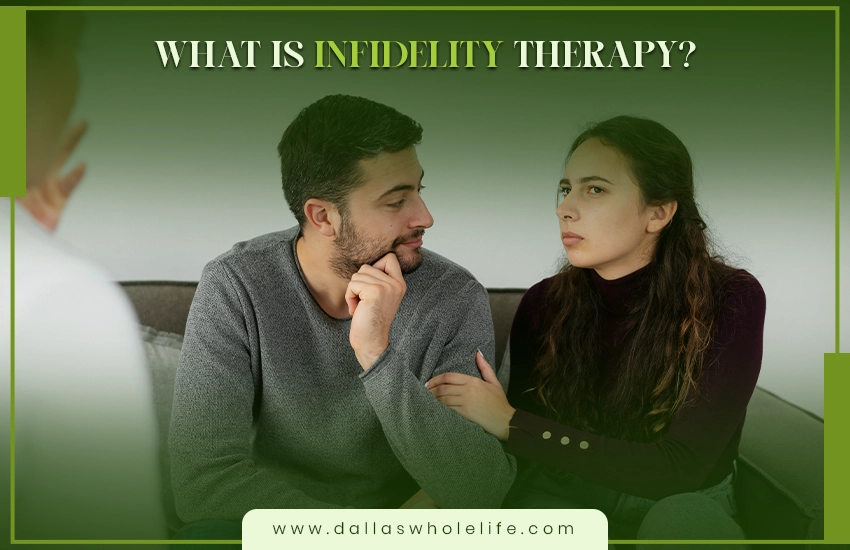
Infidelity therapy is counseling for people dealing with cheating, affairs, betrayal, secrecy, broken trust, or the emotional aftermath of infidelity.
At Dallas Whole Life Counseling, infidelity therapy may involve individual therapy, couples therapy, or a combination of both. Sometimes each partner needs their own space to process the pain. Sometimes the couple also needs a structured space to talk through what happened and what needs to change.
There is no single correct path after an affair. The right path depends on safety, honesty, accountability, emotional readiness, and what each person wants.
Types of Infidelity: Emotional, Physical, and Online Affairs
Infidelity is not always one clear thing.
Different couples define betrayal differently. For one couple, secrecy around texting may feel like a major violation. For another, the line may be sexual contact. For others, emotional intimacy, dating apps, pornography, paid sexual content, hidden accounts, or ongoing flirtation may be part of the hurt.
Common types of infidelity include:
Physical Infidelity
This usually involves sexual contact outside the agreed boundaries of the relationship.
Emotional Infidelity
This happens when emotional intimacy, secrecy, or romantic energy is invested in someone outside the relationship in a way that violates trust.
Online Infidelity
This may include secret messaging, dating apps, sexting, video calls, explicit content, or ongoing online relationships.
Repeated Infidelity
This involves more than one affair or a pattern of secretive behavior over time.
Financial or Sexual Secrecy Connected to Infidelity
Sometimes the betrayal includes hidden spending, paid content, secret accounts, or sexual behavior that was concealed from the partner.
The details matter, but the deeper injury is often the same: trust has been broken, and the betrayed partner no longer knows what was real.
Emotional Affair vs Physical Affair: Which Hurts More?
There is no universal answer.
Some people feel most devastated by sexual betrayal. Others feel more wounded by emotional intimacy, secrecy, private jokes, hidden conversations, or the feeling that their partner gave someone else the closeness that belonged in the relationship.
An emotional affair may feel painful because it can involve:
- Secrecy
- Deep personal sharing
- Romantic tension
- Emotional dependency
- Comparison with the partner
- Lying or minimising
- Turning away from the relationship
A physical affair may feel painful because it can involve:
- Sexual betrayal
- Health concerns
- Shock
- Images that are hard to stop replaying
- A sense of being replaced
- Loss of physical safety or intimacy
Many affairs include both emotional and physical elements.
In therapy, we do not rank the pain. If it hurt you, it matters.
Why Do People Cheat in Relationships?
There is never a simple excuse for cheating, but there are often patterns behind it.
People may cheat because of:
- Poor boundaries
- Avoidance of conflict
- Emotional disconnection
- Desire for validation
- Loneliness
- Impulsivity
- Resentment
- Unresolved personal issues
- Low self-esteem
- Sexual dissatisfaction
- Opportunity and secrecy
- Addiction or compulsive behaviour
- Fear of intimacy
- Fear of ending the relationship honestly
- Childhood or attachment wounds
- Poor communication
- Unspoken needs
- A major life transition
Understanding why cheating happened does not make it okay. It does not remove accountability. But if a couple wants to repair the relationship, the “why” needs to be understood clearly enough that the same pattern is not simply repeated.
Research has linked infidelity with significant relational distress and mental health strain, including depression, anxiety, and trauma-related symptoms for some people.
How Childhood Trauma and Attachment Patterns Can Influence Infidelity
Sometimes infidelity is connected to deeper emotional patterns that started long before the relationship.
For example, a person may avoid honest conflict because they learned early that conflict was unsafe. Someone may seek validation because they never felt secure or valued. Someone may run from intimacy when closeness starts to feel vulnerable. Someone may choose secrecy because they do not know how to express needs directly.
Attachment patterns can influence how people handle closeness, distance, fear, rejection, anger, and repair.
This does not mean childhood trauma causes someone to cheat. It means past experiences can shape how people respond to discomfort in adult relationships.
If trauma is part of the picture, trauma and PTSD therapy may be important alongside relationship support.
Why Infidelity Hurts So Deeply
Infidelity is not only about sex or secrecy. It can affect a person’s sense of reality.
The betrayed partner may wonder:
- What else do I not know?
- Was any of it real?
- Did everyone know but me?
- Can I trust my own instincts?
- Am I enough?
- How long was I being lied to?
- Could this happen again?
- Who is this person now?
- Who am I in this relationship?
That is why infidelity can feel so destabilizing. The pain is not only about the affair itself. It is about the collapse of safety, honesty, and trust.
At Dallas Whole Life Counseling, trust issues therapy can help when cheating has created deep mistrust, fear, and difficulty knowing how to move forward.
Is Infidelity Always the End of a Relationship?
No, infidelity is not always the end of a relationship.
Some couples do separate after an affair. That may be the healthiest choice when there is ongoing deception, emotional harm, repeated betrayal, abuse, lack of accountability, or no real willingness to change.
Other couples decide to stay and work through the affair with professional support. Some rebuild a relationship that becomes more honest, emotionally aware, and intentional than it was before.
Both outcomes can be valid.
Therapy does not exist to push you towards staying or leaving. It helps you slow down, understand what has happened, and make a decision from a clearer place.

You Have Just Discovered an Affair: Here Is What You May Be Going Through
The early stage after discovering infidelity can feel like emotional shock.
You may not be sleeping. You may not be eating normally. You may be checking messages, replaying timelines, asking the same questions, or swinging between wanting closeness and wanting distance.
This is not you being “dramatic.” Your nervous system may be trying to make sense of a major relational injury.
During this stage, it is usually not helpful to force big decisions immediately unless safety is involved.
You may need support with stabilizing first.
Understanding Betrayal Trauma After Infidelity
Betrayal trauma is a way to describe the deep emotional injury that can happen when someone you trust violates that trust.
It is not always used as a formal diagnosis, but many people find the term helpful because it captures how intense betrayal can feel.
Betrayal trauma may include:
- Intrusive thoughts
- Panic
- Sleep problems
- Numbness
- Anger
- Shame
- Hypervigilance
- Checking behaviours
- Difficulty concentrating
- Emotional swings
- Loss of appetite
- Feeling unsafe in the relationship
- Loss of trust in your own judgement
- Fear of being lied to again
Some people describe it as feeling trauma-like because their body and mind remain on alert long after the discovery.
The American Association for Marriage and Family Therapy has discussed how chronic betrayal and secrecy can undermine trust, security, and self-esteem.
The Emotional Impact on the Betrayed Partner
The betrayed partner may feel emotions that seem to contradict each other.
You may love your partner and hate what they did.
You may want comfort from the same person who hurt you.
You may want details but feel devastated by the details.
You may want to stay but feel embarrassed for staying.
You may want to leave but feel terrified of losing your life together.
Common feelings include:
- Anger
- Grief
- Shock
- Anxiety
- Depression
- Shame
- Confusion
- Jealousy
- Disgust
- Fear
- Obsession with details
- Emotional numbness
- Loss of confidence
- Loss of trust
There is no clean or tidy way to feel after betrayal. Therapy gives you room to process the pain without being rushed.
Trust Issues After Infidelity
Trust is not rebuilt by saying, “You just have to trust me again.” After infidelity, trust needs evidence.
The person who cheated may need to show:
- Honesty
- Accountability
- Patience
- Transparency
- Emotional maturity
- Willingness to answer questions
- Respect for boundaries
- Consistent behavior over time
- A clear end to the affair
- No blaming the betrayed partner for the choice to cheat
The betrayed partner may need support with:
- Understanding what they need to feel safer
- Deciding what boundaries are required
- Managing triggers
- Working through intrusive thoughts
- Rebuilding self-trust
- Deciding whether reconciliation is genuinely wanted
Trust takes time because it is rebuilt through repeated experiences of safety.
Signs of Emotional Infidelity
Many people ask, “Does this count as cheating?”
The answer depends on the agreements and boundaries in your relationship, but emotional infidelity often includes secrecy, romantic energy, and emotional intimacy that is hidden from the partner.
Possible signs include:
- Hidden messages
- Deleting conversations
- Sharing personal details with someone outside the relationship before sharing with your partner
- Comparing your partner to the other person
- Feeling excited or emotionally dependent on contact with them
- Lying about the closeness
- Defending the connection strongly
- Pulling away emotionally from your partner
- Using the other relationship to avoid problems at home
- Saying “we are just friends” while hiding the depth of the connection
Emotional affairs can be deeply painful because they often involve both secrecy and emotional replacement.
What to Do Immediately After Discovering Infidelity
In the first days after discovering an affair, your mind may push you to make fast decisions.
Sometimes urgent decisions are necessary, especially if there is abuse, danger, financial harm, or health risk. But if immediate safety is not the issue, it can help to focus first on stabilising.
Try to:
- Pause before making major decisions
- Find one safe person to talk to
- Avoid posting publicly while emotions are raw
- Prioritize sleep, food, hydration, and basic care
- Consider STI testing if there has been sexual betrayal
- Ask for space if you need it
- Write questions down instead of chasing answers all night
- Set immediate boundaries around contact with the affair partner
- Seek therapy early if you feel overwhelmed
If there is any threat, coercion, violence, stalking, or emotional abuse, couples therapy may not be the safest first step. Individual support and a safety plan may be more appropriate.
Should You Stay or Leave After Infidelity?
This is one of the hardest questions after an affair.
Some people stay because there is genuine accountability, remorse, transparency, and commitment to change. Some people leave because the betrayal ended something they cannot or do not want to rebuild. Some people need time before they know.
Therapy can help you explore:
- Is the affair fully over?
- Is the person who cheated being honest?
- Is there accountability without blame-shifting?
- Is there emotional or physical safety?
- Is this a one-time betrayal or a repeated pattern?
- Are both people willing to do difficult repair work?
- What would staying require?
- What would leaving require?
- What do your values tell you?
- What do you need in order to heal?
Forgiveness, reconciliation, separation, and divorce are not the same thing. You can forgive and still leave. You can stay and still need a lot of time. You can leave and still grieve.
If separation becomes part of the conversation, divorce counseling can help you process the decision and its emotional impact.
Coping With Anxiety and Depression After Being Cheated On
Infidelity can affect your mental health.
You may feel anxious, low, obsessive, numb, or emotionally exhausted. You may struggle to sleep, eat, work, parent, or make decisions. You may replay details, compare yourself, or feel stuck in shame.
If anxiety or depression symptoms become strong, therapy can help you stabilise.
Support may include:
- Grounding techniques
- Sleep support
- Anxiety management
- Trauma-informed therapy
- CBT tools for painful thought loops
- Self-esteem work
- Boundary support
- Emotional processing
- Decision-making support
DWL offers support for anxiety counseling and depression counseling when infidelity has affected your mental health.
How to Stop Overthinking After Being Cheated On
Overthinking after betrayal is common.
Your brain is trying to rebuild the timeline. It wants certainty. It wants to prevent future pain. It wants every missing piece.
But constant investigation can become exhausting.
Therapy can help you separate useful questions from rumination.
Useful questions may include:
- What do I need to know to make decisions?
- What boundaries do I need now?
- What evidence of accountability is present?
- What support do I need today?
Rumination often sounds like:
- What if I missed more signs?
- What did they have that I did not?
- Was I stupid?
- What else are they hiding?
- Will I ever feel normal again?
You may not be able to stop the thoughts instantly, but you can learn to respond to them differently, reduce checking behaviors, and give your nervous system more moments of rest.
Repeated Cheating in a Relationship
Repeated cheating is different from a single disclosure followed by real accountability and repair.
When cheating happens repeatedly, therapy needs to look at the pattern honestly.
Questions may include:
- Has the behavior actually stopped?
- Is the person taking responsibility?
- Are there repeated promises without change?
- Is there addiction, compulsion, or secrecy?
- Is there emotional abuse or manipulation?
- Is the betrayed partner being pressured to forgive too quickly?
- Is the relationship safe?
- What would real repair require?
- What boundaries are needed?
Repeated betrayal can be deeply damaging. Healing may require individual support, couples therapy only if safe and appropriate, and clear accountability from the person who cheated.
Can a Relationship Survive Cheating?
Yes, some relationships survive infidelity. But survival is not the only question.
A better question may be: can this relationship become honest, safe, accountable, and emotionally healthy after what happened?
A relationship is more likely to heal when:
- The affair is fully ended
- There is honest disclosure
- The person who cheated takes responsibility
- The betrayed partner is allowed to feel and ask questions
- Both partners are willing to do therapy
- There is no ongoing abuse or coercion
- Boundaries are respected
- Trust is rebuilt through behavior, not pressure
- The couple addresses what was broken before and after the affair
A study published by APA found that couples with secret infidelity had higher divorce rates than couples where infidelity had been revealed or was not present.
How Infidelity Counseling Works Step by Step
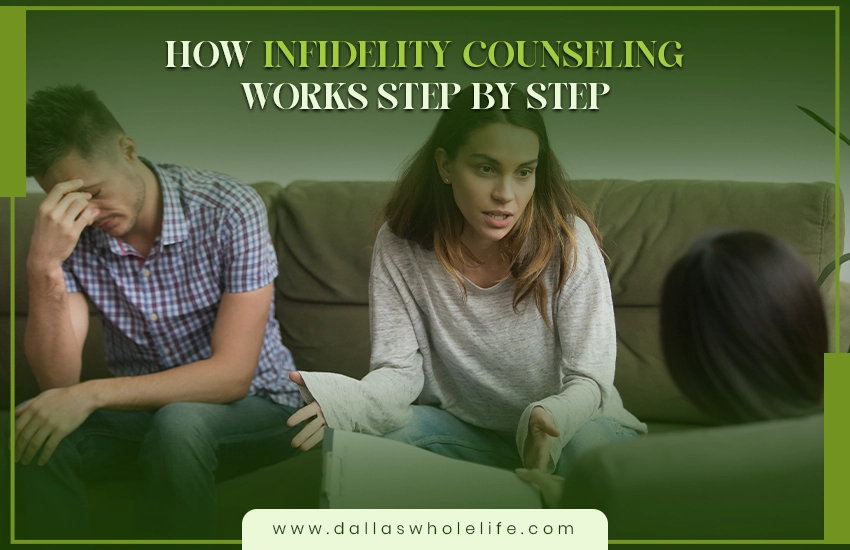
Infidelity counseling is not just “talking about the affair” every week.
It often moves through stages.
1. Stabilizing the Crisis
The early focus may be on emotional safety, basic functioning, boundaries, and reducing chaos.
2. Clarifying What Happened
This may include understanding the affair, secrecy, disclosure, and the impact on the betrayed partner.
3. Accountability and Emotional Processing
The person who cheated must be able to take responsibility without becoming defensive or collapsing into shame. The betrayed partner needs space to express pain without being rushed.
4. Rebuilding Communication
Couples may need help having hard conversations without escalating, shutting down, attacking, or avoiding.
5. Rebuilding Trust
Trust is rebuilt through consistent honesty, transparency, boundaries, and follow-through.
6. Deciding the Future
Some couples choose reconciliation. Some choose separation. Some need therapy to understand what is possible.
7. Creating a New Relationship Pattern
If the couple stays together, the goal is not to return to the old relationship exactly as it was. The goal is to build something more honest and stable.
What Happens in the First Infidelity Therapy Session?
The first session is usually about understanding what happened, what each person needs, and what kind of support is safest and most appropriate.
We may discuss:
- What brought you to therapy
- Whether the affair is ongoing or ended
- What has been disclosed
- How each person is coping
- Whether there are safety concerns
- Whether individual therapy, couples therapy, or both may help
- Whether there is trauma, anxiety, depression, anger, or shame
- What each person wants from therapy
- What immediate boundaries may be needed
You do not have to know whether you are staying or leaving before you start therapy.
Many people come in because they do not know.
Individual Therapy vs Couples Therapy After Cheating
Both can help, but they serve different purposes.
Individual Therapy
Individual therapy gives one person space to process their own emotions, decisions, trauma responses, guilt, shame, anger, or confusion.
The betrayed partner may need individual therapy to work through shock, self-doubt, intrusive thoughts, grief, and trust injuries.
The person who cheated may need individual therapy to understand their choices, take accountability, address shame, and change the patterns that led to betrayal.
Couples Therapy
Couples therapy helps both partners work through the relational injury together.
It can help with communication, disclosure, accountability, boundaries, trust rebuilding, emotional repair, and future decisions.
DWL’s couples counseling can be used alongside individual therapy when both partners are ready, and it is safe to work together.
Can Couples Therapy Actually Help After an Affair?
Yes, couples therapy can help after an affair when both people are willing to participate honestly and safely.
Couples therapy may help partners:
- Talk without constant escalation
- Understand the impact of betrayal
- Rebuild emotional safety
- Create clear boundaries
- Improve communication
- Process anger and grief
- Decide whether to reconcile
- Rebuild physical and emotional intimacy when appropriate
- Work towards a healthier relationship pattern
DWL’s relationship therapy supports infidelity, affairs, trust issues, communication issues, intimacy issues, financial issues, conflict resolution, and long-term compatibility concerns.
How to Rebuild Trust After Infidelity
Rebuilding trust takes more than apologies.
It usually requires:
- Full ending of the affair
- Truthfulness
- Transparency
- Consistency
- Patience with questions
- Willingness to hear pain
- No blame-shifting
- No pressuring the betrayed partner to “move on”
- Clear boundaries
- Behavior that matches words
- Time
Trust rebuilding is not controlled by the person who broke trust. It is earned slowly through repeated safety.
The Gottman Institute describes affair recovery through three broad phases: atonement, attunement, and attachment. Their article on reviving trust after an affair explains why repair usually needs both accountability and deeper emotional reconnection.
Communication Exercises for Couples After Betrayal
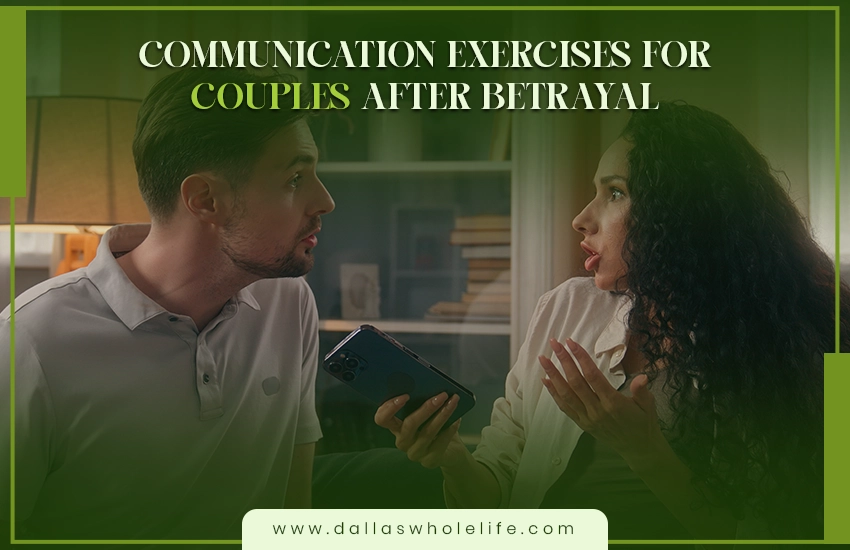
After infidelity, normal conversations can turn into fights quickly.
A few therapy-supported communication practices may help:
Use Short, Honest Statements
Instead of a long defense, try:
“I can see why that hurt you.”
“I am feeling ashamed, but I want to stay present.”
“I need a moment, but I am not leaving the conversation.”
Reflect Before Responding
One partner speaks. The other reflects back what they heard before answering.
This can slow the conversation down and reduce misunderstanding.
Set a Time Limit
Affair conversations can become emotionally overwhelming. Some couples need planned times to talk rather than discussing it all day and night.
Ask Clear Questions
The betrayed partner may need answers. It can help to write questions down and work through them in therapy rather than chasing answers in panic.
Take Breaks Without Abandoning the Conversation
A break should not be used to avoid accountability. It should be used to calm the nervous system so the conversation can continue more safely.
Forgiveness After Infidelity
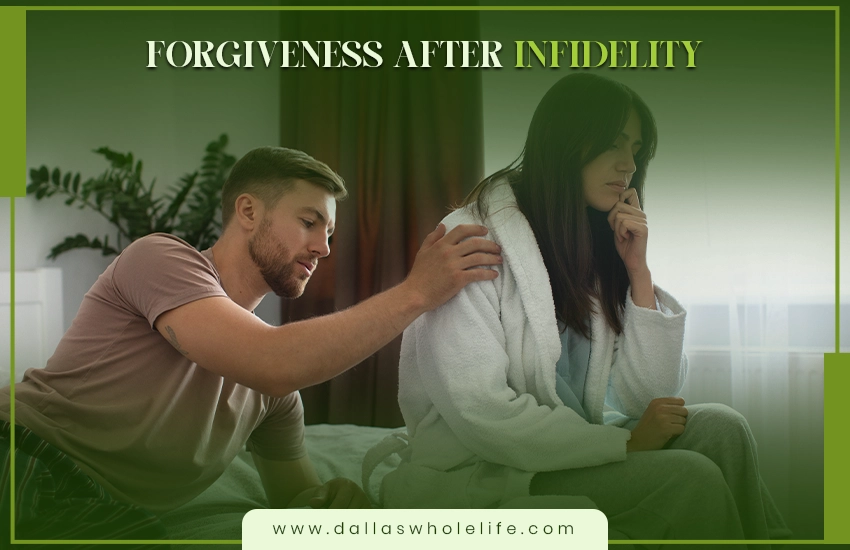
Forgiveness is personal. For some people, forgiveness means releasing the need to stay emotionally tied to the injury forever. For others, forgiveness is not the right word or the right goal, at least not yet.
In therapy, we do not force forgiveness. We help you understand what healing means for you. Reconciliation requires more than forgiveness. It requires safety, accountability, honesty, boundaries, and change.
Setting Boundaries After a Partner Cheats
Boundaries are often necessary after infidelity.
They may include:
- Ending all contact with the affair partner
- Transparency around communication
- STI testing
- Financial transparency if money was involved
- No private messaging with certain people
- Clear agreements around social media
- Therapy attendance
- Time-limited conversations about the affair
- Separate sleeping arrangements for a period
- Space to process without being pressured
- Safety planning if there is emotional or physical danger
Boundaries are not punishments. They are ways to create enough safety for healing and decision-making.
Guilt and Shame After Cheating
If you were the person who cheated, guilt and shame may feel overwhelming.
Guilt says, “I did something wrong.”
Shame says, “I am the worst person alive.”
Guilt can help you take responsibility. Shame can make you defensive, avoidant, or desperate for quick forgiveness.
Therapy can help you face what happened without hiding behind shame.
That may include:
- Taking full accountability
- Understanding your choices
- Ending secrecy
- Tolerating your partner’s pain without rushing them
- Making repair efforts
- Exploring the patterns behind the betrayal
- Learning healthier communication and boundaries
- Deciding who you want to become from here
The goal is not self-punishment. The goal is honest responsibility and real change.
How Long Does It Take to Recover From Infidelity?
There is no fixed timeline.
Some people feel more stable after a few months of therapy. Others need a year or more to process the betrayal, rebuild trust, or make a decision. Recovery may take longer when there was repeated cheating, long-term deception, trauma, abuse, or ongoing dishonesty.
Healing can also move unevenly.
You may have a good week, then feel triggered again by a date, place, song, phone notification, or memory. That does not mean therapy is failing. It may mean your nervous system is still learning what is safe.
The goal is not to rush the pain away. The goal is to move through it honestly and steadily.
When Infidelity Therapy Does Not Work
Infidelity therapy may not work when one or both people are not willing to be honest.
It may also struggle when:
- The affair is still ongoing
- There is repeated lying
- One person refuses accountability
- The betrayed partner is pressured to forgive
- There is abuse or coercive control
- Sessions are used to attack rather than repair
- One person has already fully decided to leave
- The person who cheated wants quick relief without doing repair work
- The couple avoids the actual injury
When therapy does not lead to reconciliation, that does not mean it has failed. Sometimes therapy helps people separate more clearly, safely, and respectfully.
Why Some Couples Recover Stronger After Cheating
Some couples recover after infidelity because the affair forces honest conversations that had been avoided for years.
This does not mean the affair was “good” or “necessary.” Betrayal is painful and damaging.
But when both people are committed to repair, therapy can help them build a relationship with more honesty, clearer boundaries, better communication, and deeper emotional awareness.
Recovery may involve:
- More direct communication
- More emotional honesty
- Stronger boundaries
- Better conflict repair
- Clearer expectations
- Renewed commitment
- Deeper understanding of each person’s needs
This is possible, but not automatic. It takes time, accountability, and consistent work.
Can Online Therapy Help Couples Recover From Cheating?
Online therapy can help many individuals and couples work through infidelity, especially when privacy, scheduling, or travel makes in-person therapy harder. At Dallas Whole Life Counseling, online virtual therapy is available through secure video sessions for individuals, couples, kids, teens, and families. We use Zoom for virtual care, and we offer online support for infidelity, relationship issues, trust issues, anxiety, depression, trauma, and more.
Confidential Online Infidelity Counseling
Infidelity therapy requires privacy.
Before online sessions, it helps to:
- Choose a private room
- Use headphones
- Make sure you cannot be overheard
- Silence notifications
- Use a secure internet connection
- Avoid attending from a space where you feel pressured or monitored
- Tell your therapist if privacy or safety is a concern
If you are attending couples therapy online, both partners usually need to be in a space where they can participate safely and respectfully.
If that is not possible, individual therapy may be more appropriate at first.
Online Infidelity Counseling at Dallas Whole Life Counseling
At Dallas Whole Life Counseling, we help individuals and couples work through the pain, confusion, and decisions that often follow infidelity.
Our support may include:
- Individual therapy after infidelity
- Couples therapy after cheating
- Trust issues therapy
- Trauma-informed support
- Relationship counseling
- Divorce counseling when separation is part of the decision
- Online therapy anywhere in Texas
- In-person therapy in the Dallas/Fort Worth area
We have worked with hundreds of couples navigating infidelity. We know this is not an easy road. We also know that people need a place where the pain can be taken seriously without the session turning into blame, shouting, or avoidance.
Therapy gives you somewhere to begin.
Same-Day, Next-Day, Evening, Weekend, Insurance, and Sliding-Scale Options
Getting support after an affair can feel urgent.
At Dallas Whole Life Counseling, getting started only takes a few minutes. After you submit an appointment request, our office staff will send information for new patient paperwork, gather needed documentation, and confirm your appointment.
Same-day and next-day appointment requests may be available depending on therapist availability, insurance, and whether you would like to see a specific counselor.
Appointments are available during normal business hours, evenings, and weekends.
We accept many major Texas insurance plans. For out-of-network care, payments usually range from $150 to $200 per session. For uninsured clients, sliding-scale rates may start as low as $100 per session depending on need and financial situation. You can review therapy rates and insurance options before beginning.
You Do Not Have to Decide Everything Today
After infidelity, it is normal to want certainty.
You may want to know whether to stay or leave.
You may want to know whether trust can come back.
You may want to know whether the pain will ever stop.
You may want to know if your relationship can survive this.
You may not have those answers today.
That is okay.
Your first step does not have to be a final decision. It can simply be getting support, slowing down the panic, understanding what happened, and creating enough emotional safety to think clearly.
At Dallas Whole Life Counseling, we offer confidential infidelity therapy for individuals and couples in the Dallas/Fort Worth area and online anywhere in Texas.
Whether you want to rebuild the relationship, decide what comes next, or heal from the pain on your own, we are here to help you take the next step.
FAQs
What is infidelity therapy?
Infidelity therapy is counseling that helps individuals or couples process the pain, confusion, guilt, shame, anger, and trust damage after an affair.
How does infidelity counseling work?
Infidelity counseling may involve individual therapy, couples therapy, or both. It can help with emotional processing, communication, accountability, boundaries, trust rebuilding, and decisions about the relationship.
What is the difference between an emotional affair and a physical affair?
A physical affair usually involves sexual contact. An emotional affair involves hidden emotional intimacy, romantic energy, secrecy, or emotional dependency outside the relationship.
What are the main types of infidelity?
Common types include physical affairs, emotional affairs, online affairs, repeated cheating, sexting, dating app behavior, and secrecy involving sexual or romantic contact.
Why do people cheat in relationships?
People may cheat because of poor boundaries, avoidance, validation-seeking, resentment, emotional disconnection, impulsivity, unresolved personal issues, or relationship problems. Understanding the reason does not excuse the behaviour.
What is betrayal trauma?
Betrayal trauma describes the emotional injury that can happen when someone you deeply trust violates that trust. It may involve shock, panic, intrusive thoughts, numbness, shame, and difficulty feeling safe.
What are signs of an emotional affair?
Signs may include hidden messages, emotional secrecy, romantic tension, deleting conversations, pulling away from the relationship, and sharing emotional intimacy with someone else while hiding it from the partner.
What should I do immediately after discovering infidelity?
Try to pause before making major decisions, seek safe support, care for your basic needs, consider health testing if needed, set immediate boundaries, and consider therapy early.
Can a relationship survive cheating?
Yes, some relationships survive infidelity. Healing usually requires honesty, accountability, boundaries, patience, communication, and consistent behavior over time.
Should I stay or leave after my partner cheated?
That decision is personal. Therapy can help you explore safety, accountability, trust, your values, the relationship pattern, and what healing would require.
What happens in the first infidelity therapy session?
The first session usually focuses on what happened, how each person is coping, whether there are safety concerns, and whether individual therapy, couples therapy, or both may be appropriate.
What is the difference between individual and couples therapy after infidelity?
Individual therapy focuses on one person’s healing, emotions, decisions, guilt, shame, or trauma responses. Couples therapy focuses on the relationship injury, communication, trust, and future decisions.
How long does recovery from infidelity take?
There is no fixed timeline. Some people need months, while others need longer, especially when there has been repeated deception, trauma, or ongoing trust damage.
Is forgiveness after infidelity possible?
Forgiveness is possible for some people, but it cannot be rushed or demanded. Forgiveness does not always mean staying in the relationship.
How do you deal with guilt and shame after cheating?
Therapy can help the person who cheated take responsibility, understand the behaviour, tolerate difficult emotions, stop hiding behind shame, and make real changes.
Can online therapy help after infidelity?
Yes, online therapy can support individuals and couples after infidelity when sessions are private, safe, and clinically appropriate.
Does Dallas Whole Life Counseling offer online infidelity counseling?
Yes. We offer online infidelity counseling through secure virtual sessions for clients anywhere in Texas, as well as in-person sessions in the Dallas/Fort Worth area.
Does Dallas Whole Life Counseling accept insurance for infidelity therapy?
We accept many major Texas insurance plans. Costs depend on your benefits, therapist fit, and network status. Sliding-scale options may be available for uninsured clients.
How quickly can I get an infidelity counseling appointment?
Same-day and next-day appointment requests may be available depending on therapist availability, insurance, and whether you want to see a specific counselor.
