

Dinner is done, the dishes are in the sink, and the two of you are at opposite ends of the couch, each looking at a phone. Nobody is upset. You haven’t had a real fight in months. You also haven’t had a real conversation in a while. If that’s close to home, you’re in good company. Plenty of couples live like this, and most of them assume they’re the only ones. Below we cover how couples end up here, what it looks like, and what therapy can do about it.
The Quiet Kind of Relationship Trouble
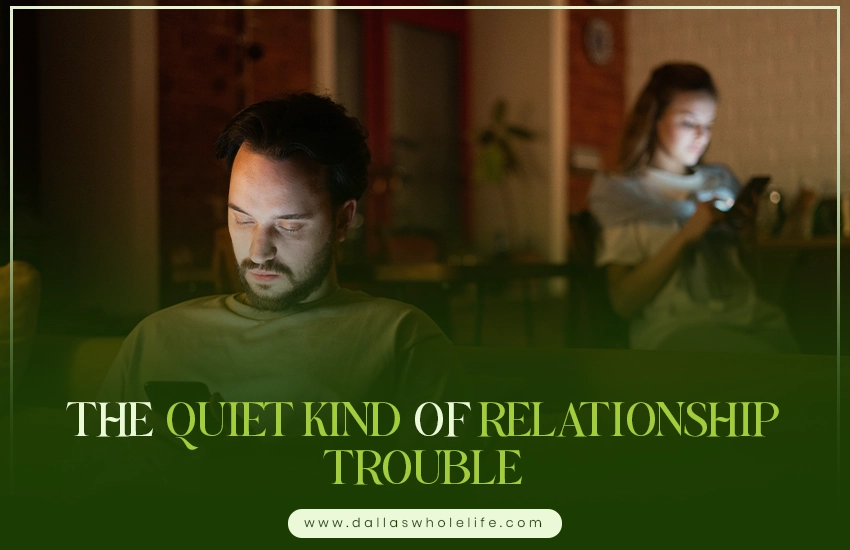
When people think of a relationship in trouble, they picture shouting or a betrayal. This is different. It’s mostly an absence: less talking, less touching, less laughing together, less curiosity about what the other person is thinking.
Because it’s calm, it’s easy to wave off. “We’re fine.” But one of you, or both, may feel lonely with the other person in the room. That lonely feeling is usually the first sign worth listening to.
It can also go unnoticed because both people are doing their jobs. The bills get paid, the kids get to school, the house runs. From the outside, it looks like a solid partnership. Only the two of you know that you can go a whole week without asking each other a single real question.
How Couples Drift Into Roommate Mode

Nobody plans for this to happen. It just happens over time. Work gets busy, life gets hectic, and when kids come along, most of your time goes into looking after them. Slowly, you start spending less time together as a couple. Most of your conversations are about everyday things, like who’s picking up the kids on Thursday or what needs to be done around the house. By the end of the day, you’re both tired, and sometimes sitting quietly feels easier than trying to have a conversation. You end up on your phones instead of talking to each other, and before you realise it, you’ve grown apart. Money worries can cause distance between you, too, especially when arguments about money are really about something else.
Signs The Distance Has Set In
Every relationship looks different, so treat this as a loose guide, not a test. Couples in this spot often describe things like these:
- You live parallel lives, with separate routines and friends and not much overlap.
- Most of your talk is about tasks: schedules, groceries, who is picking up whom.
- Affection and sex have dropped off, or they feel more like routine than closeness.
- You’ve stopped sharing small things, like a good day, a worry, or something funny you saw.
- You feel oddly relieved when your partner is out, or lonely when they’re sitting right next to you.
- You avoid bigger topics because they feel like too much work, or too risky.
Plenty of people also catch themselves wondering whether this is just what long relationships turn into. If several of these rings true, it may be worth talking to someone. A therapist can help you understand what may be contributing to the distance and explore ways to rebuild connection. Noticing these patterns is a useful place to start.
Why This is Common And Doesn’t Mean It’s Over
Feeling like roommates doesn’t mean the relationship has failed. Most couples in this spot still care about each other. They’ve just stopped getting the small moments that keep people close.
The Gottman Institute, which studies couples, calls those moments “bids.” A bid can be tiny: “Look at this,” a joke, a question about someone’s day. The other person can notice it and respond, which Gottman calls turning toward, or they can miss it. Miss enough of them and the connection thins out. Catch more of them and it tends to build back.
That makes this more of a habit than a flaw in who you are, and habits can change. In our sessions, couples in this situation often say they can’t point to one thing that went wrong. It just slowly stopped being a priority.
How Couples Therapy Helps You Reconnect
This is where couples therapy in Dallas can help. A couples therapist gives you a calm place to slow down and look at what’s been happening, with someone who isn’t taking sides.
A lot of the work is small and practical. You learn to say what you need without it sounding like an accusation, and to listen without getting defensive. You practice noticing those bids and answering them. You get to talk about old hurts that went unspoken, in a setting where that feels safe. And you spend time on the bigger question of what you each want your life together to feel like, which tends to get lost when you’re just getting through the week.
A session might start with something as simple as each of you describing an ordinary weekday: who does what, when you talk, when you don’t. It sounds basic, but it often shows patterns that are hard to see from inside them, like the hour after dinner when you both default to screens.
No therapist can promise how it will turn out. It depends on both of you and on what’s going on in your lives. What therapy offers is a space where you both get heard, plus some practical tools. That applies to every kind of couple, whatever your background, identity, or setup.
When To Reach Out
You don’t need to wait for a crisis. Many couples wait until things feel desperate, and talking is harder by then. Consider reaching out if you keep saying the distance will pass and it hasn’t, if small resentments are stacking up, if you miss how things used to feel, or if you’ve tried to talk about it and got nowhere. Earlier is easier, because the habits haven’t set in as deeply. If your partner isn’t ready, that’s common. Some people start with a few individual sessions to sort out their own thoughts and plan how to bring it up. Others ask their partner to try just one session. Ask us about options when you get in touch.
Getting Started
Dallas Whole Life Counseling is a group practice with more than 10 credentialed therapists, including licensed marriage and family therapists. We see couples of all kinds, and sessions can be virtual, so you can meet from home. We take Aetna, Blue Cross Blue Shield of Texas, Cigna, Medicare, United Healthcare, UMR, and Optum. Private pay is available too. Coverage depends on your plan, so check your benefits first. Our guide on whether insurance covers online therapy in Dallas explains how.
Frequently asked questions
Is it normal to feel like roommates with my partner?
Yes, it’s common, especially while raising kids, changing jobs, or caring for family. It usually builds slowly from routine and unspoken hurts, not from a lack of love.
Can a disconnected relationship be repaired?
Many couples feel closer after putting in time and attention, but nobody can promise a specific result. It depends on both partners and their situation. A therapist can help you learn new ways of talking and connecting.
What if my partner won’t come to therapy?
You still have options. You can start on your own, or ask your partner to try one session. A therapist can help you think through what might work for the two of you.
Do you offer virtual couples sessions?
Yes. You can meet with a therapist online from a private space at home, which often makes scheduling easier.
Do you take insurance?
Yes. We accept Aetna, Blue Cross Blue Shield of Texas, Cigna, Medicare, United Healthcare, UMR, and Optum, and private pay is available. Coverage varies by plan, so check your benefits.
