

Finding a community that truly understands and accepts you as who you really are is a basic human need. For many LGBTQIA+ individuals, a support system is not having people to hang out with. It is creating a network of chosen family and allies who provide the emotional safety necessary to survive in a world that is not always affirming. Whether you are currently coming out or transitioning, your support system acts as the anchor for your mental and emotional health.
Navigating identity is complex, and doing it alone leads to burnout and isolation. Organizations like The Trevor Project emphasize that having even one supportive person in your life significantly reduces the risk of mental health crises. So, you need to intentionally surround yourself with people who celebrate your authentic self. It creates a buffer against the external pressures of societal heteronormativity and prejudice.
Building this system is a gradual process of trial and error where you learn to distinguish between those who merely tolerate your identity and those who truly celebrate it. As you begin this journey, remember that your support system can include a mix of friends, online communities, support groups, and mental health professionals who specialize in LGBTQIA+ issues.
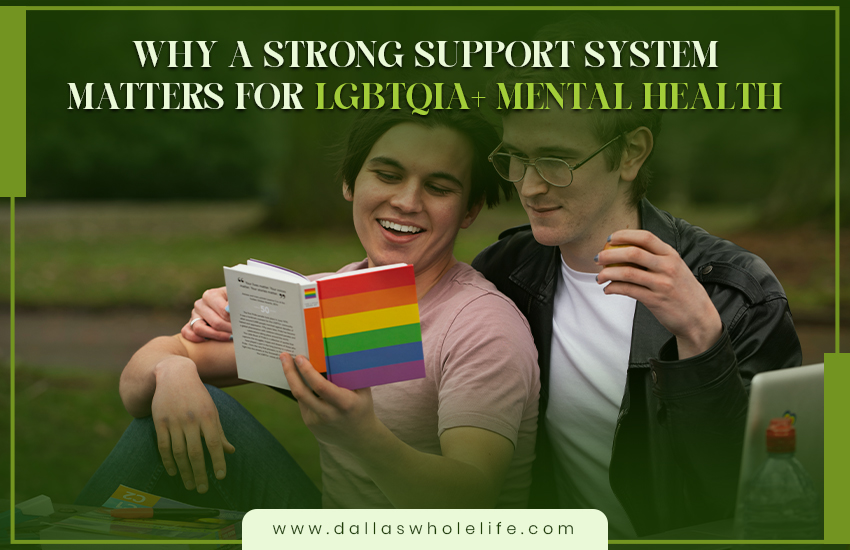
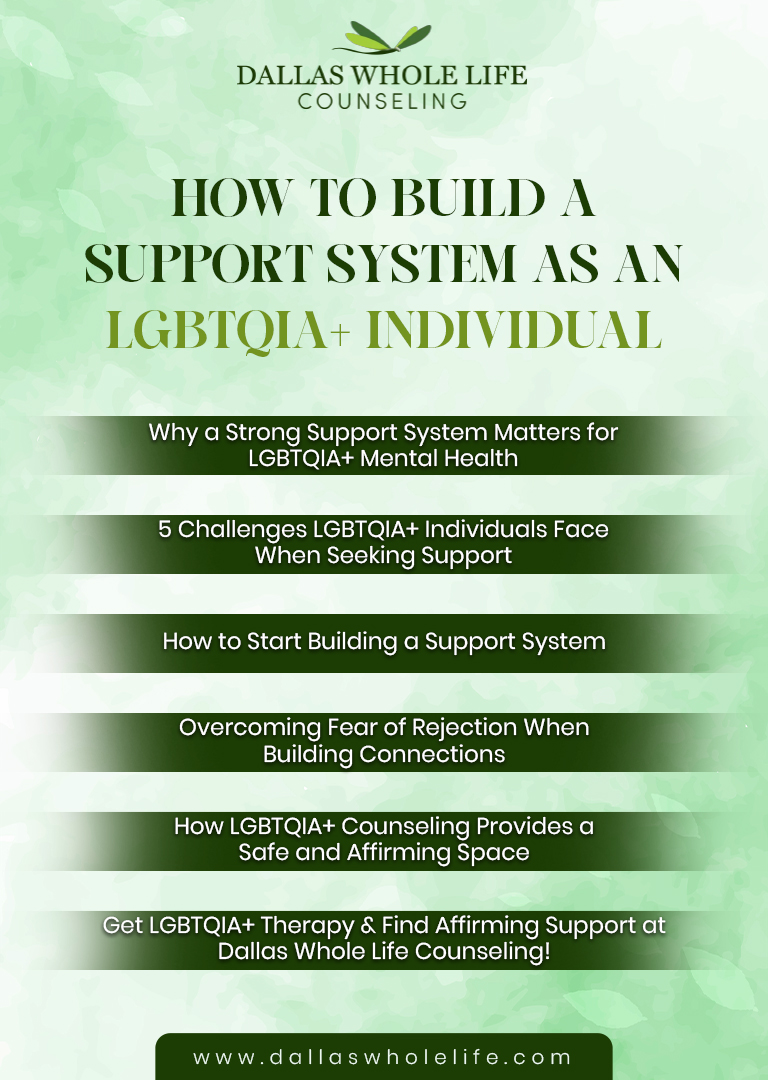
Why a Strong Support System Matters for LGBTQIA+ Mental Health
Support systems play a critical role in emotional well-being, especially for LGBTQIA+ individuals who may face rejection, misunderstanding, or isolation from their families of origin or local communities. Without a reliable network, there is an increased risk of developing anxiety, depression, or loneliness. When you lack a space to be yourself, the mental energy required to “mask” or hide your identity becomes an exhausting burden that erodes your self-esteem over time.
Emotional safety, rooted in feeling seen, accepted, and validated, serves as the foundation for building confidence and a stable sense of identity. Having a support system that mirrors your values back to you is like having a protective shield against the stress of discrimination. If you know that you have a “safe harbor” to return to after facing a difficult day, it makes you more resilient, allowing you to move through the world with greater authenticity and less fear.
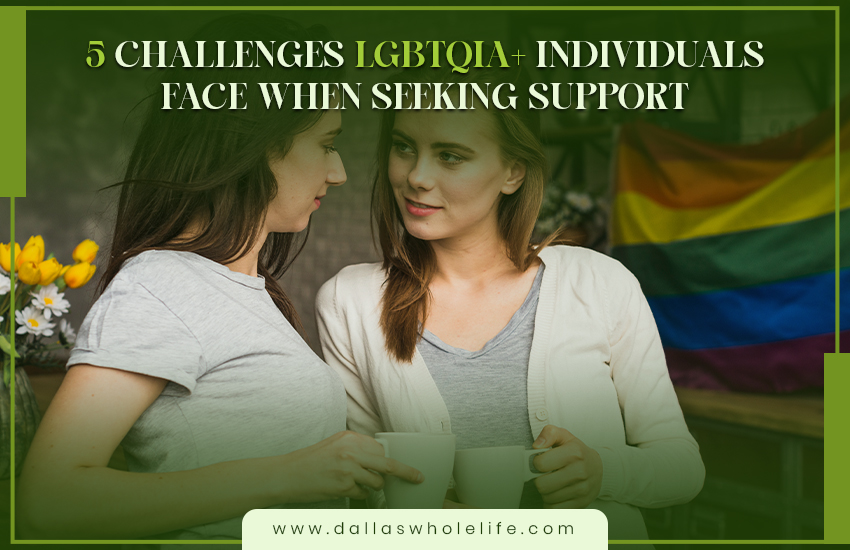
5 Challenges LGBTQIA+ Individuals Face When Seeking Support
The need for connection is always clear. But finding it is often obstructed by unique obstacles. Many individuals find that their past experiences dictate how they approach new relationships. It develops a protective “guard” that can be hard to lower.
- Fear of judgment or rejection from family or friends
- Lack of understanding from peers or the community
- Internalized stigma or self-doubt
- Difficulty finding safe and affirming spaces
- Past experiences of invalidation or discrimination
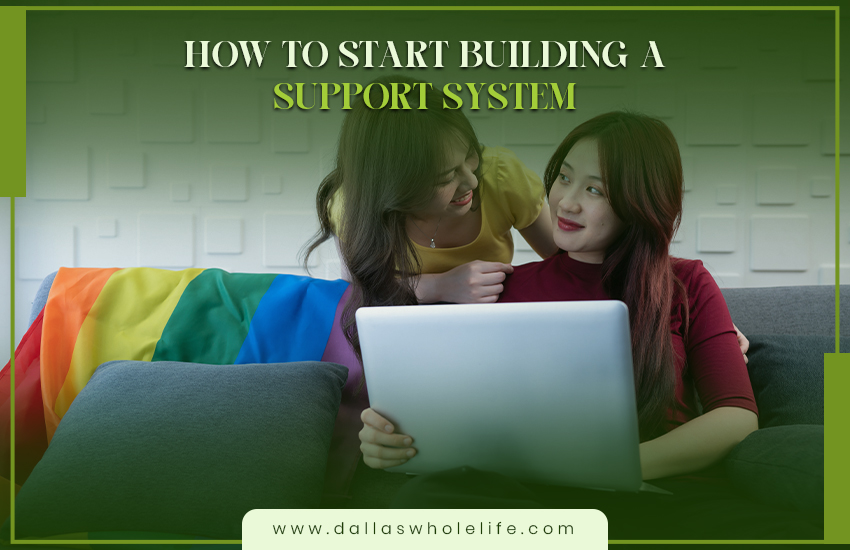
How to Start Building a Support System
A support system forms with a commitment to your own well-being and the recognition that you deserve help. Start small when looking for your community. You don’t need to find a dozen people overnight and meet everyone at once. Quality over quantity is the most sustainable approach. Focus on finding one or two people who make you feel safe.
Here are some simple ways to begin:
- Identify safe and supportive individuals in your life
- Set boundaries with unsupportive or harmful relationships
- Start with small, meaningful connections
- Practice vulnerability at your own pace
- Seek environments where authenticity is encouraged
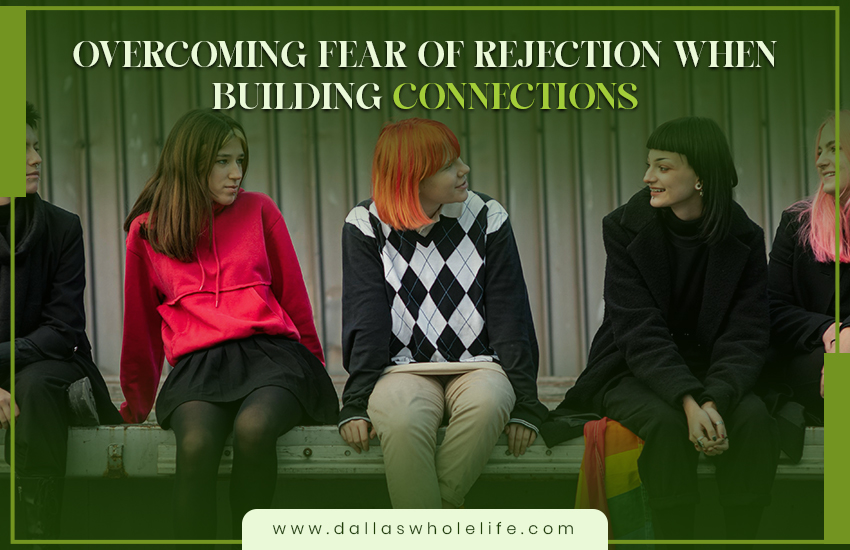
Overcoming Fear of Rejection When Building Connections
It is completely natural to feel hesitant when trying to connect with others. Past rejection, especially if it came from parents or long-term friends, makes it incredibly risky to form new connections. This fear is a survival mechanism, protecting you from more pain, but it can also keep you isolated. Building trust takes time and patience. It’s a slow process of testing the waters and seeing how others respond to your truth.
Remember that not every relationship will be safe, and that is okay. Learning to identify the “red flags” of unsupportive people is just as important as finding the “green flags” of allies. Ultimately, self-acceptance is the key step toward external connection. When you begin to validate your own identity, the sting of potential rejection from others becomes less defining, allowing you to seek out those who truly deserve a place in your life.
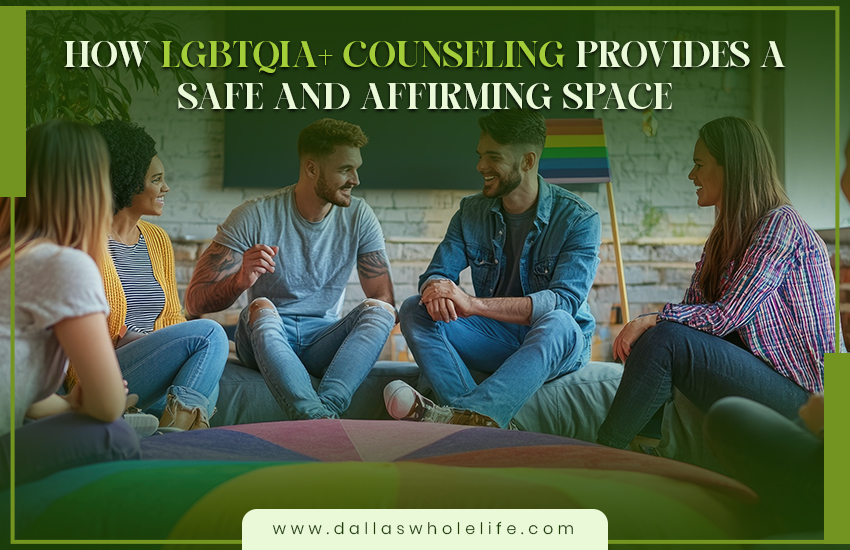
How LGBTQIA+ Counseling Provides a Safe and Affirming Space
Therapy is the first place where an LGBTQIA+ individual experiences unconditional positive regard. It offers guidance in building healthy relationships and setting firm boundaries with those who do not respect your journey. In a clinical setting designed specifically for the community, you are provided with a structured environment for processing past experiences of rejection or trauma.
- Non-judgmental environment to explore identity
- Emotional support during difficult transitions
- Tools to manage anxiety, stress, or self-doubt
Get LGBTQIA+ Therapy & Find Affirming Support at Dallas Whole Life Counseling!
If you are struggling to find your footing or feel isolated in your journey, you don’t have to navigate it alone. At Dallas Whole Life Counseling, we understand the unique challenges faced by the LGBTQIA+ community and are dedicated to providing a space where you feel completely seen and respected. Our therapists are not just “friendly”. We are affirming experts committed to your growth.
Whether you are looking to manage the anxiety of coming out or simply want a therapist who “gets it,” we are here to help. We believe that everyone deserves a support system that starts with a strong therapeutic alliance, providing you the confidence to build a vibrant, authentic life outside the therapy room.
Take the first step toward a more connected and supported version of yourself. Contact us today to book an appointment with one of our affirming specialists. Your community is waiting for you.
Frequently Asked Questions
What can I do to support the LGBTQ community?
- Educating yourself
- Use correct pronouns
- Advocate for equality
- Support local or national LGBTQIA organizations
How can we support someone who identifies as LGBTQ?
- Accept them as who they are
- Respect their confidentiality
- Listen to them with compassion
- Affirm their identity without judgment
- Show them you care
- Don’t make assumptions and ask intrusive questions
What religion is most accepting of LGBTQ?
Unitarian Universalism is widely considered the most LGBTQ-affirming religion, as it officially welcomes and advocates for LGBTQ+ rights as part of its core principles. Other highly accepting groups like Reform and Reconstructionist Judaism, the United Church of Christ (UCC), and several Hindu communities traditionally hold inclusive views regarding gender and sexuality.
Can you support LGBTQ as a straight person?
Yes. You absolutely can by acting as an ally. Advocate for their equal rights, challenge homophobic or transphobic remarks, support queer creators, and actively promote inclusivity.
