

Stress is an uninvited guest that refuses to leave you on your own. For example, your heart racing before a big presentation or your muscles tightening during a long commute through traffic. This physical reaction is simply your biological system responding to a perceived challenge.
We view these feelings as purely negative. However, that is not always the case. Some stress is necessary for survival. According to the Mayo Clinic, a little bit of pressure can actually improve your focus and help you stay alert when you need it the most.
Living without any pressure at all would likely lead to a lack of motivation or boredom. You need a certain level of stimulation to get out of bed to tackle the goals you have set for yourself. The problem arises when pressure stays on indefinitely and becomes a permanent fixture in your life rather than a temporary visitor.
The key is finding the balance. You need to know when your body is working for you or when it is working against you. Dallas Whole Life helps you find that clarity so you can feel better.
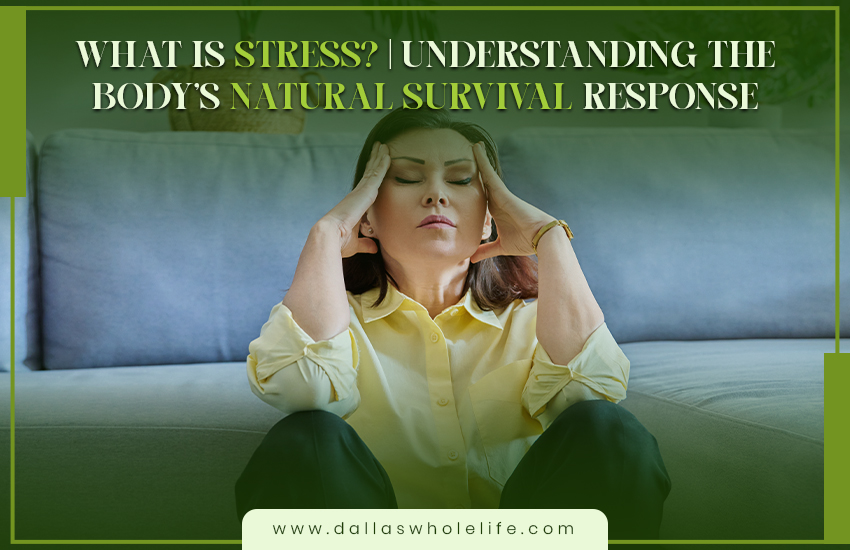
What Is Stress? | A Look At the Body’s Natural Survival Response
When you face a challenge, your brain acts as a command center that triggers an immediate biological shift in the form of stress. This reaction is known as the fight-or-flight system, a survival mechanism passed down from our ancestors to keep us safe from immediate physical danger. Instead of fighting off predators, your body now reacts this way to tight deadlines or social pressures. The system floods your bloodstream with cortisol along with a surge of adrenaline to prepare you for action.
This hormonal cocktail produces an immediate change in how you function. You will likely experience increased alertness and a sudden burst of energy that sharpens your focus on the task at hand. In the short term, this serves as a protective mechanism that helps you react quickly to a car stopping suddenly or a child running into the street. It is a brilliant design for survival, provided the system eventually returns to a state of rest.

What Is Healthy Stress (Eustress)? | How Positive Pressure Helps You Grow
Healthy stress, or eustress, acts as a catalyst for personal development and achievement. Typically short-lived and directly tied to a specific event or goal that you feel confident you can handle, it is the “good” kind of tension that makes you feel alive and capable. It provides the necessary friction to move you forward rather than holding you back.
- Motivation to meet deadlines or achieve goals
- Improved performance during important tasks
- Emotional excitement before major life events
- Building resilience through manageable challenges
- Encouraging learning, adaptation, and confidence
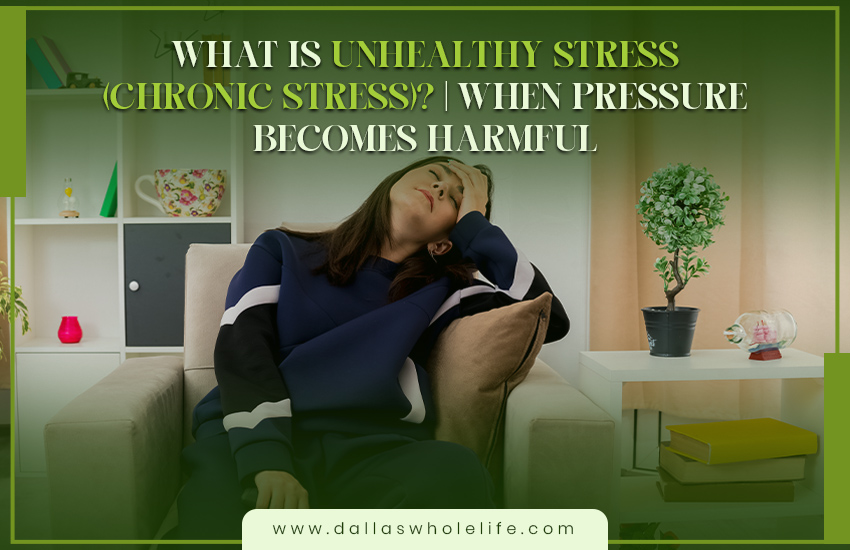
What Is Unhealthy Stress (Chronic Stress)? | When Pressure Becomes Harmful
Unhealthy stress occurs when the pressure remains constant. You feel like you never have a chance to recover. This chronic state wears down your physical and mental reserves because your body stays stuck in survival mode. Instead of feeling energized, you feel drained and overwhelmed by the simple demands of daily life. When the “off switch” for your survival response feels broken, it begins to erode your quality of life.
- Constant worry or mental exhaustion
- Feeling trapped or unable to relax
- Emotional irritability or mood swings
- Sleep disturbances and physical tension
- Loss of motivation or burnout
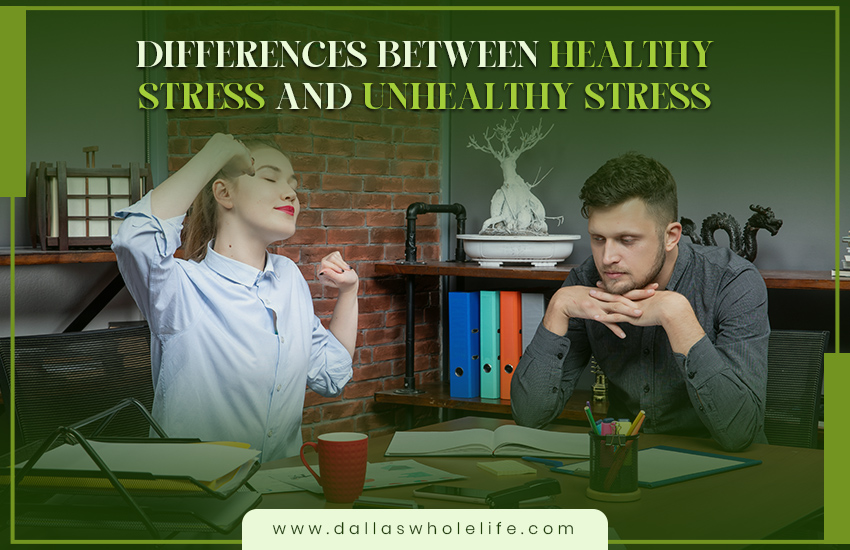
Differences Between Healthy Stress and Unhealthy Stress
| Feature | Healthy Stress (Eustress) | Unhealthy Stress (Distress) |
| Duration | Short-term; temporary | Chronic, long-term, or persistent |
| Feeling | Motivating, exciting, challenging | Overwhelming, helpless, frightening |
| Control | Within your ability to cope | Feels out of control |
| Physical Effect | Temporary pulse increase (excitement) | Headaches, insomnia, high blood pressure |
| Outcome | Personal growth, accomplishment | Burnout, anxiety, depression |
| Example | First dates and promotions | Financial trouble and toxic relationships |
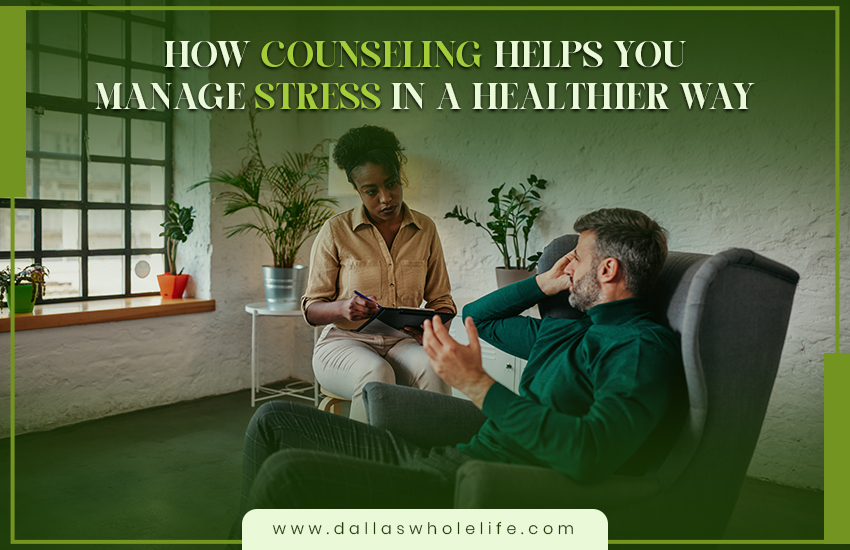
How Counseling Helps You Manage Stress in a Healthier Way
Working with a professional provides you with a neutral space where you can deconstruct the pressures that are weighing you down. A therapist helps you identify your personal triggers, often hidden in your daily routines or specific relationships. After you see these patterns clearly, you develop emotional regulation. It prevents your survival response from spiraling out of control. You move from a reactive state to a proactive one.
Beyond just talking about the problems, counseling helps you build practical boundaries and better time-management skills. You will explore relaxation techniques and mindfulness practices that actually work for your specific lifestyle. By developing more balanced thinking patterns, you can change how you interpret pressure. This shift allows you to transform overwhelming anxiety into manageable challenges that no longer feel like a threat to your happiness.
Contact Dallas Whole Life & Learn to Manage Your Stress Effectively
You do not have to deal with this by yourself. Our team in Dallas wants to see you feel better and more in control of your days. We know that life gets loud sometimes. We offer a space where you can be heard without any judgment. Your health matters to us.
If you feel like you are drowning in tasks, we can help you find the shore. Our stress management therapy is built for real people with real problems. We look at what you need and help you find a path that works. It is okay to ask for a hand when things get tough. We are here to listen.
Give us a call or send a message to set up a time to chat. We have different options to make sure you get the right support. Taking this step is a great way to look after your future. Let’s work on getting you back to feeling like your best self. We are ready to help when you are.
Frequently Asked Questions (FAQs)
Q1. How to know if stress is good or bad?
The main indicator is how you feel. Healthy stress makes you feel accomplished or energized. Unhealthy stress leaves you feeling drained or anxious.
Q2. What are healthy ways to deal with stress?
Engage in regular physical movement. Practice mindfulness, like meditation and deep breathing. They are excellent ways to signal safety to your nervous system. Seeking professional counseling also provides long-term solutions for managing pressure.
Q3. At what point does stress become harmful?
When it interferes with your ability to function in daily life or impacts your physical health. If you no longer feel like yourself, it is time to seek help.
Q4. What is the difference between good stress and bad stress?
Good stress is a short-term motivator that helps you grow and perform. Bad stress is a long-term drain that causes mental exhaustion. It can also lead to physical fatigue over time.
