

Walking through the door of a therapist’s office is a massive step. It’s normal if your heart is racing because you are choosing to face the heavy weight of worry that has been following you around lately. This first meeting is just a conversation. You won’t have to fix everything in one hour.
Research shows that nearly one in five adults in the US lives with a diagnosed anxiety disorder. Knowing that you aren’t alone doesn’t always make the initial step easier. However, it does validate your struggle. This initial meeting is the ground for everything that happens next. It is a time for you to breathe and realize that help is available.
Most people worry about what they need to bring or say. You don’t need a script. Your therapist is there to listen while you describe how anxiety affects your daily life. They want to hear about the nights you can’t sleep, and the moments your chest feels tight.
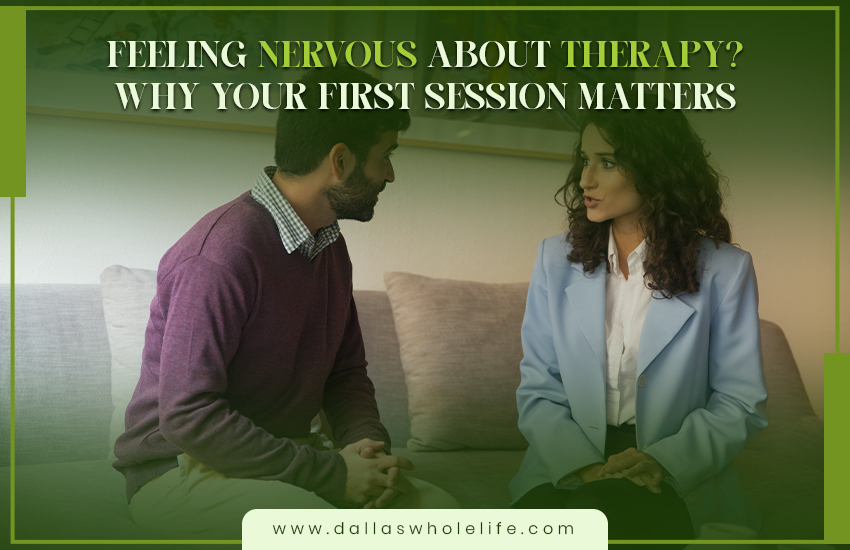
Feeling Nervous About Therapy? Why Your First Session Matters
It is ironic that the very thing you are seeking help for, anxiety, often tries to stop you from going to your first appointment. You may worry that your thoughts are too strange. Maybe you fear the therapist will judge you for how you feel. These fears are incredibly common. Opening up to a stranger feels risky.
However, this first session is vital because it breaks the cycle of silence. Privacy is a top priority for every licensed professional. Everything you share stays within the room. This creates a protective bubble for your thoughts. You might feel a bit of emotional discomfort as you touch on sensitive topics, but that is a natural part of the process. If you don’t know where to start, your therapist will guide you.

Getting to Know Your Therapist | Building a Safe Therapeutic Relationship
Think of this first meeting as a compatibility check. Your therapist will explain how they work. Some use cognitive strategies while others focus on mindfulness. They will describe how the sessions look week to week so you know what to expect. This clarity helps lower your guard.
Building trust takes time. You are encouraged to speak honestly. Also, you never have to rush into topics that feel too raw. A supportive environment is the goal here. The therapist will reiterate the boundaries of confidentiality and ensure you feel secure while you explore the roots of your stress.

What Happens Before the Therapy Session Begins?
Before you sit down on the couch, there is a bit of logistical housekeeping. This helps the clinic get a snapshot of your history. You will fill out forms that ask about your physical health and current mental state. It seems clinical, but it saves time during the actual talk.
- Initial paperwork or intake forms about mental health history
- Basic questions about symptoms, stress levels, sleep, and lifestyle
- Understanding therapy goals and expectations
- Opportunity to ask questions about the counseling process

Common Emotions People Experience After Their First Session
Walking out of the office, you might feel a strange mix of sensations. It’s like a weight has been lifted. Yet your mind might feel a bit buzzy. Processing an hour of deep conversation takes energy. It is perfectly fine to go home and rest.
- Relief from finally talking openly
- Emotional tiredness from sharing personal struggles
- Hopefulness about finding solutions
- Uncertainty about the therapy journey

How Many Sessions Does Anxiety Therapy Usually Take?
Every person has a unique timeline for healing. Some people find that their immediate symptoms improve after just a few weeks of targeted strategies. If your goals are focused on a specific event, the process might be relatively short. Your therapist will check in with you often to see how you are progressing.
For others, anxiety is tied to deeper patterns from years ago. In these cases, staying in therapy longer allows for more profound change. Showing up consistently is the most important factor in seeing results. Regular appointments help you build momentum and keep your coping skills sharp.

Start Your Anxiety Therapy Process at Dallas Whole Life Counseling
Dallas Whole Life Counseling provides a space where you can finally stop fighting your anxiety alone. Our team recognizes how heavy these feelings can be. We offer a compassionate approach to your specific needs and lifestyle. You deserve to feel at peace in your own mind.
If you are tired of the constant “what-ifs” and the physical toll of stress, we are here to help. Our clinicians specialize in anxiety therapy that gives you practical tools for daily life. We work with you to find the root causes of your worry. This isn’t just about managing symptoms. It’s about reclaiming your life.
We invite you to schedule a session and see how a supportive environment can change your perspective. Your mental well-being is worth the investment.
Frequently Asked Questions (FAQs)
Q1. Is it common to feel anxious before a therapy session?
Yes. It is extremely common. Most people experience it because they are about to discuss personal topics with someone new. However, this feeling usually fades once the conversation begins and you get comfortable with your provider.
Q2. How long should you stay in therapy?
The length of time you stay in therapy depends entirely on your personal goals and the intensity of your symptoms. Some clients find resolution in a few months. Others prefer ongoing support for a year or more to work on deep-seated emotional patterns.
Q3. How do people feel after their first therapy session?
After their first therapy session, you feel a mix of emotions, ranging from relief and hope to emotional exhaustion. It is common to feel vulnerable or, conversely, energized by the prospect of positive change.
Q4. Is it normal to cry in your first therapy session?
Crying is very natural. It is a frequent occurrence during the first session. Therapists provide a safe space for these emotions. Many people find that releasing those tears helps them feel lighter.
