

Men and women can both experience a midlife crisis, but it often shows up in different ways. For men, it may come through career pressure, aging, identity, confidence, emotional withdrawal, or a feeling that life has not turned out as expected. For women, it may be more connected to hormonal changes, caregiving, relationship strain, body image, emotional exhaustion, or a desire to rediscover who they are outside of everyone else’s needs. At its heart, a midlife crisis is often not about falling apart. It is usually a sign that something important needs attention, support, and a more honest conversation.
Midlife has a way of making people pause.
Sometimes that pause feels gentle. Other times, it feels uncomfortable, confusing, or even frightening.
You might look at your marriage, your career, your health, your family, your confidence, or your future and think:
- “Is this really what I want?”
- “Why do I feel so disconnected?”
- “Why am I suddenly questioning everything?”
- “Why does my life look fine from the outside, but feel different on the inside?”
That is why a midlife crisis is not always about one big dramatic decision. Often, it is more like a life review. You start looking at where you are, where you have been, and what you want the next part of life to feel like.
At Dallas Whole Life Counseling, we help adults who are adjusting to the emotional side of aging, life transitions, relationship changes, and shifting identities. If you’re struggling with worries about getting older or finding your place in this new stage of life, our senior counseling through Medicare can help you move forward with confidence and support.
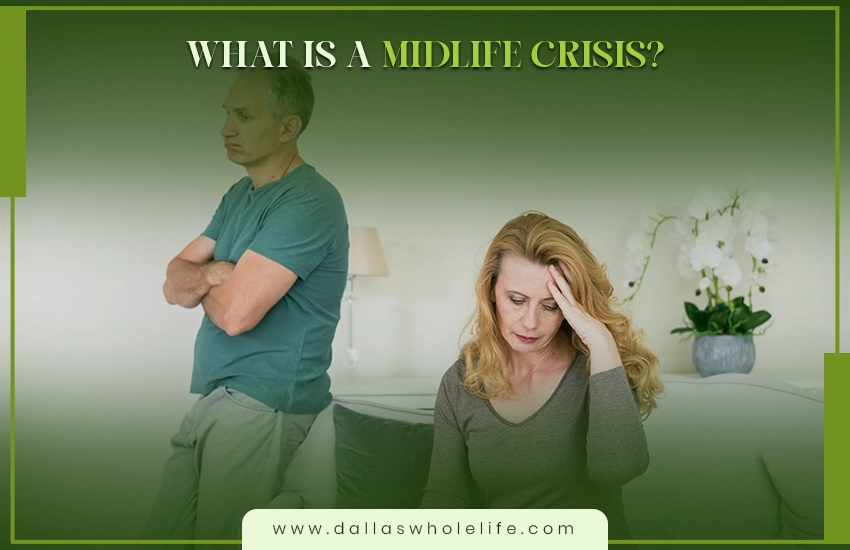
What Is a Midlife Crisis?
A midlife crisis is not a formal mental health diagnosis. It is a phrase people often use when they feel emotionally unsettled during middle adulthood. For some people, it feels like panic. For others, it feels quiet and hard to explain. The important thing to know is this: feeling unsettled in midlife does not mean you are broken. It may mean your mind and body are asking you to pay attention.
Is a Midlife Crisis Always Dramatic?
No. A midlife crisis does not always look like quitting a job, ending a marriage, or making a sudden lifestyle change.
It can look like:
- Feeling flat most days
- Losing interest in things you used to enjoy
- Feeling more impatient than usual
- Pulling away from your partner
- Wanting more meaning from your life
- Feeling anxious about your body changing
- Wondering whether you have spent too long putting others first
- Feeling like you are living on autopilot
That is why many people do not recognize it straight away. They may simply think they are tired, stressed, bored, or becoming a different person.
Why Midlife Feels Different for Everyone
Midlife often brings several pressures at once.
You may be caring for children, helping aging parents, managing work stress, thinking about retirement, dealing with health changes, or wondering whether your relationship still feels connected.
It can also be a time when the body starts changing in ways that are hard to ignore.
The National Institute on Aging describes menopause as a normal part of aging and explains that the menopausal transition can involve changes such as hot flashes, sleep issues, and other symptoms.
For men, emotional distress can also show up in ways that are not always recognized as mental health concerns, such as irritability, anger, sleep changes, substance misuse, or high-risk behavior.
So, when we talk about a midlife crisis, we are not just talking about mood. We are talking about identity, health, hormones, relationships, stress, aging, and the way people have learned to cope.

How Midlife Crisis Can Look Different for Men and Women
Men and women can both experience sadness, anxiety, regret, frustration, and confusion during midlife.
The difference is often in how those feelings show up.
How Midlife Crisis Often Shows Up in Men
For many men, midlife can bring up pressure around success, strength, money, career, physical health, and identity.
Some men begin to wonder:
- “Have I achieved enough?”
- “Am I still respected?”
- “Am I still attractive?”
- “Is this career really what I want?”
- “Why do I feel so restless?”
- “Why do I feel disconnected from my family?”
A midlife crisis in men may show up as:
- Irritability or anger
- Emotional withdrawal
- Career dissatisfaction
- Restlessness
- Increased drinking or distraction
- Sudden interest in major changes
- Avoiding difficult conversations
- Feeling pressure to prove something
- Loss of motivation
- Feeling trapped or numb
Many men are not taught to talk openly about fear, sadness, or uncertainty. So instead of saying, “I am struggling,” it may come out as frustration, silence, avoidance, or overworking.
That does not make the pain less real. It simply means it may be harder to name.
Why Men May Pull Away During Midlife
When midlife feels heavy, some men respond by pulling away.
That might mean spending more time at work, becoming quiet at home, avoiding serious conversations, or trying to distract themselves from what they feel.
This can be confusing for partners and family members because the person may seem angry, distant, or uninterested.
Underneath, there may be deeper questions:
- “Who am I now?”
- “Have I done enough?”
- “What happens if I am not as strong as I used to be?”
- “What if I am not happy, even though I should be?”
These are not small questions. They deserve patience, care, and support.
How Midlife Crisis Often Shows Up in Women
For many women, midlife can feel like several changes arriving at the same time.
There may be hormonal changes, sleep disruption, body changes, relationship pressure, parenting shifts, caregiving responsibilities, and a growing awareness that their own needs have been pushed aside for a long time.
A midlife crisis in women may show up as:
- Emotional exhaustion
- Anxiety about aging
- Mood changes
- Sleep problems
- Body image concerns
- Feeling invisible or unappreciated
- Questioning a relationship
- Loss of interest in old roles
- Resentment from overgiving
- A strong desire to rediscover personal identity
That is why midlife can feel especially layered for women. It may not be one issue. It may be the emotional, physical, and relational load all arriving at once.
Why Women May Feel Emotionally Drained or Unseen
Many women spend years carrying a lot.
They may be caring for children, supporting a partner, managing a household, working, or being the person everyone turns to when something needs to be handled.
Then midlife arrives, and a quiet question can start to grow:
“What about me?”
That question can feel selfish at first. But often, it is not selfish at all. It may be the beginning of healthier boundaries, clearer communication, and a more honest relationship with yourself.

The Body Plays a Real Role in Midlife
It is easy to treat a midlife crisis like it is only emotional, but the body matters too.
For Women
Perimenopause and menopause can affect how a person feels day to day.
Common changes may include:
- Hot flashes
- Night sweats
- Trouble sleeping
- Mood changes
- Irritability
- Brain fog
- Changes in libido
- Body changes
- Vaginal dryness
- Fatigue
MedlinePlus explains that menopause symptoms can include changes in periods, hot flashes, night sweats, and trouble sleeping, among other changes.
When sleep, mood, and body comfort are affected, it can become much harder to cope with work, relationships, and daily stress.
For Men
Men may also notice changes in:
- Energy
- Strength
- Weight
- Libido
- Sleep
- Confidence
- Motivation
- Physical health
- Emotional resilience
These changes can feel especially difficult when a person’s identity has been connected to performance, independence, work, or being the strong one.

How Midlife Can Affect Relationships
Midlife can place real pressure on relationships.
One person may want change while the other wants stability. One may be ready to talk while the other shuts down. One may feel rejected, while the other feels misunderstood.
Common relationship struggles during midlife include:
- More arguments
- Less emotional closeness
- Less physical intimacy
- Feeling like housemates
- Old issues resurfacing
- Different ideas about the future
- Resentment around family roles
- One person wanting change faster than the other
A relationship feeling strained in midlife does not automatically mean it is failing. Sometimes it means the relationship needs new conversations, better tools and more honesty.
When Midlife Becomes Anxiety, Depression or Stress
Some midlife questioning is normal.
But when the feelings start affecting sleep, mood, work, relationships or daily life, it may be time to reach out for support.
You may benefit from counselling if:
- You feel anxious most days
- You feel low, flat or hopeless
- You feel more irritable than usual
- You are withdrawing from people
- You are questioning your relationship constantly
- You are making decisions from panic
- Your sleep, appetite or energy has changed
- You are using alcohol, work, spending or distraction to cope
- You feel disconnected from your partner, family or yourself
- You do not feel like yourself anymore
At Dallas Whole Life Counseling, we support people with anxiety, depression, stress management and age-related emotional concerns.
How Aging Issues Counselling Can Help During Midlife
Midlife can bring up a lot that people do not always feel ready to talk about.
Aging. Regret. Marriage. Purpose. Body changes. Family pressure. Fear of the future. Old grief. Lost confidence. Feeling like you do not recognize yourself.
This is where counseling can help.
Our Aging Issues counseling service is especially relevant for people who are struggling with the emotional and mental side of aging. On that page, we explain that aging can be connected to emotional and mental challenges, and that treating those concerns together can help create lasting change. We also use approaches such as cognitive behavioral therapy and acceptance and commitment therapy for age-related issues.
Counseling can help you slow things down and understand what is really happening, instead of reacting from fear, guilt, or panic.
Therapy Can Help You Understand What Is Underneath
In counseling, we may explore:
- What has changed in your life
- What you are grieving
- What feels unfinished
- What still matters to you
- What feels out of alignment
- What emotions you have been avoiding
- What patterns are affecting your relationships
- What support would help you move forward
The goal is not to judge your thoughts. The goal is to understand them.
Counseling Can Help You Make Clearer Decisions
Midlife can create a strong urge to change everything quickly.
Sometimes change is needed. Sometimes the first need is to pause, breathe, and understand what is driving the urge.
Counseling can help you separate:
- A healthy desire for growth
- Temporary emotional overwhelm
- Avoidance
- Relationship pain
- Depression or anxiety
- Burnout
- Fear of aging
- A genuine need for a new direction
That clarity can make decisions feel less reactive and more grounded.
Life Coaching May Help When You Feel Stuck
Not everyone in midlife feels depressed or anxious. Some people simply feel stuck.
You may know that something needs to change, but not know where to begin.
That is where life coaching may be helpful.
Life coaching may help you work through questions like:
- What do I want next?
- What kind of life feels more meaningful now?
- What goals have I put off for too long?
- What habits need to change?
- What do I need to stop carrying?
- What would a healthier next chapter look like?
Sometimes midlife is not asking you to fall apart. It is asking you to become more honest.
A Healthier Way to Think About Midlife
Instead of asking, “Am I having a midlife crisis?”, try asking:
- What part of my life feels out of alignment?
- What have I ignored for too long?
- What am I grieving?
- What do I want more of?
- What do I need less of?
- What keeps feeling heavy?
- What do I keep pretending is fine?
- What does my relationship need right now?
- What kind of support would help me think more clearly?
- What do I want this next stage of life to feel like?
You do not need to answer all of these at once.
Sometimes the first step is simply admitting, “Something feels different, and I need help understanding it.”
Midlife Is Not the End of Your Story
A midlife crisis can feel heavy, but it can also become a turning point.
For men, it may be a chance to talk more honestly, reconnect with purpose, and stop carrying everything alone.
For women, it may be a chance to listen to the parts of yourself that have been pushed aside and make choices with more clarity.
For couples, it may be a chance to understand each other again instead of assuming the relationship is beyond repair.
At Dallas Whole Life Counseling, we help people move through midlife, aging concerns, anxiety, depression, stress, and relationship changes with care and support. If this stage of life has brought up questions you cannot ignore, you do not have to work through them alone.
FAQs
Do men and women both experience midlife crisis?
Yes. Men and women can both experience a midlife crisis or midlife transition. The feelings may be similar, but the way those feelings show up can be different.
Why do men and women experience midlife crises differently?
Men and women often carry different social, emotional, physical, and relational pressures. Men may feel pressure around success, identity, and achievement, while women may also be dealing with hormonal changes, caregiving, and relationship reassessment.
What does a midlife crisis look like in men?
A midlife crisis in men may look like irritability, withdrawal, career dissatisfaction, impulsive decisions, emotional distance, restlessness, or feeling trapped.
What does a midlife crisis look like in women?
A midlife crisis in women may look like emotional exhaustion, anxiety, sleep changes, body image concerns, relationship doubts, resentment, or a desire to rediscover personal identity.
What age does a midlife crisis usually happen?
A midlife crisis is often associated with the 40s and 50s, but it can happen earlier or later depending on life events, health, relationships, and stress.
Is a midlife crisis a mental health condition?
No. A midlife crisis is not a formal mental health diagnosis. However, it can overlap with anxiety, depression, stress, grief, or relationship concerns.
Can menopause contribute to a midlife crisis?
Menopause can contribute to emotional strain for some women because it may affect sleep, mood, energy, libido, and body comfort.
Can men experience body-related changes during midlife?
Yes. Men may experience changes in energy, strength, sleep, libido, weight, motivation, and confidence, which can affect emotional wellbeing.
Can a midlife crisis affect marriage?
Yes. Midlife can bring up relationship tension, communication issues, intimacy concerns, resentment, or different ideas about the future.
Does questioning your marriage mean the relationship is over?
Not always. Questioning a relationship may mean something needs attention. Counseling can help couples understand what is happening before making major decisions.
Why do some men withdraw during midlife?
Some men withdraw because they feel overwhelmed, ashamed, confused, or unsure how to talk about their emotions. Withdrawal may be a sign that support is needed.
Why do some women feel invisible in midlife?
Some women feel invisible after years of caregiving, emotional labor, or putting others first. Midlife can bring a need to feel seen, heard, and valued again.
Can a midlife crisis cause anxiety?
Midlife stress can contribute to anxiety, especially when someone feels uncertain about aging, health, finances, career, family, or relationships.
Can a midlife crisis cause depression?
Midlife stress can overlap with depression. Signs may include low mood, loss of interest, withdrawal, sleep changes, hopelessness, or emotional numbness.
Should I make a big life change during a midlife crisis?
It is usually wise to slow down before making major decisions. Counseling can help you understand whether the desire for change is coming from clarity, fear, burnout, or avoidance.
How can counselling help during midlife?
Counseling can help you understand your emotions, manage stress, explore relationship concerns, reduce anxiety or depression, and make decisions with more clarity.
Is aging issues counseling only for older adults?
No. Aging issues counseling can also help people in midlife who are struggling with body changes, identity, purpose, emotional well-being, or fear about the future.
Is life coaching helpful during midlife?
Life coaching can be helpful when you feel stuck, unclear, or ready to set new personal or professional goals.
When should I seek professional support?
You may want support if your mood, sleep, relationship, work, health, or daily functioning is being affected by stress, anxiety, sadness, or confusion.
How can Dallas Whole Life Counseling help?
At Dallas Whole Life Counseling, we support people through aging concerns, anxiety, depression, stress, relationship issues, couples counseling, and life transitions. We offer a compassionate place to understand what is happening and take the next step with more clarity.
