

Yes, online couples therapy can help save a relationship by improving communication, addressing recurring conflicts, and helping partners rebuild emotional closeness. Research suggests that video-based couples therapy can produce outcomes comparable to face-to-face sessions for many couples. However, therapy cannot guarantee that a relationship will continue. Its effectiveness depends on the issues involved, the therapist-client fit, and each partner’s willingness to participate honestly.
Relationships rarely fall apart because of one difficult conversation.
More often, small disagreements remain unresolved. Partners begin feeling unheard, become defensive, or stop sharing what they truly think. Over time, two people who once felt close may begin living more like housemates than partners.
However, you do not need to wait until the relationship reaches breaking point. Online couples therapy provides a private and practical way to understand what is happening, change damaging patterns, and decide how you want to move forward together.
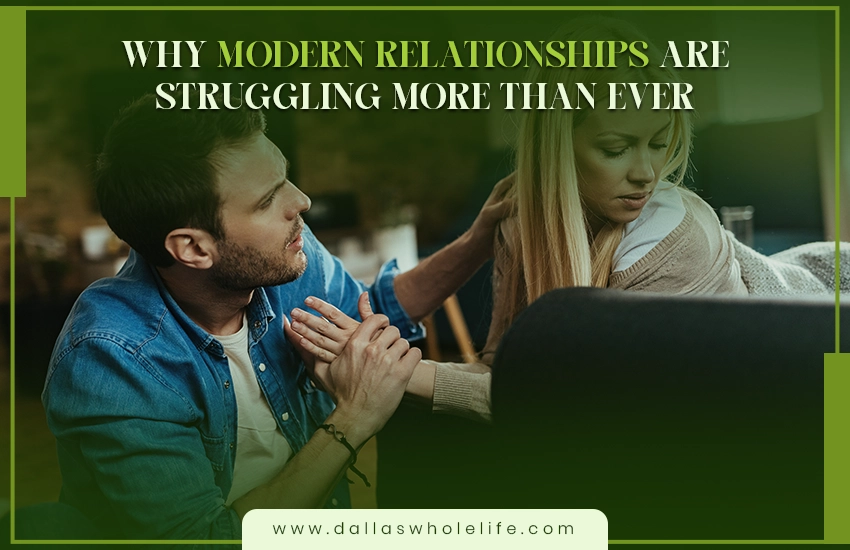
Why Modern Relationships Are Struggling More Than Ever
Modern couples often juggle work, family responsibilities, money concerns, parenting, and limited time together. Even strong relationships can feel strained when both partners are tired, distracted, or under pressure.
The problem is not always a lack of love. Sometimes, the relationship simply stops receiving the attention it needs. When stress becomes constant, patience can disappear, and minor issues can begin feeling much larger.
Subtle Signs Your Relationship May Be Weakening
Relationship problems are not always dramatic. Some warning signs are easy to dismiss because they develop slowly.
You may notice that:
- Conversations stay focused on chores, children, or schedules
- One or both partners avoid difficult subjects.
- Affection and emotional warmth have decreased.
- You feel lonely even when you are together.
- Small disagreements quickly become personal.
- You no longer feel understood or supported.
One sign does not necessarily mean the relationship is failing. However, repeated changes may suggest that something important needs attention.
The Impact of Poor Communication on Long-Term Relationships
Healthy communication is not simply about talking more. It means being able to express concerns, listen without immediately defending yourself, and discuss differences without attacking one another.
When communication breaks down, couples may repeat the same argument without resolving the issue underneath it. One partner may push for answers while the other withdraws. Both may leave the conversation feeling ignored.
Couples therapy can help identify these patterns and replace them with clearer, more respectful ways of communicating.
Emotional Distance vs. Normal Relationship Phases
Every relationship changes over time. Couples may feel especially close during some periods and less connected during others. Stress, illness, parenting, and major life changes can temporarily affect emotional or physical closeness.
Emotional distance becomes more concerning when it continues without improvement, neither partner knows how to discuss it, or attempts to reconnect regularly end in conflict.
Our relationship counseling services can help couples explore whether they are experiencing a temporary phase or a deeper pattern that needs professional support.

Signs Your Relationship Needs Professional Help
You do not need to be considering separation before speaking with a therapist. In many cases, getting help earlier gives couples more room to understand the problem before resentment becomes deeply established.
Therapy may be helpful when conversations regularly become hostile, trust has been damaged, or you keep trying to fix the same problem without making progress.
Common Issues Couples Face
Couples seek therapy for many different reasons. Some want help after a major event, while others cannot point to one clear problem.
Common concerns include:
- Communication difficulties
- Infidelity or damaged trust
- Emotional or physical intimacy concerns
- Parenting disagreements
- Financial conflict
- Different priorities or future plans
- Anger and resentment
- Feeling neglected or unappreciated
- Major life transitions
- Considering separation or divorce
These concerns are common, but that does not mean couples should simply accept them. A therapist can help both partners understand what is driving the issue and what may need to change.
Why Ignoring Problems Can Make Things Worse
Avoiding conflict can feel easier in the moment. Unfortunately, an unresolved issue does not always disappear. It may return during future disagreements or gradually turn into resentment.
Partners may begin assuming the worst about each other’s intentions. A forgotten task becomes proof that someone does not care. A quiet evening becomes evidence that the relationship has lost its connection.
Therapy creates space to examine these assumptions before they become accepted as facts.
When Arguments Become Patterns Instead of One-Time Issues
Most couples disagree. The more important question is whether those disagreements lead to understanding or simply repetition.
A pattern may be developing when:
- The same issue appears in different arguments.
- One person criticizes while the other becomes defensive
- Discussions end through withdrawal rather than resolution
- Past mistakes are repeatedly brought into current conflicts.
- Both partners expect the conversation to go badly.
The aim of therapy is not to remove every disagreement. It is to help couples manage conflict without damaging the relationship.

What Is Online Couples Therapy and How Does It Work?
Online couples therapy allows partners to meet with a licensed therapist through a secure video session. Both partners may join from the same room, or they may connect from separate locations when appropriate.
Sessions usually focus on understanding the couple’s concerns, identifying unhelpful patterns, and developing specific ways to communicate or respond differently. Online therapy is still structured therapy. It is not simply an informal conversation over video.
At Dallas Whole Life Counseling, we offer virtual sessions for clients in Texas. Our approach is balanced and non-judgmental, with space for both partners to explain their experiences.
If you’re new to virtual counseling, you may also find our guide on How Virtual Couples Therapy Works helpful for understanding what to expect before your first session.
Online vs. In-Person Couples Therapy
Online and face-to-face therapy share the same basic goal. Both help couples understand their relationship patterns and work towards measurable changes.
Online therapy may offer:
- Easier scheduling
- No travel time
- Greater access for couples outside Dallas
- The comfort and privacy of joining from home
- More flexibility when partners are in different locations
In-person therapy may suit couples who prefer being physically present with the therapist, have limited privacy at home, or find it difficult to stay engaged through video.
Research involving couples receiving therapy through videoconferencing has found meaningful improvements in relationship satisfaction and mental health, with outcomes that can be comparable to in-person treatment.
Wondering whether virtual counseling is the right choice? Read our article on How Relationship Counseling Has Shifted to Online Sessions to learn how online therapy has become a trusted option for many couples.
Types of Therapy Methods
A couples therapist may draw from several approaches depending on the couple’s needs.
Cognitive Behavioral Therapy
CBT explores how thoughts and behaviors influence emotions and relationship interactions. It may help partners question unfair assumptions and respond to situations more constructively.
Emotionally Focused Therapy
EFT focuses on emotional attachment and the deeper needs behind conflict. It helps partners recognize negative cycles and create safer emotional responses.
The Gottman Method
The Gottman Method uses structured assessments and practical exercises to strengthen friendship, manage conflict, and improve shared understanding.
A therapist may combine elements from different methods rather than following one rigid format.
Cost, Accessibility, and Convenience
The cost of couples therapy depends on the therapist, session length, location, and insurance arrangements. Couples therapy may not always be covered by health insurance, so it is important to ask about fees and payment options before booking.
Online sessions can reduce indirect costs such as travel, parking, or arranging childcare. They may also make regular attendance easier, which matters because therapy works best when couples can participate consistently.
What to Expect in Your First Session
The first session usually gives the therapist a clearer picture of the relationship and what each partner hopes will change.
Your therapist may ask about:
- The history of your relationship
- The concerns that brought you to therapy
- How disagreements usually develop
- Important recent events
- Each partner’s goals
- Existing strengths within the relationship
The session is not about deciding who is right. It is about understanding how both people experience the relationship and identifying useful goals.

Benefits of Starting Therapy Early
Couples sometimes wait until they feel exhausted, disconnected, or close to ending the relationship. Therapy can still be valuable at that point, but starting earlier may make it easier to address problems before they become deeply rooted.
Early therapy can help couples develop communication skills, discuss sensitive concerns more safely, and recognize patterns while both partners still feel hopeful about change.
What Positive Progress Can Look Like
Therapy outcomes are different for every couple, and no ethical therapist can promise to save a relationship.
Progress may mean:
- Arguments become shorter and less personal
- Partners feel safer discussing difficult subjects.
- Each person better understands the other’s perspective.
- Trust begins to return through consistent actions.
- Couples spend more meaningful time together.
- Both partners make clearer decisions about the future.
Research indicates that couples therapy can improve outcomes for many participants compared with receiving no treatment. However, results depend on the couple’s situation and engagement with the process.
How to Choose the Right Online Therapist
The relationship you develop with your therapist matters. Look for a licensed professional who has experience with couples and the specific concerns affecting your relationship.
Before booking, consider asking:
- Do you regularly work with couples?
- Which therapy approaches do you use?
- How do you make sure both partners are heard?
- Do you offer individual sessions when appropriate?
- What should we do if conflict continues after a session?
- Are virtual sessions available at suitable times?
You can also review our couples and marriage counseling service to learn more about how we work with relationship concerns.
Tips for Asking Your Partner to Try Therapy
Avoid raising the idea during an argument. Choose a calm time and explain what you hope therapy could improve.
Rather than saying, “You need therapy,” try:
- “I want us to communicate without hurting each other.”
- “I care about this relationship and think we need support.”
- “I would like us to understand each other better.”
- “Could we try one session and see how it feels?”
Presenting therapy as a shared effort is usually more helpful than treating it as a way to fix one partner.
What Happens If Only One Partner Is Willing?
Individual therapy can still be worthwhile when one partner refuses couples therapy. You can work on your communication, boundaries, emotional reactions, and decisions about the relationship.
Changing one person’s response may influence the existing pattern, although it cannot control the other partner’s behavior or guarantee that the relationship will improve.
A therapist can also help you decide how to raise the subject again without pressure, blame, or threats.

A Stronger Relationship Can Start With One Conversation
Online couples therapy cannot erase the past or guarantee that two people will stay together. What it can do is provide a calmer setting where both partners can speak honestly, recognize harmful patterns, and learn healthier ways to respond.
You do not have to wait until every conversation feels impossible. Seeking help can be a sign that you value the relationship enough to give it focused attention.
Dallas Whole Life Counseling has supported individuals, couples, and families since 1999. Our licensed Texas therapists offer online and in-person appointments, with a practical approach that respects both partners’ experiences.
Frequently Asked Questions
Is Online Couples Therapy Actually Effective?
Online couples therapy can be effective for many couples. Research has found that video-based treatment can improve relationship satisfaction, communication, and emotional well-being, with results that may be similar to face-to-face therapy. Outcomes still depend on the therapist, the couple’s concerns, and their level of participation.
How Long Does Couples Therapy Take to Work?
There is no fixed timeline. Some couples notice changes after several sessions, while more complex issues may require longer-term support. Your therapist can discuss an expected treatment plan after learning more about your concerns and goals.
Can Therapy Help If Only One Partner Is Committed?
Couples therapy is generally more productive when both partners participate. However, individual therapy can help one partner improve communication, establish boundaries, and decide how they want to approach the relationship.
Is Online Therapy as Good as Face-to-Face Sessions?
For many couples, online therapy can provide results comparable to in-person sessions. Personal preference, privacy, internet access, and the severity of the relationship concerns may affect which option works better.
What If My Partner Refuses Therapy?
Consider attending individual therapy first. A therapist can help you understand your needs, change your own responses, and find a respectful way to discuss couples therapy again. Avoid forcing, threatening, or repeatedly pressuring your partner.
How Much Does Online Couples Therapy Cost?
Costs vary according to the provider, therapist qualifications, and session length. Insurance coverage also varies, and some plans do not cover relationship therapy unless it is connected to a diagnosed mental health condition. Ask the provider about fees, insurance, and payment options before scheduling.
